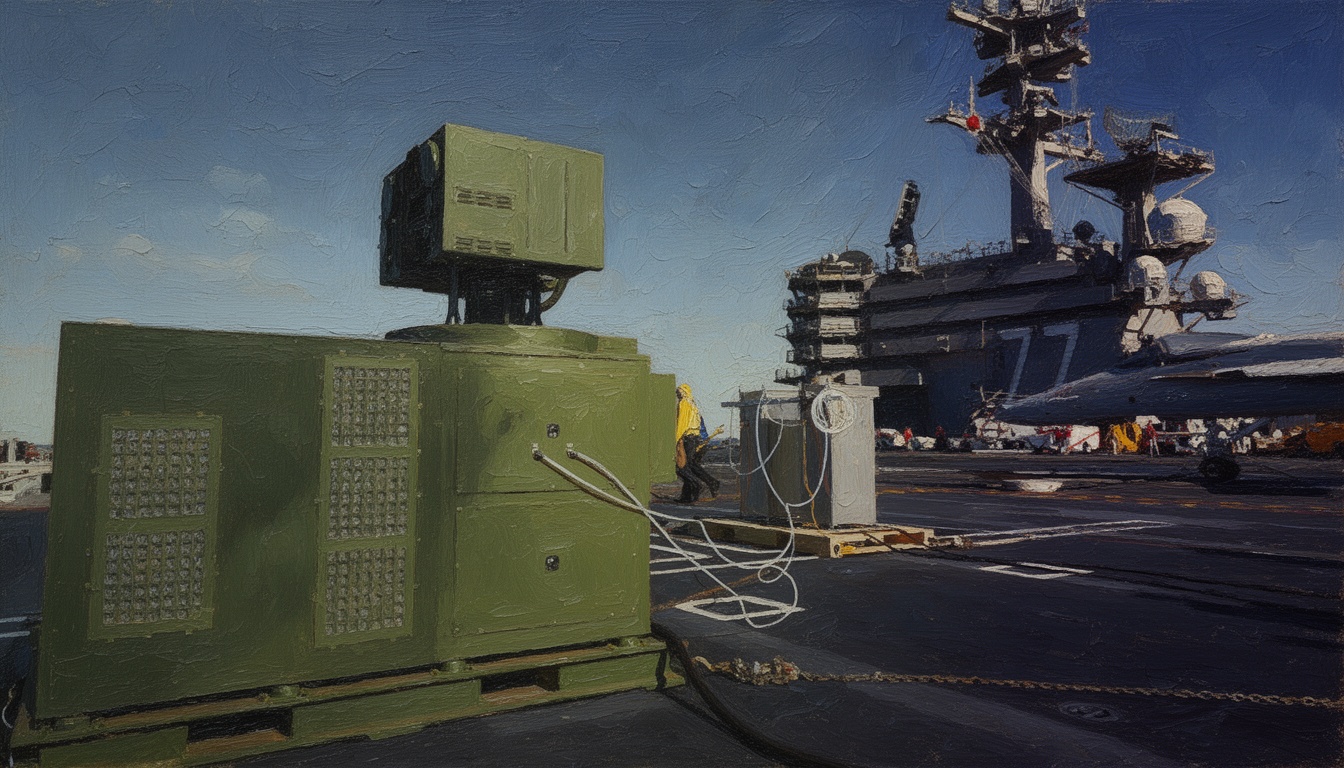
US Navy Tests Drone-Frying LOCUST Laser From Supercarrier
The LOCUST laser on a Nimitz-class carrier demonstrates drone intercept capability, but range and speed remain constrained. The test adds a potential defensive layer for carrier groups amid evolving drone threats. Read as a capability demonstration with implications for future naval air defenses.
The US Navy conducted a test of the LOCUST laser on the aircraft carrier USS George H.W. Bush, showcasing the ability to target and disable drones. The laser demonstration marks a notable step in carrier-based air defense, yet officials caution that coverage remains limited by power, cooling, and targeting speed. The test emphasizes a growing reliance on directed-energy systems to complement kinetic defenses.
Context for the exercise lies in increasing use of unmanned systems in maritime warfare and the need for scalable, cost-effective counter-UAS options. Locust is positioned as part of a layered defense for high-value platforms like supercarriers, where traditional missiles and guns face saturation risks from swarms. While promising, the test does not signal a quick replacement for established close-in weapon systems.
Strategically, the experiment signals continued US investment in disruptive tech to preserve carrier reach against drone-enabled threats. It also tests integration with onboard sensors, command-and-control, and power management on a large warship. The outcome could influence future procurement and development paths for naval directed-energy programs.
Technical details remain guarded, but officials describe LOCUST as a laser system capable of delivering rapid, repeatable drone intercepts at close to moderate ranges. The test occurred in a controlled environment with defense teams coordinating track, engagement, and safety protocols. Costs, logistics, and training implications are likely under review as the program matures.
Forward assessment suggests phased expansion: broader range tests, multi-target engagements, and interoperability with other shipboard defenses. If LOCUST scales effectively, it could reduce drone kill-chain time and lessen the burden on missiles during carrier sorties. However, the technology still faces constraints on power availability, cooling needs, and real-world attack dynamics.