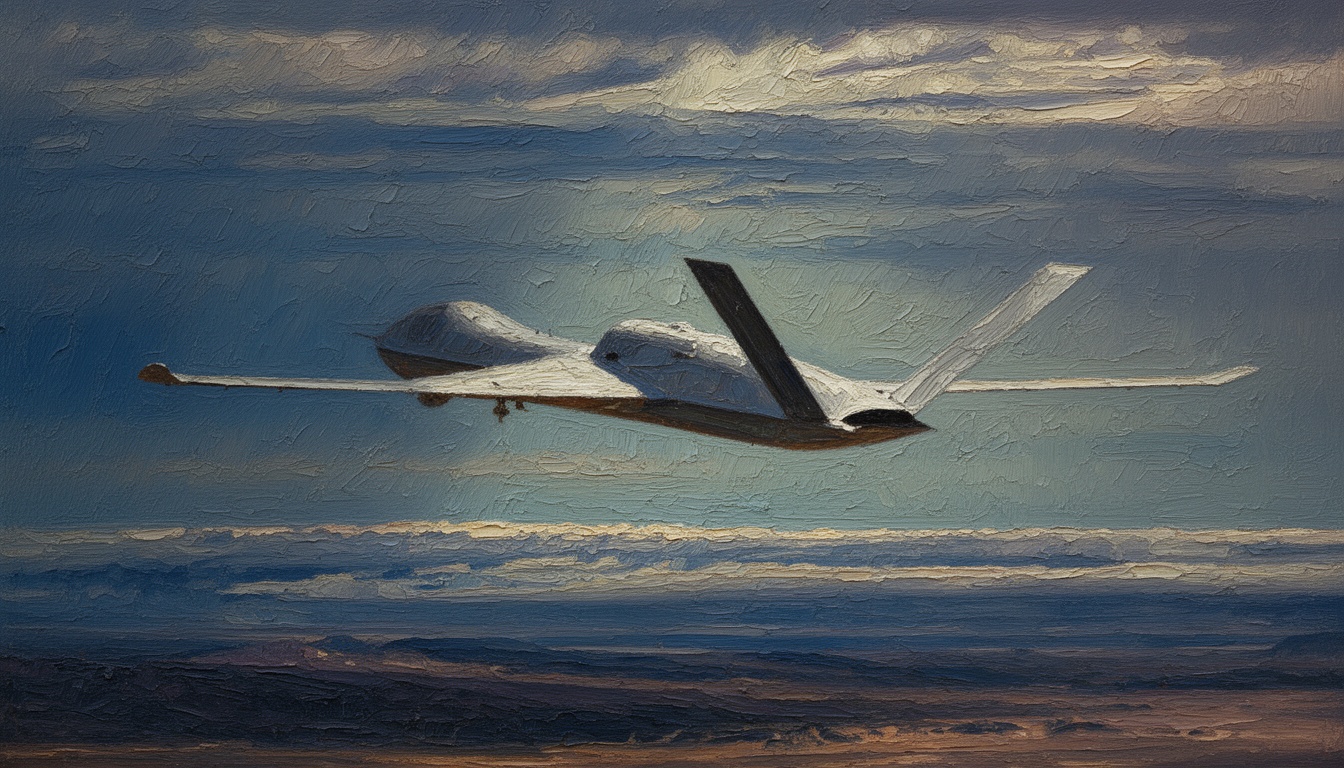
US Navy selects GA-ASI for CAMP autonomy project
The US Navy’s NAVAIR PMA-281 has named GA-ASI to lead the Collaborative Autonomy Mission Planning and Debrief (CAMP) program. The selection marks a step forward in naval unmanned systems and autonomous warfare planning. CAMP aims to integrate autonomous mission planning with real-time debriefs to shorten cycle times and improve decision speed.
The United States Navy has formally selected General Atomics Aeronautical Systems, Inc. (GA-ASI) for the Collaborative Autonomy Mission Planning and Debrief (CAMP) project under PMA-281. The award confirms GA-ASI as the primary industry partner to advance autonomous mission planning and post-mission analysis for Navy platforms. The CAMP program targets the integration of autonomous algorithms with human-in-the-loop decision processes to optimize maritime operations. The selection underscores the Navy's commitment to maturing autonomy within its unmanned and manned asset mix. No details on contract value were released at this stage.
Background context places CAMP within broader Navy efforts to accelerate decision cycles and reduce operator workload in complex maritime environments. PMA-281, responsible for air combat electronics and mission planning, seeks a vendor capable of delivering scalable autonomy tools. CAMP is designed to support planning, execution, and debrief across multiple platforms, including unmanned systems. The initiative aligns with Navy modernization efforts aimed at expanding autonomy while maintaining safety and accountability.
Strategic significance centers on advancing maritime domain awareness and operational tempo through autonomous planning. By enabling faster, more reliable mission briefs, CAMP could reduce time-to-decision in contested environments and improve joint force interoperability. The project also signals the private sector’s growing role in defense software ecosystems, with potential ripple effects on procurement strategies and cyber-hardening requirements. The autonomy dimension matters for deterrence and readiness in a competitive maritime theater.
Technical/operational details describe CAMP as a software-enabled framework for collaborative mission planning and debriefing. GA-ASI will likely contribute in areas such as algorithm development, simulation environments, data fusion, and user-interface design for sailors and pilots. The program emphasizes traceability, auditability, and safety constraints to ensure compliance with military standards. Details on platforms, sensors, or hardware integration remain under wraps pending contract negotiations.
Likely consequences include accelerated adoption of autonomous planning tools across Navy fleets and allied partners seeking compatible systems. CAMP could become a backbone for future unmanned carrier operations and distributed maritime operations. Observers expect a ramping schedule that phases in capabilities while validating reliability and safety. The program will test governance mechanisms for autonomy in high-stakes decision cycles and pave the way for broader industrial collaboration.