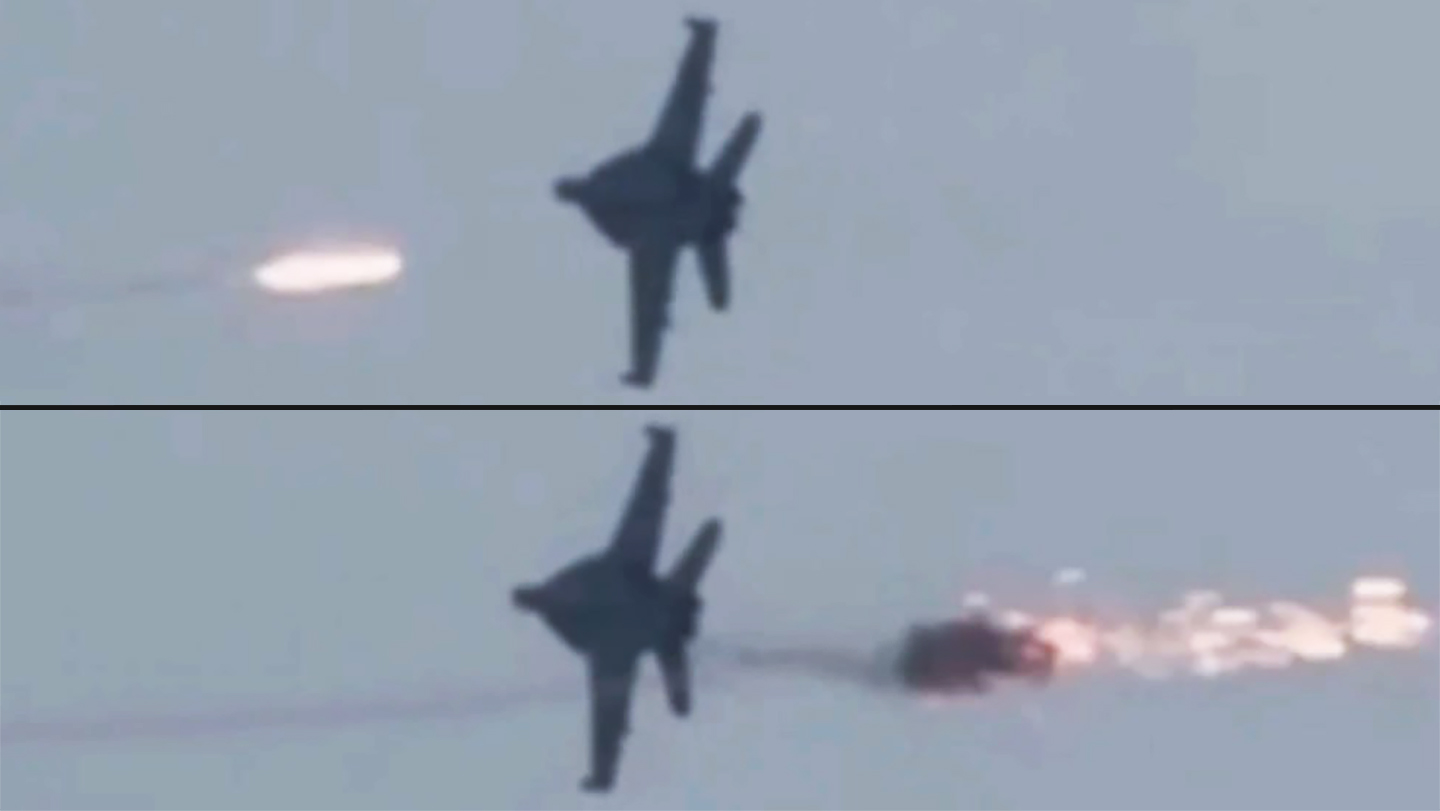
US Navy F/A-18 Nearly Hit by Iranian SAM Near Persian Gulf
An F/A-18 jet faced a close call with an Iranian surface-to-air missile, exposing ongoing risks to coalition air operations near Iran. MANPADS and SAM systems remain significant threats despite reduced tensions in coastal zones. Iran's contested airspace continues to challenge true air supremacy.
A US Navy F/A-18 Hornet jet operating near the Persian Gulf narrowly escaped a launch of an Iranian surface-to-air missile (SAM). This close encounter underscores persistent vulnerabilities aircraft face from existing Iranian missile systems, even in less contested coastal airspace. The missile threat remains real and capable of endangering aircrew despite ongoing US and allied air superiority missions.
Iran has invested heavily in layered air defenses including man-portable air-defense systems (MANPADS) and more advanced SAMs. These systems proliferate across the region, allowing Iran to maintain a credible deterrent against both drones and manned aircraft. The Persian Gulf remains a hotspot where airspace control is hotly contested.
The strategic implication is clear: coalition forces cannot assume uncontested air dominance over Iranian coastal areas. Iranian air defenses can jeopardize strike, surveillance, and escort operations. This incident signals a continuing air threat that calls for enhanced countermeasures, intelligence, and caution for pilots operating within range.
The F/A-18 is equipped with advanced avionics and electronic countermeasures but can still be vulnerable to heat-seeking MANPADS and radar-guided SAM missiles like the Iranian Raad or Shahin variants. These medium-range systems have engagement envelopes effective against low- to mid-altitude targets, making heroic close-air support and maritime patrols highly perilous.
Forward assessments suggest further regional tension and risks for coalition aircraft as Iran continues to upgrade and proliferate its air defense networks. The incident underlines the need for sustained aerial vigilance, improved missile detection, and defensive tactics to ensure aviator survivability in contested airspace near Iran.