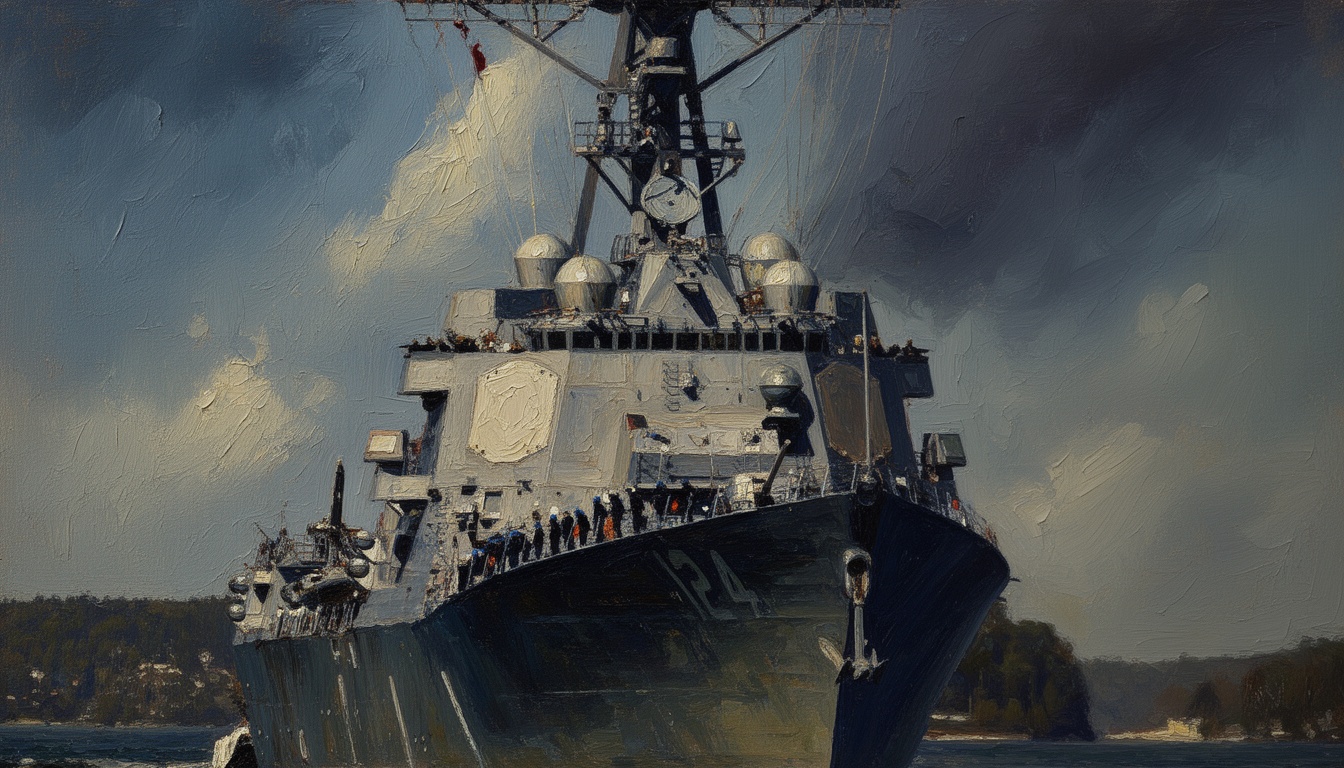
US Navy commissions guided-missile destroyer USS Harvey C. Barnum Jr.
The United States Navy has commissioned the guided-missile destroyer USS Harvey C. Barnum Jr. (DDG 124) at Naval Station Norfolk on 11 April 2026. The ceremony formalizes the ship's entry into active service, expanding fleet air defense and surface warfare capabilities. The event underscores ongoing modernization of attack destroyer forces as regional tensions persist.
The United States Navy has formally commissioned the guided-missile destroyer USS Harvey C. Barnum Jr. (DDG 124) at Naval Station Norfolk on 11 April 2026. The ceremony marked the ship's transition from builder’s trials to commissioned status, placing it in active service with the Atlantic Fleet. Command leadership highlighted the vessel’s advanced Aegis combat system and integrated missiles as key elements of its mission profile.
DDG 124 bears the name of Medal of Honor recipient Harvey C. Barnum Jr., reinforcing the tradition of linking frontline platforms to historical pioneers of U.S. maritime power. The ship is part of the Arleigh Burke-class, which remains the spearhead of the U.S. surface fleet’s multi-mission capability. The commissioning comes amid steady fleet expansion and ongoing modernization of command-and-control networks.
The ceremony featured remarks from senior naval leaders who stressed deterrence, crisis response, and alliance interoperability. Planners noted that DDG 124 will enhance air-defense coverage, anti-surface warfare, and anti-submarine missions across the Western Atlantic and beyond. The ship’s readiness profile was framed as a concrete signal of U.S. commitment to sea control in contested theaters.
Technically, Harvey C. Barnum Jr. carries the Aegis Combat System, dual-role Vertical Launch System, and a suite of Mk 41 missiles, including SM-2, SM-3, SM-6 interceptors, and Tomahawk land-attack missiles. The vessel’s propulsion relies on the AegisSPY radar ecosystem and dual-screw propulsion for high-endurance operations. Officials highlighted crew-intensive training and cyber-hardened networks as force multipliers for rapid tasking in coalition environments.
Analysts expect DDG 124 to contribute to forward presence, rapid deployment of air-defense assets, and crisis escalation management in a multi-domain context. The commissioning acts as a preface to real-world exercises with allies, testing interoperability through joint unmanned and manned operations. Looking ahead, the ship will likely participate in patrols that demonstrate U.S. naval reach and persistently strengthen deterrence against potential adversaries.