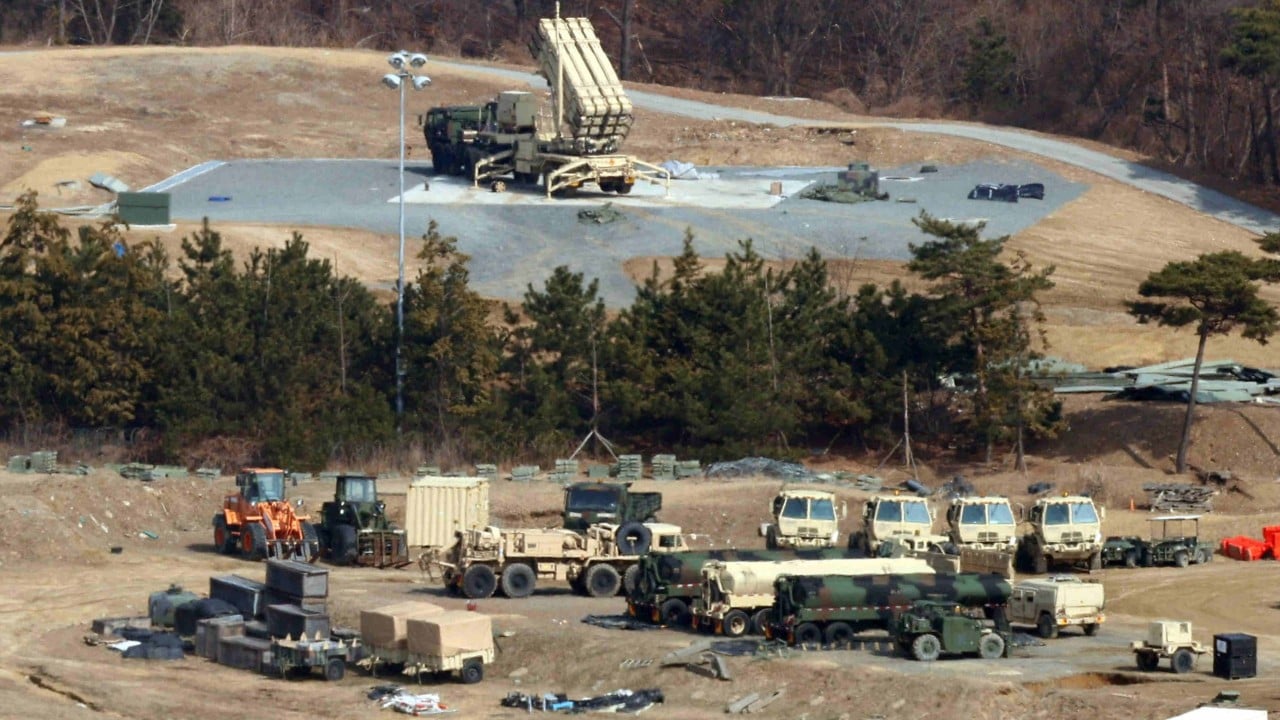
US Moves THAAD from South Korea to Middle East, Exposing Regional Vulnerabilities
The US's relocation of THAAD systems signals a shift in missile defense strategy, potentially emboldening adversaries like China. This maneuver reveals both strategic flexibility and the precarious security landscape in Asia.
The United States is withdrawing elements of its Terminal High Altitude Area Defense (THAAD) system from South Korea, relocating them to the Middle East. This transfer, reportedly confirmed by two anonymous US government officials, raises immediate concerns about the implications for regional security dynamics, especially with respect to China, which may perceive this as a temporary weakening of US deterrence in Asia.
Historically, the deployment of THAAD to South Korea was a response to North Korea's advancing nuclear and missile capabilities. Since its installation in 2017, the system has played a crucial role in bolstering South Korean defenses against ballistic threats. The decision to now move these assets underscores a rapid capability restructuring by Washington, likely influenced by shifting operational priorities and the evolving focus on countering threats in the Middle East.
This maneuver is significant for several reasons. First, it highlights the fragile state of US deterrence mechanisms in Asia. The potential gap in missile defense may embolden North Korean provocations or Chinese military assertiveness in the South China Sea and extended regions. Furthermore, it raises questions about the reliability of US commitments to its allies in South Korea and Japan, at a time when both nations are vying for a more independent defense posture.
Key actors in this scenario include the United States and China, but South Korea and Japan also play crucial roles. The US aims to reallocate its resources in response to what it sees as new global threats, particularly from China and Iran. Meanwhile, China is likely to use this redeployment to bolster its narrative that the US is a destabilizing force in the Asia-Pacific, asserting that it undermines regional security.
The operational details of the THAAD system reveal advanced capabilities, including tracking and targeting potential ballistic threats at altitudes up to 150 kilometers. The THAAD batteries in South Korea are estimated to cost over $800 million, emphasizing the financial commitment the US made to enhance South Korean defenses. While some launchers will remain, the sheer scale of the shift signals a prioritization of Middle Eastern interests over those in Northeast Asia.
Consequences of this move could manifest in several forms. Should tensions rise with North Korea or if China escalates its military activities, the absence of THAAD could lead to a crisis. This redeployment could serve as a catalyst for greater military cooperation among US adversaries, prompting them to test the limits of US deterrence in their respective regions.
Historically, similar redeployments have occurred, often resulting in increased hostilities. For example, when the US repositioned forces during the Cold War, it often led to escalated tensions in Europe and Asia. This shift echoes past instances where reallocating military assets resulted in miscalculations by regional powers.
Looking ahead, analysts should monitor China's military posture closely, particularly regarding missile testing and naval operations in the South China Sea. Furthermore, the response from North Korea will be critical; any new missile tests could indicate a blatant challenge to US deterrence. The broader implications of this redeployment may reshape the security architecture in Asia for years to come.