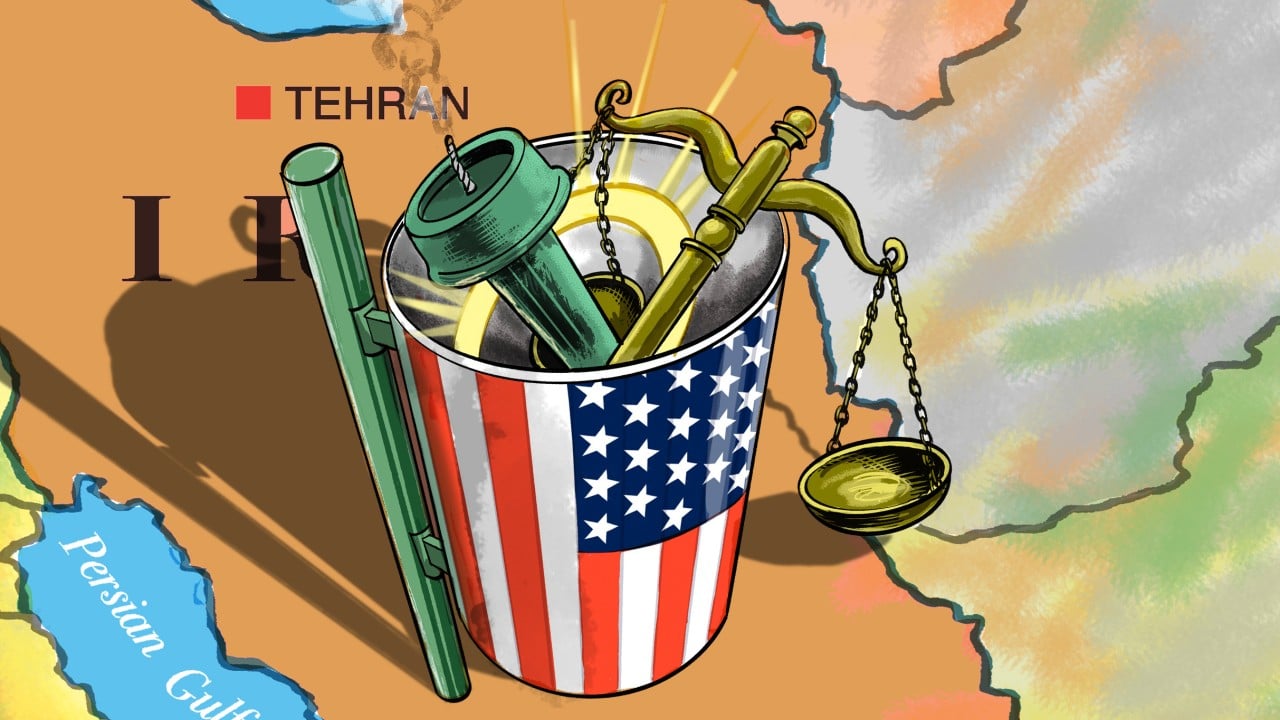
US Miscalculates Iran Attack, Boosts China's Strategic Position
The US military's open conflict with Iran has created a power vacuum that China is poised to exploit. With Iran challenging US naval operations, regional dynamics are shifting dangerously in China's favor.
The United States launched a military offensive against Iran on February 28, aiming to quickly incapacitate Tehran’s leadership. However, one week later, the Iranian military continues to assert its strength, launching missiles across the Gulf and blocking over 150 oil tankers in the crucial Strait of Hormuz. Iranian Revolutionary Guard Commander Hossein Salami has warned that any vessels attempting to navigate the Strait will face catastrophic consequences, indicating a persisting conflict and a lack of US control in the region.
Historically, the US has maintained a dominating presence in the Gulf to protect its interests and those of allies like Saudi Arabia. However, this latest military engagement threatens to unravel decades of US influence in the Middle East. Iran's ability to persist despite the US assault illustrates a significant miscalculation by Washington, which has underestimated the Iranian regime's resilience and military capabilities.
The strategic significance of this situation cannot be overstated. The ongoing confrontation not only affects oil prices globally but also empowers rival powers like China. As the US focuses on conflicts with Iran, Beijing is already looking to step into the resulting geopolitical void. This development poses a threat to regional and international stability, as a strengthened Iran may lead to more aggressive posturing against US allies and interests.
China's motivations are clear: to expand its influence in the Middle East while the US is preoccupied with its conflict in Iran. The recent turmoil allows Beijing to reassert its role as a major power broker. If Iran continues its confrontational approach, China stands to gain economically and strategically by positioning itself as a stabilizing force, potentially mediating between Tehran and other nations.
Operationally, the US has committed significant military assets, including aircraft carriers, to the region, which are now in danger of being severely tested. The USS Dwight D. Eisenhower has been deployed to the Persian Gulf, but the effectiveness of US naval power is under scrutiny as Iran continues to exert control over shipping lanes. With oil shipping critical for the global economy, Iran’s military actions could lead to severe economic repercussions, further complicating the situation.
The likelihood of escalating hostilities is high, as both nations prepare for sustained operations in the Gulf. Iran may increase its missile strikes or resort to asymmetric warfare targeting US assets, heightening tensions. Meanwhile, the US may respond with increased military presence, which could spiral into a larger regional conflict involving Iranian proxies across the Middle East.
Looking back, historical precedents reveal that such military miscalculations can have dire consequences. The US invasion of Iraq in 2003 led to significant instability across the Middle East, creating long-lasting repercussions for American influence. This latest misstep may similarly catalyze the emergence of new alliances and deepen existing rivalries.
In the coming weeks, it will be critical to monitor Iran's military operations and international responses, particularly from China and other regional powers. Signs to watch include increased Iranian missile launches, potential naval confrontations in the Strait of Hormuz, and any shifts in diplomatic communications with Beijing. Ongoing developments will shape the balance of power in the region and signal the effectiveness of US military strategy under pressure.