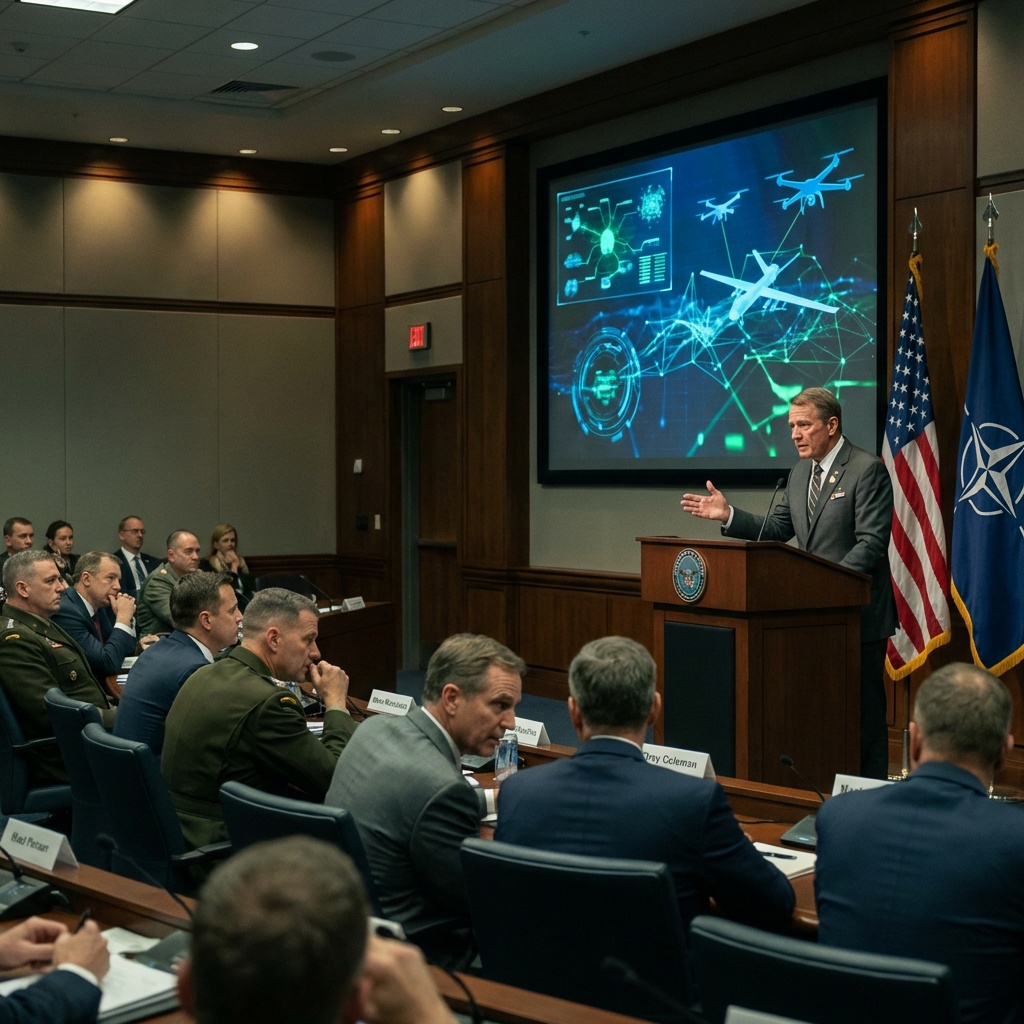
US Military Veteran Advocates for AI Arms Race at RAFT
The insights presented by Trey Coleman signal a new frontier in AI military applications, raising concerns about escalatory technologies and unregulated autonomy in warfare. The aggressive push for AI integration reflects ongoing competition in military innovations worldwide.
Trey Coleman, a retired US Air Force colonel, is pushing RAFT to become a key player in the burgeoning field of edge-based artificial intelligence (AI). Coleman’s leadership is driving the company's focus on integrating AI capabilities into military applications, despite global calls for regulating autonomous weapon systems. This strategic shift signals RAFT’s intent to establish a foothold in a crucial and highly competitive sector of defense technology.
The evolution of AI technology has been rapid, with militaries around the world racing to harness its potential for surveillance, combat, and decision-making systems. Recent advancements have not only highlighted the transformative power of AI on traditional warfare but have also intensified debates on ethical and strategic implications. As nations like China and Russia push the boundaries of AI integration into their military frameworks, the urgency for American firms like RAFT to innovate is paramount to maintaining global tech leadership.
This shift towards AI at the edge represents a critical juncture in global defense dynamics. Nations enhancing their military capabilities through AI could tip the balance of power, making traditional deterrents outdated. The prospect of AI systems operating autonomously, without human oversight, heightens fears of accidental engagements and escalations in international conflicts, pushing global security into precarious territory.
Key players in this arena, including Coleman at RAFT, have compelling motivations. While stated goals often include enhanced operational efficiency and improved situational awareness, the underlying motivations may also involve securing lucrative government contracts and establishing market dominance. Consequently, the proliferation of AI technologies raises alarms about a new arms race, where ethical considerations are sidelined in favor of rapid technological advancement and competitive superiority.
Technical details reveal that edge AI can process data significantly faster than traditional centralized systems, allowing for near-instantaneous decision-making on the battlefield. With projected budget allocations for AI in military contexts expecting to reach upwards of $60 billion annually by 2025, RAFT's advancements in this sector will have a marked impact on future military planning and operations.
The likely consequences of RAFT’s AI innovations will extend far beyond corporate interest, as nations scramble to respond to emerging threats. Rapid AI deployment could equalize power disparities, allowing smaller nations equipped with advanced AI systems to challenge larger forces. This growing reliance on AI could also instigate unforeseen escalation paths, where operational failures by automated systems lead to unintended conflicts.
Historically, parallels can be drawn to the early days of nuclear technology, where nations raced to develop arsenals without considering the inherent risks of escalating confrontation. The lessons from those times suggest a critical need for international dialogue on AI in warfare to establish norms that prevent destabilizing arms races.
Looking forward, defense analysts should closely monitor RAFT's developments and the responses from rival nations. Key indicators to watch include military adaptations of AI in real-world operations, alterations in global defense budgets focused on AI technologies, and international treaties or agreements aimed at regulating autonomous systems. The stakes are high, and the competition fierce as the next chapter of warfare unfolds with AI at its core.