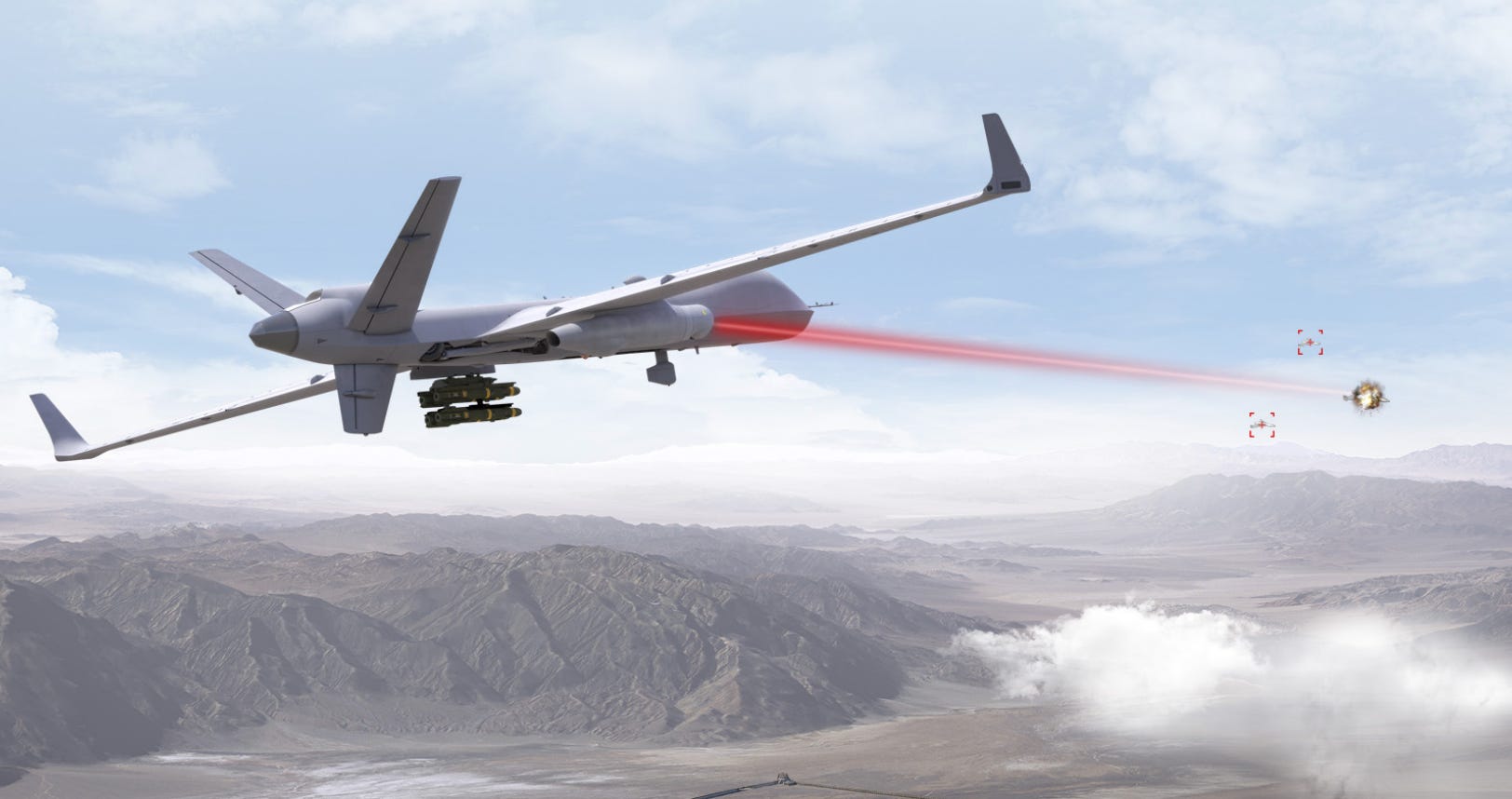
US Military Targets Missile-Killing Laser Drones
The US armed forces are renewing their push for flying directed-energy weapons to neutralize aerial missiles. The initiative signals a broader shift toward space and air domain dominance through laser tech. Experts assess the move as a test of new warfighting power and deterrence calculus.
The US military is pursuing a fleet of drone-borne laser systems designed to shoot down incoming missiles. This effort represents another iteration in the long-running quest to field directed-energy weapons that can operate at range and with high speed. Officials say the aim is to bolster defensive depth and reduce reaction time against evolving air threats.
Historically, the drive toward laser defense has cycled through periods of optimism and skepticism, tied to power, cooling, and reliability challenges. The current push appears to be part of a broader modernization drive that emphasizes speed, precision, and reduced logistical footprint. If successful, drone-based lasers could complicate adversaries' missile salvos and complicate early-warning calculations.
Strategically, laser-enabled drones would contribute to layered air defense, potentially saturating enemy missile systems before they reach their targets. They could serve alongside traditional interceptors and electronic-warfare assets to create overlapping kill chains. The capability would also shape adversaries' incentives, raising the perceived cost of long-range missile campaigns.
Technical details remain sparse, but expectations center on lightweight, mobile platforms, high-energy fiber or solid-state lasers, and autonomous target-tracking. Designers must balance power density, cooling needs, and endurance to keep drones aloft during continuous combat operations. Budgetary and procurement cycles will determine how rapidly such systems move from concept to fielded capability.
If the program progresses, consequences include a shift in force planning, increased emphasis on aerial maneuvering to protect assets, and potential escalation in arms competition around directed-energy tech. Adversaries may accelerate countermeasures, such as highly maneuverable missiles or hardening strategies. Analysts foresee a period of doctrinal experimentation as forces integrate laser drones into combined arms tactics and air-defense networks.