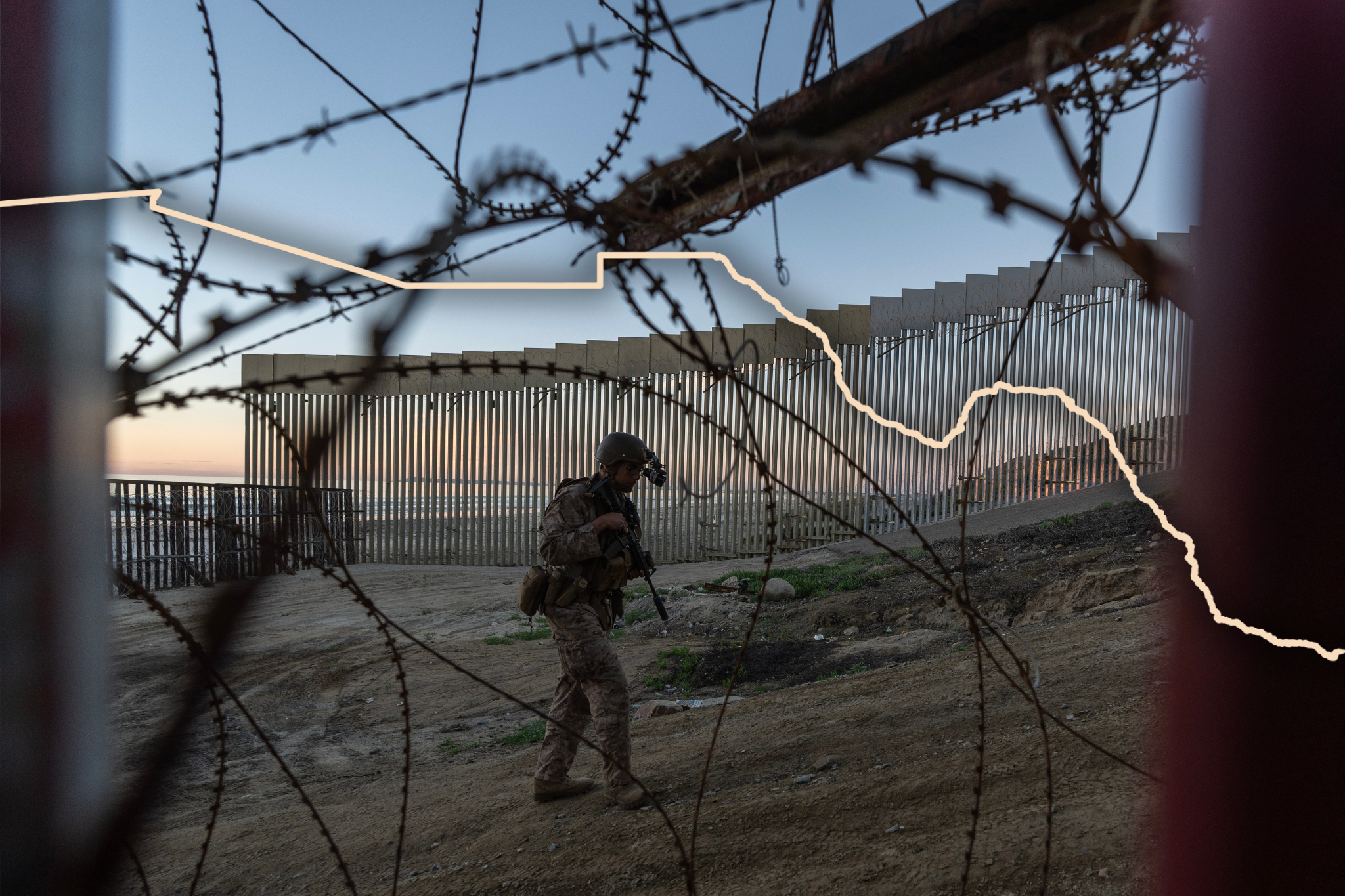
US Military Expands Control, Militarizes Mexico Border One Year On
One year after Trump's emergency decree, US military presence on the Mexico border surged, blurring civil-military roles and deploying advanced military tech. This evolution marks a critical shift in border security enforcement, sparking legal and regional stability concerns.
One year after the Trump administration declared a national emergency to justify deploying military forces on the southern border, the US military maintains a significant operational presence, transforming the border zone into a heavily militarized area. The declaration allowed military personnel, including active-duty troops, to operate beyond traditional defense roles, intensifying efforts to interdict migrants and bolster border infrastructure.
Originally a political maneuver to fund President Trump’s border wall, the emergency declaration effectively expanded the military’s domestic role, straining established legal boundaries between civilian law enforcement and armed forces. This escalation also facilitated the introduction of military-grade surveillance drones, sensors, and armored vehicles, assets traditionally reserved for combat zones.
Strategically, this militarization shifts US border security from a civilian-led law enforcement approach to a paramilitary model, raising regional tension with Mexico and provoking debates about civil liberties and the militarization of domestic spaces. The blurring of military and police functions casts doubts on oversight and accountability in a sensitive area involving migration and international diplomacy.
Technically, installations now include advanced ISR (Intelligence, Surveillance, Reconnaissance) platforms such as MQ-9 Reaper drones with live-feed capabilities, Stingray signal interception units, and armored Humvees for patrols. The Department of Defense allocated over $2 billion to sustain these operations, reflecting a consolidation of military resources in what some analysts call a domestic wartime posture.
Looking forward, this hardened military presence risks escalating conflicts along the border and may provoke reciprocal increases in Mexican security responses. Unless legislative frameworks clarify and limit military scope domestically, the US-Mexico border could become a prolonged zone of militarized tension with significant implications for migration policy, bilateral relations, and civil rights in the United States.