US military board, seize another ship in international waters
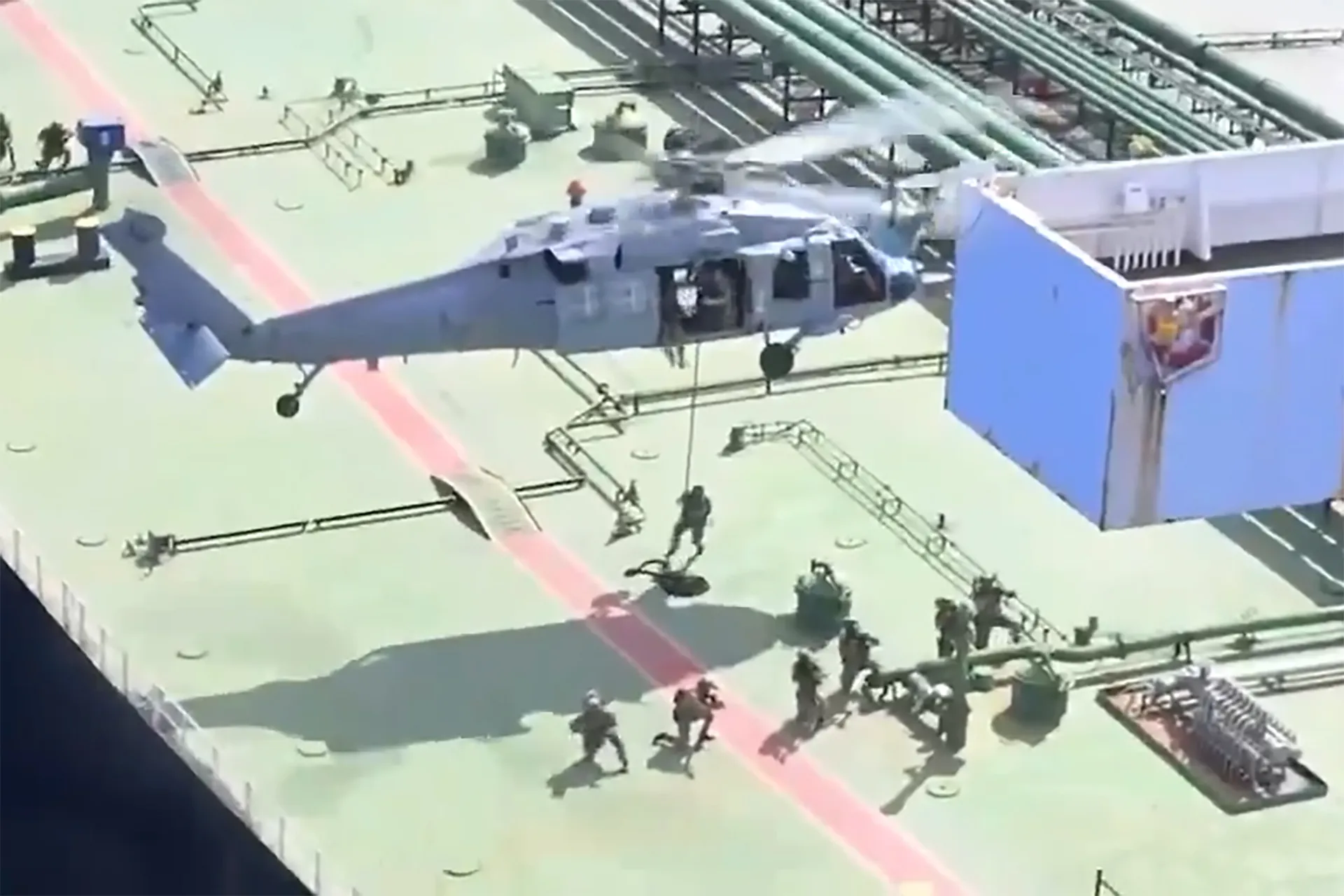
International tensions escalate as a US military unit boards and seizes a ship in international waters. Video shows soldiers descending from helicopters to perform the operation. The move signals a continued aggressive posture and raises risk of confrontation with other maritime actors.
A US military unit has boarded and seized a ship in international waters after helicopters descended to the vessel. The operation appears to be part of a broader posture aimed at enforcing US priorities at sea. The footage, released by the Pentagon, shows rapid insertion teams moving from air to water, then securing the target vessel. The surrounding environment remains tense as international actors monitor the incident closely.
Context matters: this is not an isolated incident but part of a pattern where US forces have repeatedly asserted freedom of navigation and maritime dominance. Similar actions in recent years have prompted warnings from rival powers and heightened naval patrols around contested routes. The legality of such seizures in international waters often hinges on underlying claims to law, order, or safety of life at sea. Analysts will watch for additional deployments or statements clarifying intent.
Strategic significance lies in signaling capability and resolve. A successful boarding demonstrates mission readiness, rapid-response discipline, and the ability to project power over distant vessels. It also tests allied coordination and rules of engagement in complex maritime theaters. The move could influence deterrence calculations for state and non-state actors operating near chokepoints and claimed maritime zones.
Operational details reveal a high-midelity, helicopter-based insertion, with assault teams and support assets coordinating to secure the vessel. The target ship’s size, configuration, and cargo, if disclosed, would sharpen judgments about the operation’s precision and risk. Budgetary or programmatic implications may surface if such missions are to be sustained or expanded under a broader maritime-security framework.
Forward assessment suggests heightened vigilance ahead of any similar deployments. Expect diplomatic reactions, potential counter-maneuvers by other navies, and a renewed push for clearer maritime rules of engagement. If perceptions of impunity persist, regional tensions could escalate, prompting stronger patrols, allied legitimacy debates, and renewed calls for restraint from major maritime powers.