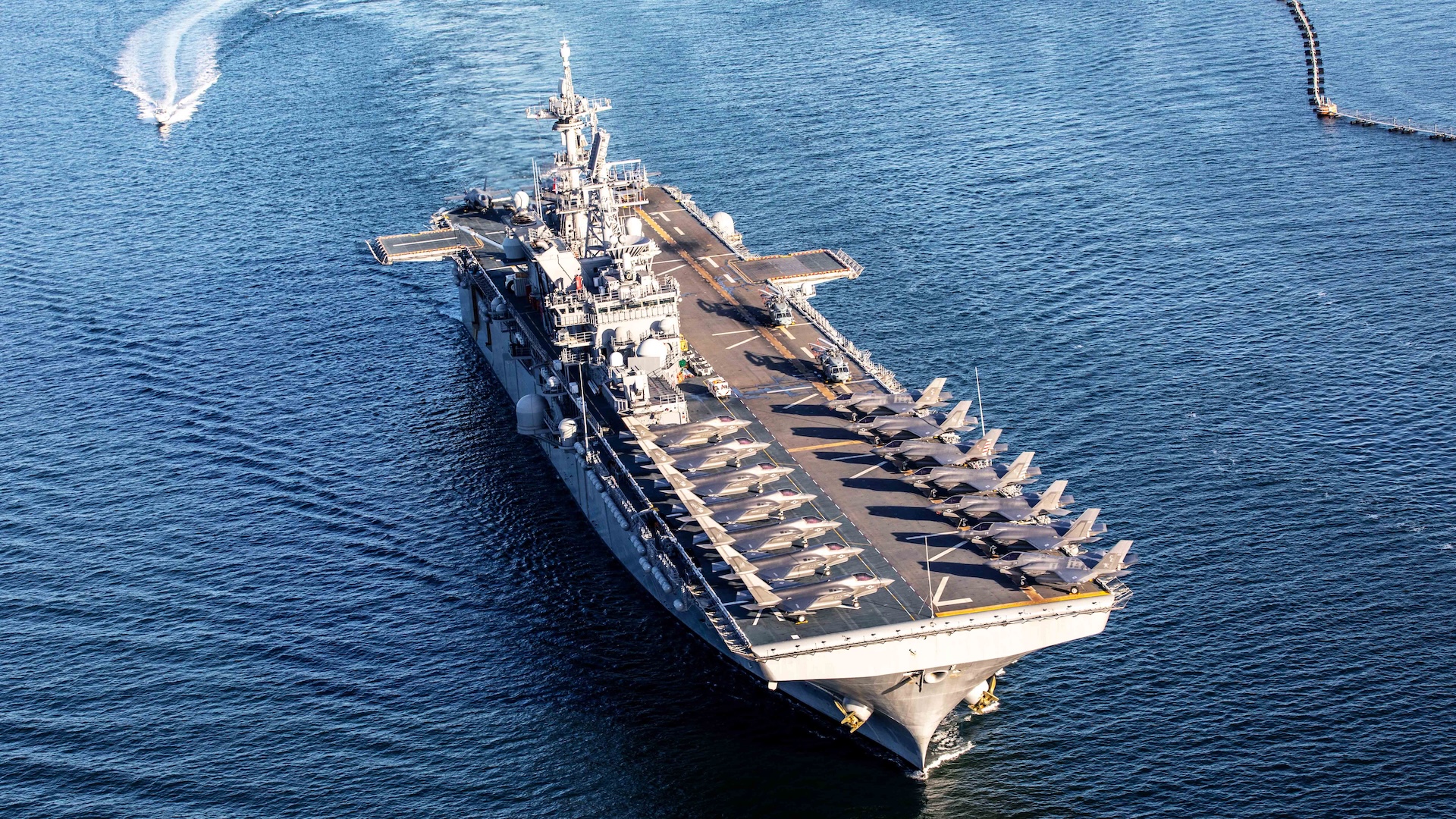
U.S. Marine Expeditionary Unit Deploys to Middle East for Potential Conflict
The deployment of a Marine Expeditionary Unit signifies a heightened military posture in the Middle East, reflecting escalating tensions in the region. This move directly supports Operation Epic Fury, which could be a precursor to significant military engagements.
The U.S. Marine Expeditionary Unit (MEU) has begun deployment to the Middle East, bringing an array of naval ships and armed vehicles. This rapid mobilization is a clear sign of the United States' readiness to engage in potential military operations amidst increasing regional volatility. The deployment will enhance U.S. capabilities in the area, ensuring a rapid response to emerging threats.
Historically, U.S. military presence in the Middle East has been a response to various conflicts and power struggles, notably following the U.S. invasions of Iraq and Afghanistan. The constant shifts in alliances and intelligence reports have perpetuated a complex environment where every military movement by the United States is under scrutiny. Previous operations in the region have often escalated into larger conflicts—reaffirming that U.S. forces are in a state of perpetual readiness.
This deployment is significant as it indicates a possible shift in U.S. military strategy, emphasizing readiness for rapid engagement. The Marine Expeditionary Unit is designed for versatility, but its presence raises the stakes and tension levels between the U.S. and adversarial forces. The region has already seen heightened Iranian-hostile activities, which could provoke a major confrontation.
Key players in this dynamic include the United States, Iran, and local indigenous forces. The U.S. aims to deter Iranian influence and protect its allies, particularly Israel and Saudi Arabia, while Iran seeks to expand its influence across the region. The motivations here extend beyond mere defense, as both nations are vying for dominance in an increasingly multipolar geopolitical landscape.
The naval contingent consists of several amphibious assault ships equipped with advanced weaponry such as the MV-22 Osprey and AH-1Z Viper helicopters, capable of conducting both air support and troop transport. The availability of rapid-response forces underscores the U.S.'s commitment to maintaining supremacy in maritime operations and quick strike capabilities, crucial during this time of rising tensions.
Increased military presence may lead to a range of possible consequences, including heightened confrontation with Iranian forces, ground engagements, or air strikes against perceived threats. As troop levels rise, incidents involving U.S. and Iranian naval forces could escalate, potentially igniting a broader conflict across the region.
This deployment echoes past U.S. actions in the Gulf, particularly during the Gulf War and in response to the ISIS crisis in Iraq. Each of these historical moments demonstrates the rapid escalation that can occur with seemingly modest troop movements, often leading to prolonged military engagements.
Moving forward, intelligence analysts should closely monitor developments regarding this Marine Expeditionary Unit's activities and any signs of hostility from Iranian forces. Future indicators might include Iran's military maneuvers, responses from allied nations, or unexpected incidents at sea that could trigger a rapid escalation into conflict.