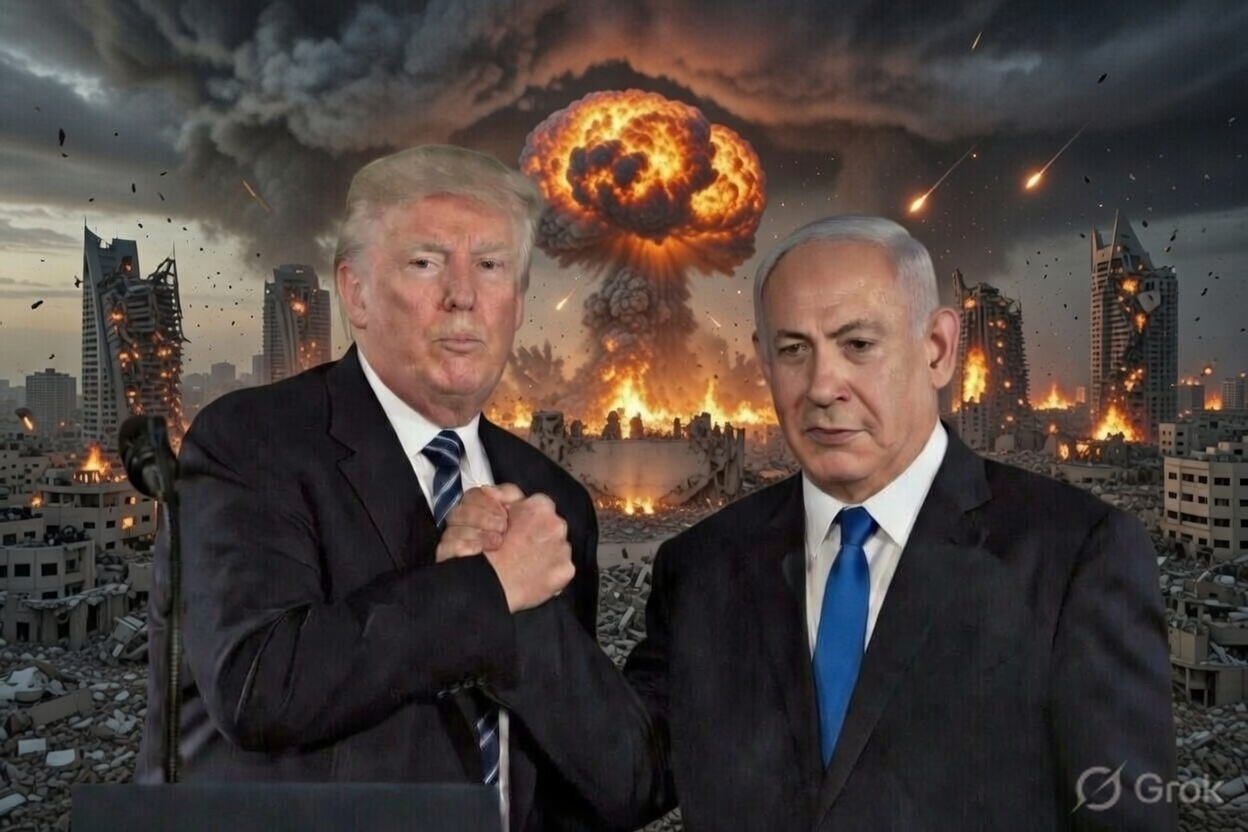
U.S.-Israeli Strikes Fail to End Iran's Nuclear Threat in Epic Fury
Operation Epic Fury sees a significant escalation in U.S.-Israeli military action against Iran's nuclear capabilities, yet questions remain about its long-term effectiveness. Iranian military infrastructure faces immediate damage, but the possibility of a decisive end to its nuclear ambitions remains dubious.
Operation Epic Fury, initiated on February 28, 2026, represents a significant escalation in military engagement between U.S.-Israeli forces and Iran. Coordinated strikes target numerous Iranian military installations, including facilities belonging to the Islamic Revolutionary Guard Corps (IRGC), missile sites, air defenses, naval bases, and drone launch points. The operational order, authorized by President Donald Trump, indicates a commitment to countering Tehran's nuclear aspirations through direct military means rather than diplomatic negotiations.
The roots of this crisis run deep, fueled by Iran's continued advancements in nuclear capabilities and missile technology, which have generated serious concerns among regional and global powers. Discontent has simmered since the U.S. withdrawal from the Joint Comprehensive Plan of Action (JCPOA) in 2018, and subsequent Iranian defiance of the nuclear agreement set the stage for today's military confrontation. As Iran allegedly breaches uranium enrichment limits and expands its ballistic missile program, U.S. and Israeli patience has worn thin, culminating in this high-stakes offensive.
The significance of Operation Epic Fury hinges on its potential to shift the balance of power in the Middle East. While immediate tactical gains may be achieved through the destruction of key military assets, deeper vulnerabilities in Iran's nuclear program remain. The strikes may only delay Iran's ambitions rather than halt them entirely, underscoring a broader strategic risk of entrenching Iranian resolve and potentially provoking further retaliatory measures. This operation may ignite a prolonged conflict rather than provide a definitive solution.
Key actors in this rapidly evolving situation include the U.S. and Israeli governments, whose motivations intertwine national security with domestic political considerations. For President Trump, the operation seeks to reaffirm his hardline stance against Iran, catering to a constituency that demands decisive action against perceived threats. For Israeli Prime Minister Benjamin Netanyahu, ensuring regional dominance and eliminating the Iranian nuclear threat remain paramount; yet, this action risks entangling Israel in an expanding conflict.
From a technical standpoint, Operation Epic Fury deploys advanced precision weaponry, including F-35 fighter jets and long-range missiles capable of penetrating hardened targets. U.S. CENTCOM has reportedly mobilized numerous naval assets in the Persian Gulf to ensure air superiority and rapid response capabilities. However, exact expenditures remain classified, with experts estimating costs likely reaching into the hundreds of millions of dollars.
The operation's immediate consequences suggest a dual pathway of escalating military engagement and potential diplomatic fallout. Responses from Iran could manifest in retaliatory strikes against U.S. and Israeli interests in the region, including increased proxy attacks by Iranian-aligned militias in Syria and Iraq. The expanded conflict could also provoke new coalition formations among adversarial regional powers, further destabilizing the Middle East.
Historically, this situation draws parallels to past military operations aimed at curtailing hostile nuclear programs, notably Israel's 1981 strike on Iraq's Osirak reactor. While that operation temporarily disrupted Iraq's nuclear ambitions, it ultimately reinforced the Iranian determination to develop its own capabilities. The question now becomes whether a similar result awaits in the wake of this latest military endeavor.
Looking ahead, analysts should closely monitor Tehran's reactions, particularly any indications of accelerated nuclear activity or enhanced collaboration with regional partners such as Russia and China. Moreover, intelligence efforts should focus on observing retaliatory capabilities and any shifts within Iran's military command structure, which may alter the regional security dynamics. The potential for a broader conflict remains high as both sides brace for the next developments ensuing from Operation Epic Fury.