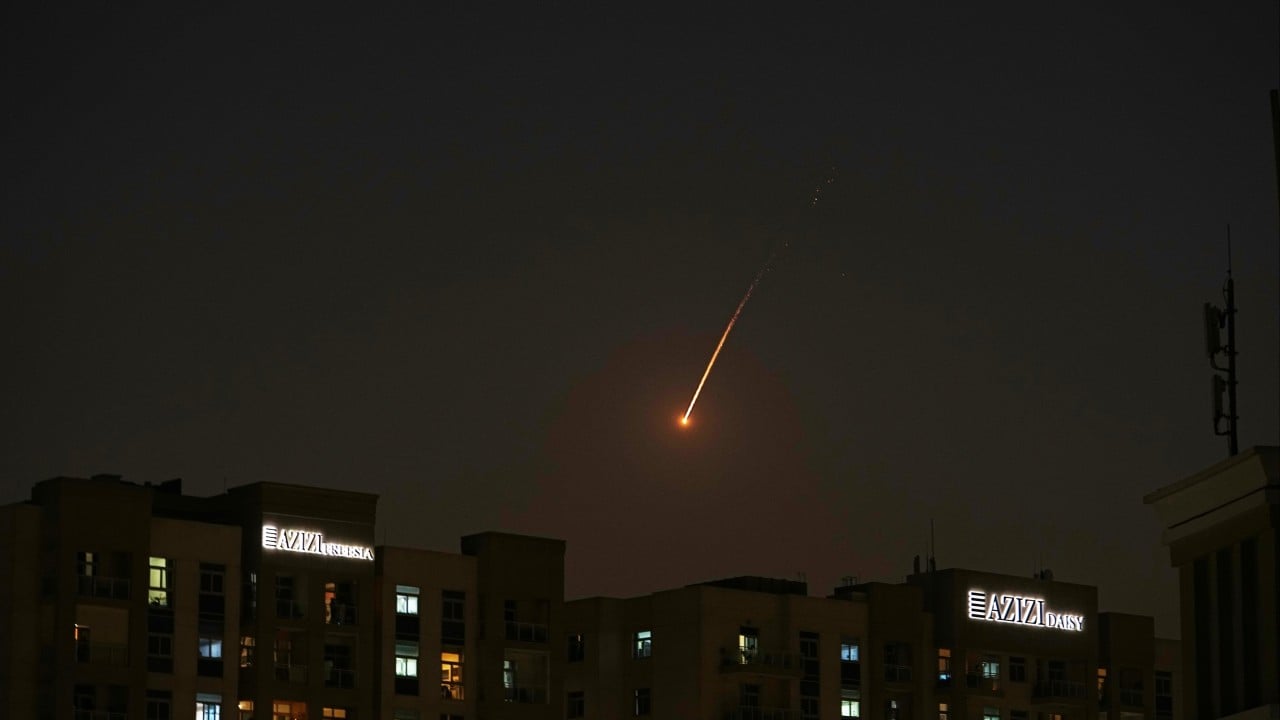
US-Israel Strikes on Iran Ground 54 Hong Kong-Mideast Flights
The US-Israeli military campaign against Iran disrupts global aviation, signaling escalating conflict. With significant flight cancellations, regional stability hangs by a thread amid rising tensions.
The US-Israel military strikes on Iran have forced the suspension of 54 flights between Hong Kong and the Middle East, as regional airspace remains closed. The ongoing conflict has compounded travel disruptions, impacting not only military objectives but also civilian aviation routes vital for international connectivity. Aviation analytics firm Cirium reports that approximately 13,000 of the 32,000 scheduled flights to and from the Middle East have been canceled since hostilities surged last Saturday.
The current crisis marks a significant escalation in hostilities involving the US and Israel's aggressive posturing against Iran. This renewed offensive follows decades of fraught relations, wherein previous military engagements and sanctions have continuously targeted Iran’s nuclear aspirations. The ongoing strikes intensify an already volatile regional landscape, which has seen numerous diplomatic failures and increasing aggression from Tehran.
This situation is significant as it disrupts global aviation and highlights the level of precariousness within Middle Eastern geopolitics. A cascade of flight cancellations enhances risks to regional tourism and trade, jeopardizing the economic stability of Gulf states already grappling with the ramifications of prior conflicts. Furthermore, the escalation of US and Israeli military operations in the area raises the specter of a broader military confrontation, with potential implications for allied nations.
Key actors in this crisis include the US and Israel, whose military collaboration aims not only to curb Iran's nuclear capabilities but also to exert influence in a turbulent Middle East. Their strategic motivations stem from the perception of Iran as a destabilizing force in the region, yet this may have unintended consequences, including driving Tehran closer to its regional allies, such as Hezbollah and militias in Iraq.
On an operational level, the tactical application of precision-guided munitions has become a hallmark of the US-Israeli assault, accompanied by a robust aerial presence. The coalition's military expenditures have surged, aiming to streamline and enhance targeting capabilities against Iran's military infrastructure, including missile sites and command centers. The closure of key airspaces presents logistical challenges and signals a strategic realignment in air operations over the Middle East.
The ongoing military escalation is likely to result in further flight cancellations and increased tensions among affected nations, with Gulf states potentially facing economic repercussions. The longer this airspace remains closed, the more strained regional alliances may become, as nations struggle to navigate the fallout from these strikes. Moreover, the ongoing conflict could provoke retaliatory actions from Iran via proxies, spiraling into a more extensive regional confrontation.
Historically, similar escalations, such as the 2006 Lebanon War or past engagements in Iraq, demonstrate how military interventions can lead to broader regional instability. Such military operations often lead to unintended escalation and external entanglement, as various actors seek to capitalize on perceived weaknesses or preoccupations among their adversaries.
Looking ahead, stakeholders should monitor how Iran responds in terms of asymmetric warfare tactics and whether it seeks to leverage its influence through regional proxies. Intelligence assessments should focus on potential retaliatory strikes against US interests, as well as the degree to which Gulf states may enhance their military readiness amidst this crisis. The unfolding events will remain pivotal in determining the strategic balance within the Middle East and the future of international air travel into and out of the region.