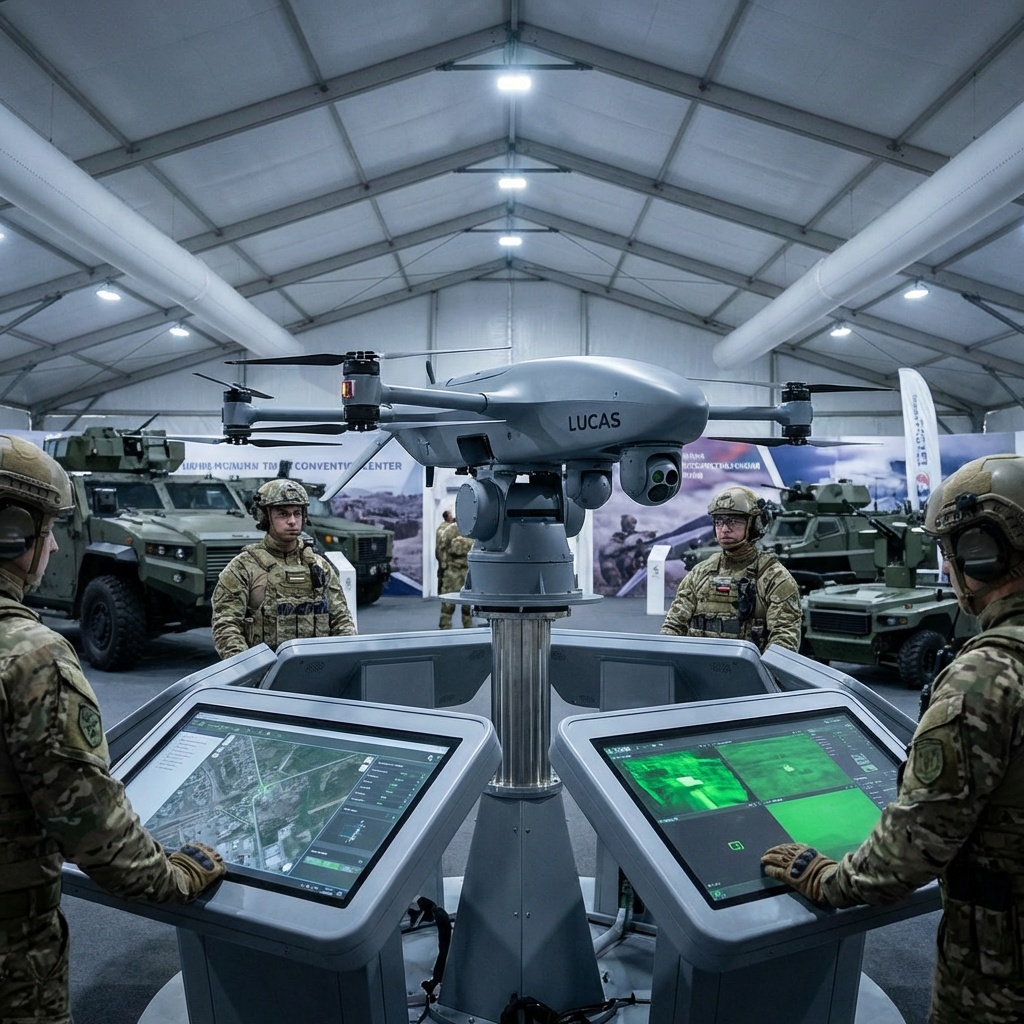
U.S. Introduces LUCAS Drone: A Tactical Counter to Iranian Technology
The U.S. has unveiled LUCAS, a Low-cost Unmanned Combat Attack System, developed as a strategic response to Iranian drone technology. This system exemplifies a shift in tactical approaches to unmanned warfare by repurposing adversarial designs for American use.
The U.S. military recently showcased its latest advancement in drone technology, the Low-cost Unmanned Combat Attack System (LUCAS). This system is notably derived from the Iranian Shahed-136 drones, which have been previously used against U.S. interests. This development marks a significant reverse application of military technology where the U.S. not only utilizes but also claims to improve upon adversarial designs, branding LUCAS as 'American-made retribution.'
LUCAS features advanced design efficiencies aimed at maintaining low operational costs while maximizing combat effectiveness. Specific technical specifications remain classified; however, the drone is designed for rapid deployment and precision strikes, capable of integrating various payloads including explosives and surveillance equipment. This nimble platform may enhance the U.S. military's capabilities in asymmetric warfare by allowing deployment in environments where traditional manned aircraft face significant risks.
Strategically, the introduction of LUCAS could change the dynamics of U.S. engagements in regions where Iranian drones are deployed. By leveraging technology that mirrors adversarial capabilities, the U.S. can potentially neutralize threats posed by similar drones while simultaneously sending a message of technological supremacy. This tactic may bolster U.S. credibility and influence among allies concerned about Iranian drone proliferation and its implications for regional stability.
LUCAS is being developed under the auspices of U.S. defense contractors who are adept at rapid prototyping and leveraging insights from captured equipment to inform design and functionality. This approach not only expedites the developmental cycle but also ensures that U.S. forces are equipped with the latest advances tailored specifically to counter identified threats. The applications of LUCAS could extend beyond direct engagement scenarios, being used for reconnaissance and intelligence-gathering missions in contested environments.
Overall, the deployment of LUCAS symbolizes a tactical evolution in U.S. defense policy, incorporating lessons learned from adversaries while showcasing an innovative approach to drone warfare. As operational capabilities continue to expand, LUCAS may become a cornerstone in future military engagements, embodying the U.S. commitment to technological supremacy in air combat.