US Faces Crisis: Finite Interceptor Stockpile Depleted by Iranian Attacks
Iran's continuous missile and drone strikes are draining U.S. interceptor stocks, potentially undermining American defensive capabilities. This escalation in missile threats poses a significant risk to regional stability and global military power dynamics.
Iran's ongoing barrage of ballistic missiles and suicide drones is forcing the U.S. military to confront a critical crisis: the depletion of its finite interceptor missile stockpile. Experts warn that the relentless attacks, which have significantly intensified over the past few months, jeopardize the United States' ability to defend its assets and allies in the region. If left unchecked, this situation could severely expose U.S. vulnerabilities in air defense.
The roots of this crisis trace back to escalating tensions between the U.S. and Iran, particularly following the withdrawal of America from the Joint Comprehensive Plan of Action (JCPOA) in 2018 and the subsequent imposition of stringent sanctions on Tehran. In response, Iran has advanced its ballistic missile program and increased its asymmetrical warfare tactics, including the development and deployment of cheap yet effective suicide drones. The latest incidents are a direct result of a strategy geared towards showcasing Iran’s military capabilities and undermining U.S. influence in the Persian Gulf region.
The implications of this crisis extend far beyond the immediate regional conflict. As Iran employs increasingly sophisticated missile and drone technologies, joint operations and defense collaborations among U.S. allies could be jeopardized. Moreover, the strain on interceptor stocks indicates a significant vulnerability, potentially inviting further aggression from adversaries who may sense a weakened U.S. posture.
Key players in this crisis include Iran's Revolutionary Guard Corps (IRGC), which is driving the missile program, and U.S. defense policymakers who may soon be compelled to reconsider their strategic options. Iran's motivations stem not only from a desire to assert dominance in the region but also from a need to demonstrate resilience against perceived threats from U.S. forces and allies. Conversely, U.S. responses have often relied on a strategy of deterrence and defense, which is now being rigorously tested.
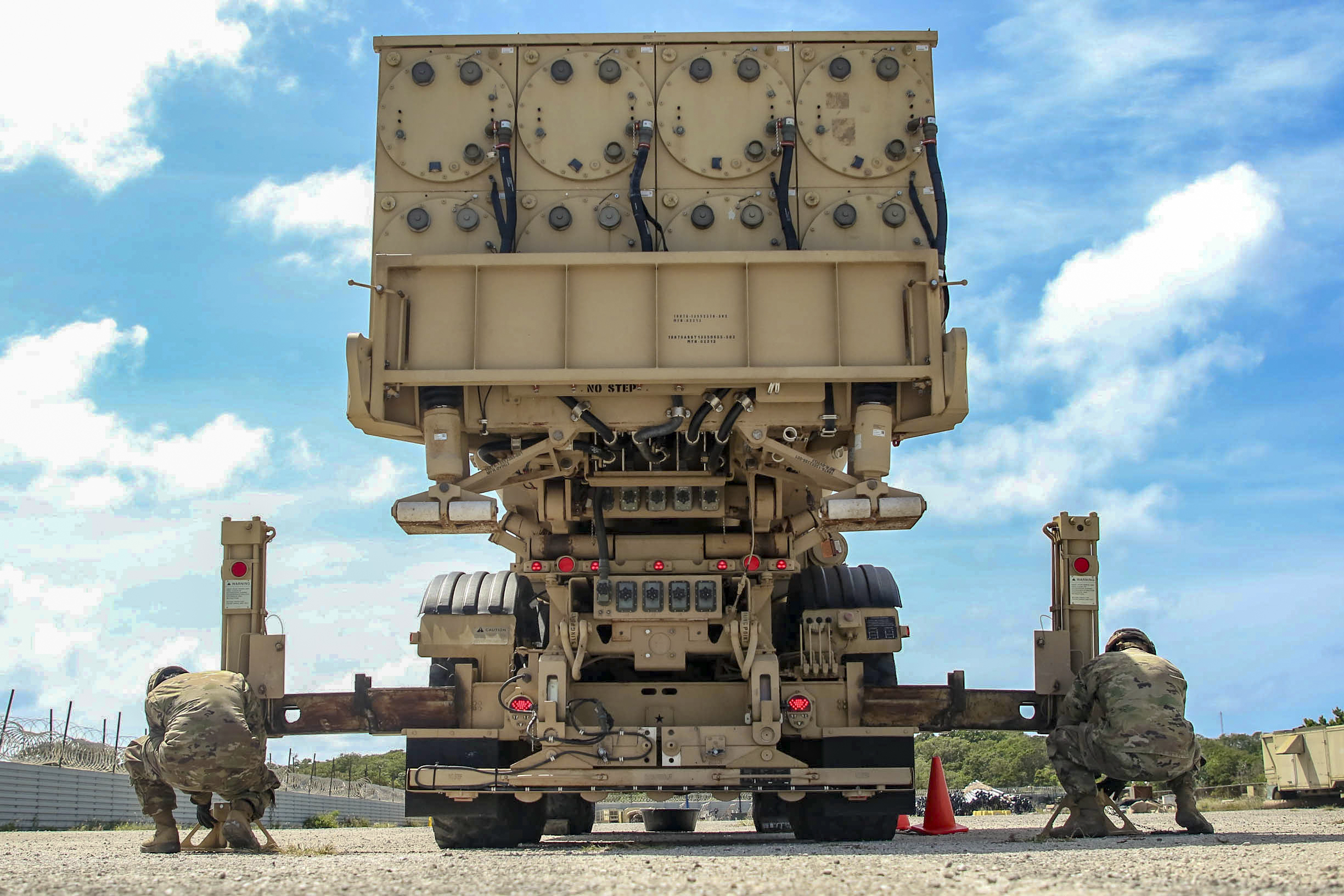
Operationally, U.S. forces currently rely on systems like the Terminal High Altitude Area Defense (THAAD) and Aegis Ballistic Missile Defense, which together provide a limited capability to intercept incoming threats. However, these systems have finite capacities and may struggle to cope with a sustained or coordinated missile onslaught from Iran. Reports suggest that the U.S. is currently facing a positioning crisis, with less than 100 THAAD interceptors actively available and the Aegis fleet not fully optimized for high-volume engagements.
As the confrontation escalates, potential consequences include heightened military activity in the region, a potential reconfiguration of U.S. air defense investment priorities, and increased diplomatic fallout with Iran and its regional proxies. There is also the risk that a failure to escalate or adapt might embolden Iran to pursue more aggressive military posturing, potentially drawing in other regional players into the conflict.
This situation mirrors previous historical precedents, such as the infamous Gulf War, where missile threats forced adversaries to adapt rapidly. The ongoing conflict showcases evolving military tactics and technology; the current phase could lead to a widening military engagement if interceptor stocks fall critically low, similar to how past conflicts have spiraled out of control.
Looking ahead, observers should monitor U.S. military logistics and procurement strategies to replenish interceptor stocks and whether a renewed diplomatic effort will materialize to de-escalate tensions with Iran. Key indicators to watch for include changes in Iranian missile testing patterns, joint military exercises between U.S. allies, and the production capacities of U.S. defense manufacturers for interceptor systems over the coming months.