US Escalates Stance Against Iran's External Power Projection
The US explicitly aims to curtail Iran's influence beyond its borders, escalating regional tensions. This follows a string of provocations from Iran, raising the stakes for military confrontation.
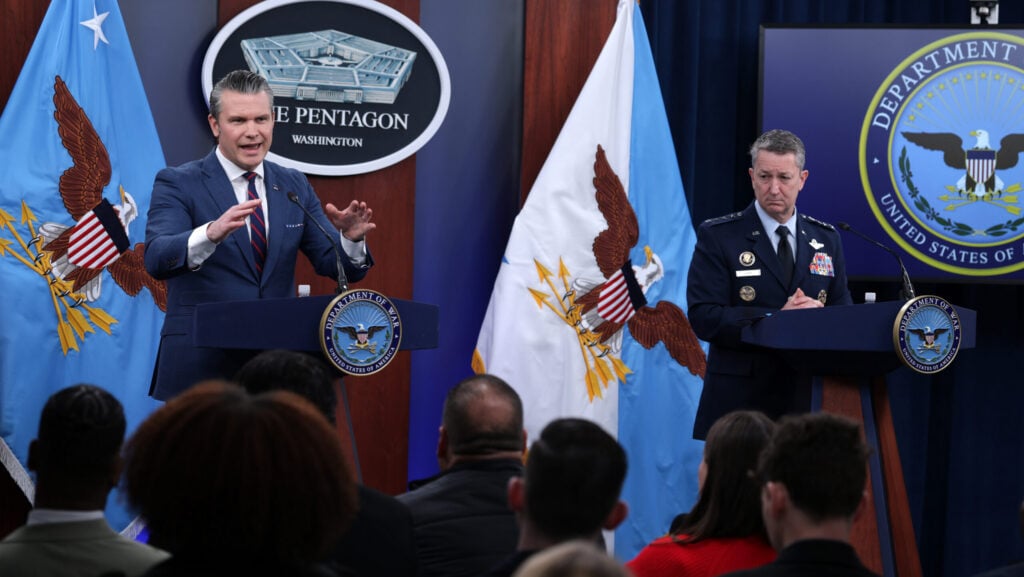
The United States has intensified its efforts to prevent Iran from exerting influence outside its borders, marking a clear escalatory intent in the region. Defense Secretary Pete Hegseth's comments underscore a hardening stance amid increasing Iranian military maneuvers and aggressive posturing in the Gulf and beyond.
Historically, US-Iran tensions have been fraught, particularly since the 1979 Iranian Revolution that overthrew a pro-Western regime. Since then, the US has consistently sought to limit Iran's regional influence, particularly through sanctions, military presence in the Gulf, and support for adversaries. The current administration, echoing strategies from previous administrations, emphasizes a proactive approach to deter any expansionist move by Tehran.
The significance of this stance cannot be understated—curtailing Iran's regional ambitions could provoke further instability in an already volatile Middle East. Iran has been known to respond aggressively to such measures, and any miscalculation could spark direct hostilities. This development could also amplify the risk of regional arms races if neighboring states perceive an existential threat from Iran's growing military capabilities.
Key actors in this scenario include the United States, Iran, and proxy groups in the region such as Hezbollah and various Shiite militias in Iraq and Syria. The US aims to maintain hegemony in the region while Iran seeks to solidify its presence as a regional power, leveraging asymmetric warfare strategies and allied groups to project power despite economic sanctions.
Operationally, Iran has bolstered its military capabilities over recent years with advancements in missile technology, including the production of precision-guided munitions and the development of indigenous drone fleets. The US has maintained a military presence in the region, with over 60,000 personnel across bases in Iraq and the Gulf area to deter aggression and reassure allies.
Consequences of this escalated dynamic could range from skirmishes in the Gulf to full-scale conflicts involving multiple state and non-state actors. The current climate suggests that any misstep by either country could swiftly escalate into a broader confrontation, drawing in regional powers and upending existing security arrangements.
Historically, precedents exist where US-Iran tensions led to increased military posturing and direct confrontations, such as in 2019 when drone attacks and assaults on shipping routes transpired amid the maximum pressure campaign initiated by the Trump administration. Such historical flashpoints indicate a volatile pattern that could repeat if diplomatic avenues remain unexplored.
Looking ahead, key indicators to monitor include Iranian military deployments and the US's military reinforcements in the region. Intelligence on Iranian submarine activity or missile tests will be crucial in assessing imminent threats, as well as any partnerships Iran may forge with nations looking to counterbalance US influence.