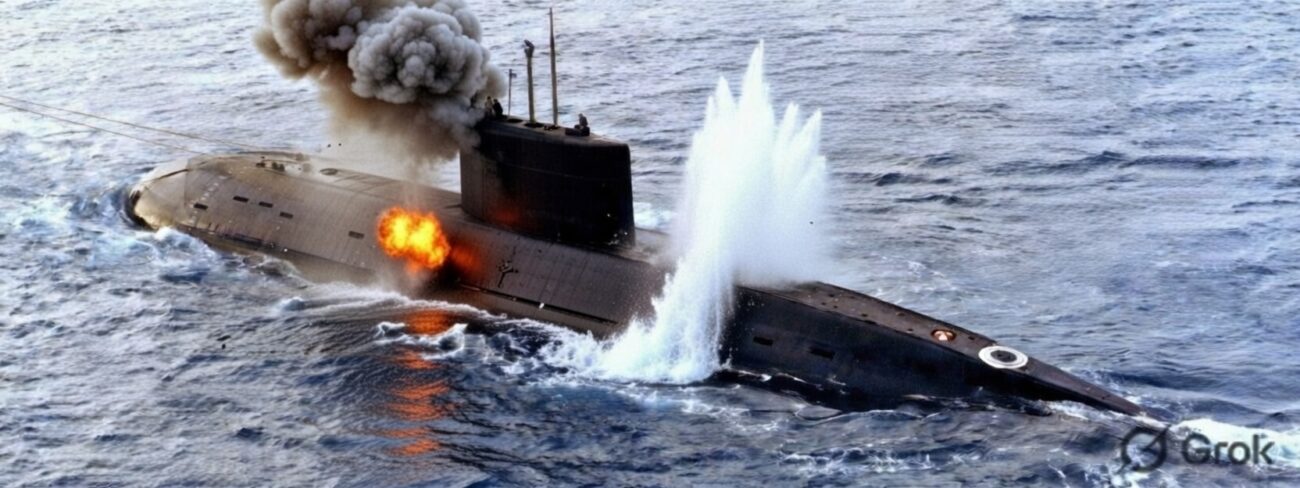
U.S. Destroys 17 Iranian Warships, Including Fateh-Class Submarine
The U.S. military's destruction of 17 Iranian vessels marks a critical escalation in regional hostilities. This unprecedented strike emphasizes vulnerabilities in Iran's naval capabilities and challenges its maritime ambitions.
In a severe escalation of naval conflict, U.S. forces have destroyed 17 Iranian warships, including a high-profile Fateh-Class submarine, signaling a dramatic shift in U.S.-Iran relations. Adm. Brad Cooper, commander of U.S. Central Command (CENTCOM), confirmed that this significant operation is aimed at neutralizing threats to American forces in the region. The mention of 'shooting all the things that can shoot at us' starkly outlines the aggressive posture adopted by U.S. military forces against perceived Iranian hostilities.
The backdrop of this confrontation stems from years of escalating tensions between the U.S. and Iran, particularly in the Persian Gulf, where naval skirmishes and aggressive rhetoric have become the norm. Following the U.S. withdrawal from the Iran nuclear agreement in 2018, relations have soured significantly. Economic sanctions and military posturing have defined both nations' interactions, paving the way for this naval confrontation as Iran attempted to project its maritime power amidst persistent threats from U.S. forces.
This development is significant as it underscores a destabilizing shift in military dynamics in the Gulf region. Iran's naval capabilities, already under scrutiny due to sanctions, have now been further diminished, enhancing U.S. military superiority at sea. The loss of 17 vessels, including a sophisticated submarine, could deter Iranian maritime operations and embolden U.S. allies in the region, leading to a reevaluation of naval strategies and alliances.
Key actors in this incident include the U.S. military, which aims to assert dominance in the region, and the Iranian regime, focused on maintaining its maritime presence and projecting power despite increasing isolation. The strategic motivations behind the U.S. operation indicate a policy of preemptive strikes aimed at rendering Iran's naval assets ineffective in any potential conflict involving its missile capabilities.
Operationally, the Fateh-Class submarine, lauded for its advances in stealth and offensive capabilities, represents a crucial asset in Iranian naval operations. Its destruction not only depletes Iran's anti-access capabilities in the Persian Gulf but also serves as a demonstration of U.S. precision and technological superiority in maritime warfare. Such engagements can have repercussions on military budgets and procurement priorities for both nations as they seek to regain or reinforce lost assets.
The likely consequences of this incident include a further escalation of hostilities between the U.S. and Iran, with both nations potentially increasing their military deployments in the region. Additionally, this could spark an arms race in the maritime domain in which regional players seek to bolster their fleets in response to U.S. and Iranian maneuvers. The potential for retaliation from Iran, either through direct or asymmetrical warfare, looms large, raising the specter of wider conflict.
Historical parallels can be drawn to the tanker wars of the 1980s during the Iran-Iraq War, where naval engagements played a crucial role in shaping U.S.-Iran relations and regional security dynamics. This current event echoes those tensions, as Iran may resort to asymmetric tactics such as using fast attack boats and proxies to retaliate against U.S. interests, mirroring the historical confrontations.
Moving forward, intelligence analysts should monitor Iranian military responses, including possible proxy engagements in the region, and indicators of an arms buildup. Additionally, the U.S. military’s operational tempo in the Gulf should be closely watched as they seek to maintain the upper hand in response to Iran’s potential retaliatory strike capabilities. Given the heightened state of alert, the prospect of further clashes remains a pressing concern.