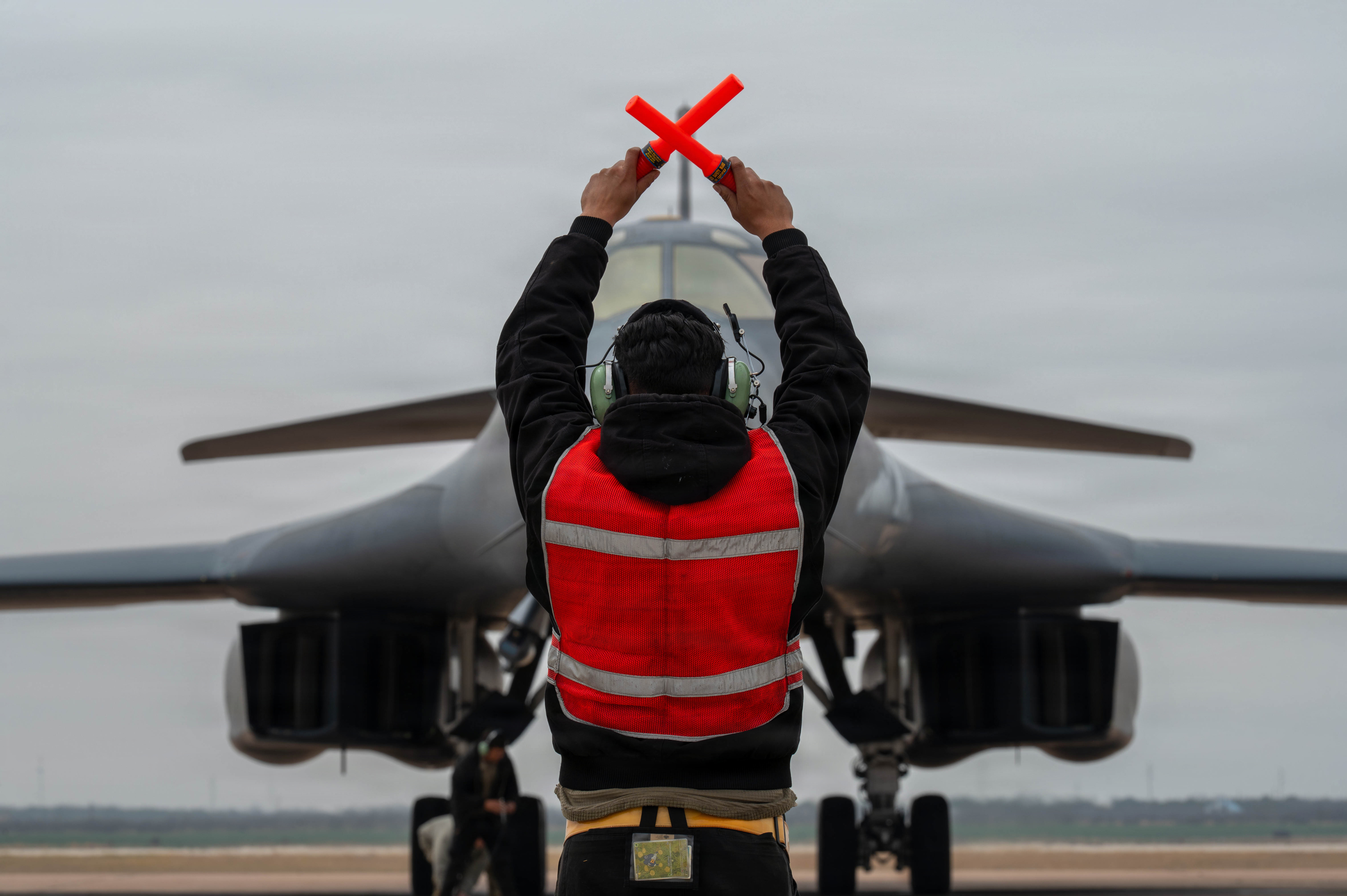
U.S. Deploys B-1B Lancers to RAF Fairford as Iran Strikes Escalate
The arrival of U.S. B-1B Lancers at RAF Fairford signifies a marked escalation in military operations against Iran. This strategic deployment raises the stakes in an already tense region, indicating heightened U.S. readiness for potential conflict.
The U.S. military has deployed several B-1B Lancer bombers to RAF Fairford, UK, amidst an escalation of airstrikes targeting Iranian positions. This operational shift has been confirmed by the U.K. Ministry of Defence, which described the bombers' role in 'specific defensive operations'—a term that masks the gravity of the situation. Given current tensions, the move signals that the U.S. is preparing for more intense engagement in the region.
Background context reveals a sustained period of hostility between the U.S. and Iran, following the collapse of the nuclear agreement and increasing military confrontations. In recent months, Iran has ramped up its regional influence, supporting proxy forces across Iraq and Syria while engaging in provocative naval maneuvers in the Strait of Hormuz. The U.S. has responded with sanctions and military posturing, including this recent deployment of strategic bombers to the UK.
The strategic implications of this deployment are significant. The B-1B Lancer, capable of flying at supersonic speeds and carrying a large payload of precision-guided munitions, enhances U.S. strike capabilities while signaling commitment to NATO allies. The proximity to Iran places U.S. assets within striking range, heightening the risk of misunderstandings or miscalculations leading to wider conflict.
Key actors involved include not only the U.S. and Iran but also the U.K., which has reaffirmed its alliance with the U.S. in military matters despite potential domestic backlash. The UK's role as a base for U.S. forces raises questions regarding its sovereignty and the willingness of European nations to support U.S. military objectives in the Middle East. Additionally, Iran's leadership is likely to perceive this deployment as a direct threat, driving them to further militarize their operations.
The B-1B Lancer is equipped with advanced avionics and can deliver a payload of up to 34,000 pounds over distances exceeding 6,000 miles. Its deployment at RAF Fairford, more than 1,000 miles from Iranian territory, demonstrates a strategic positioning intended for rapid response capabilities. The move is backed by intelligence reports suggesting increased Iranian military activity, spurring the urgent need for U.S. assets closer to potential conflict zones.
The consequence of this deployment raises the specter of retaliation from Iran, particularly against U.S. interests and allies in the region. Such actions could provoke a new cycle of escalation, leading to a direct confrontation. Observers should anticipate rapid military responses from both sides, with civilian casualties potentially increasing as conflicts intensify.
Historically, increased military presence has often preceded conflict, drawing parallels to previous U.S. deployments leading up to the Gulf Wars. The lessons from these interventions highlight the risk of collateral damage and the rapid deterioration of diplomatic channels when military assets are mobilized.
Going forward, intelligence indicators to monitor include Iranian military actions, U.S. strategic bombing missions, and the reactions of allied nations. A spike in communications or military drills by Iranian forces could signify preparations for conflict, while any increase in U.S. air sorties may indicate a shift from posture to proactive military engagement.