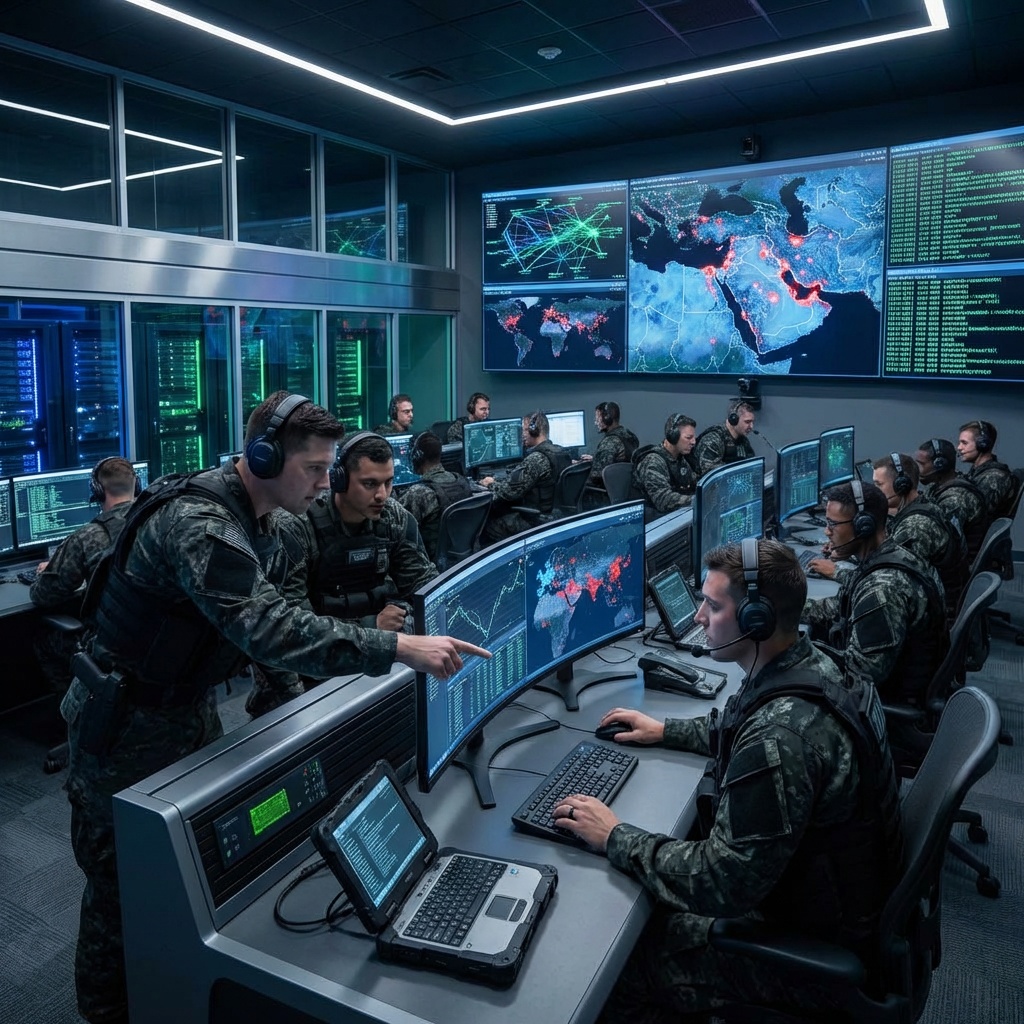
US Cyber Operations Against Iran: Continuous Engagement Strategy
US cyber operators are adopting a persistent strategy against Iran, enhancing 24/7 operations. This shift focuses on offensive, defensive, and intelligence-related activities to confront cyber threats more effectively.
{"introduction":"Recent statements by a former senior cyber commander reveal a strategic shift in US cyber operations against Iran, notably distinguishing the current operation, dubbed 'Epic Fury,' from previous one-off strikes like Operation Midnight Hammer. The ongoing operation integrates continuous support elements, enabling a comprehensive approach to cyber warfare.","operational details":"Traditionally, individual strikes have focused on specific objectives, leaving gaps in capabilities post-execution. In contrast, 'Epic Fury' emphasizes round-the-clock operations that target Iranian cyber infrastructures and assets, allowing for a dynamic response to evolving threats. This includes not only offensive measures but also defensive postures that safeguard US interests and allies from potential Iranian retaliation.","technical specifications":"To ensure success, US cyber operators are employing advanced digital forensics tools and intrusion detection systems, which enhance situational awareness and target identification. These technologies enable real-time monitoring and analysis of Iranian cyber activities, facilitating timely counteractions. Additionally, information operations will be a critical component, aimed at disrupting enemy communications and disseminating strategic narratives.","strategic significance":"The shift to a persistent engagement model reflects an understanding that cyber threats are continuous and multifaceted. By maintaining an active operational footprint, the US aims to deter Iranian aggressions in cyberspace while asserting its dominance in various domains of conflict. This approach acknowledges the limitations of one-off operations, which often result in temporary disruptions without long-term impact.","manufacturer/developer":"While specific technologies in use have not been publicly disclosed, they are likely developed by leading defense contractors and government labs specializing in cybersecurity and offensive cyber capabilities. Such entities have been at the forefront of developing tools and systems that respond to contemporary cyber threats, showcasing the increasing importance of collaboration between private and public sectors.","potential applications":"The implications of this new operational paradigm extend beyond immediate tactical engagements. A successful implementation of continuous cyber operations can serve as a model for future engagements with other adversaries, while reinforcing the US commitment to maintaining a technological edge in national defense. Furthermore, the establishment of a robust cyber defense framework can also bolster resilience in critical infrastructure and protect against asymmetric threats."}