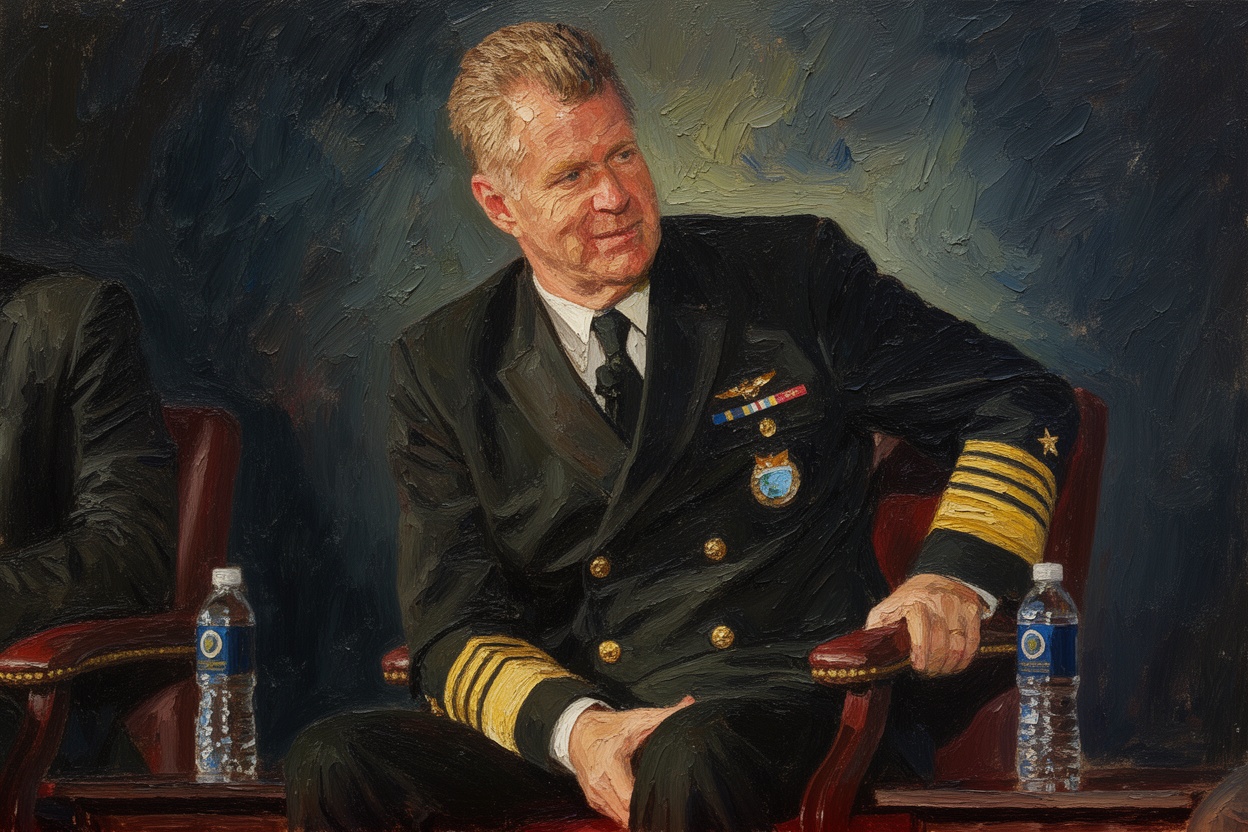
US commander warns Taiwan not to ‘starve the chicken’ on defense
Admiral Samuel Paparo urges Taiwan to pass its stalled defense budget, framing it as essential to deterrence and resilience. The remark underlines ongoing U.S.-Taiwan defense coordination amid regional tensions and rising cross-strait pressures. The episode signals continued emphasis on Taiwan’s defense readiness as show of political-will and budgetary resolve.
Admiral Samuel Paparo delivered a pointed message on Taiwan's defense budgeting, insisting that the island must pass its stalled defense budget to maintain credible deterrence. He framed the budget as a practical test of Taiwan's willingness and ability to sustain its modernization and resilience programs. The metaphorical line about not 'starving the chicken' underscored the link between funding and operational readiness in a high-stakes security environment. The warning came in the context of broader U.S.-Taiwan security discussions and ongoing regional signaling of commitment to Taiwan's defense.
Background context centers on Taiwan's parliamentary process and the political frictions that have prevented the defense appropriation from moving forward. In recent years, Taipei has pressed for rapid funding to advance air defense, missile development, and unconventional warfare capabilities. U.S. officials have repeatedly coupled strategic assurances with calls for concrete budgetary action, aiming to synchronize domestic policy with regional deterrence. The current moment reflects a persistent tension between internal politics and external security commitments in the Taiwan Strait arena.
Strategically, the exchange highlights how budgetary decisions translate into deterrence dynamics in the Indo-Pacific. Taiwan's ability to sustain modernization affects its deterrence posture against potential coercive moves. For Washington, the episode reinforces that financially backed readiness remains a critical pillar of extended deterrence and alliance credibility in a period of rising strategic competition with regional rivals. The signaling also carries implications for alliance coordination, including training schedules, procurement timelines, and interoperability efforts with partner militaries.
Technical and operational details, while not exhaustively specified in the remarks, point to broader contours of Taiwan's defense modernization: air defense upgrades, long-range precision strike capabilities, and resiliency programs designed to withstand pressure campaigns. The budget stall risks delaying procurement cycles, maintenance, and readiness assessments essential to sustaining a credible air and sea defense shield. Analysts will watch for twists in legislative timing, potential supplemental appropriations, or policy shifts that could unlock stalled programs without compromising fiscal discipline.
Likely consequences include renewed political calculations in Taipei about domestic support for defense spending, potential acceleration of alternative funding mechanisms, and intensified diplomatic messaging from allies seeking to reassure Taiwan. In the near term, deterrence signaling remains reliant on visible indicators of budgetary progress. Looking ahead, the episode could sharpen deadlines for budget deliberations, elevate domestic civilian-military coordination, and shape how external partners calibrate their own security assistance and industrial collaboration with Taiwan.