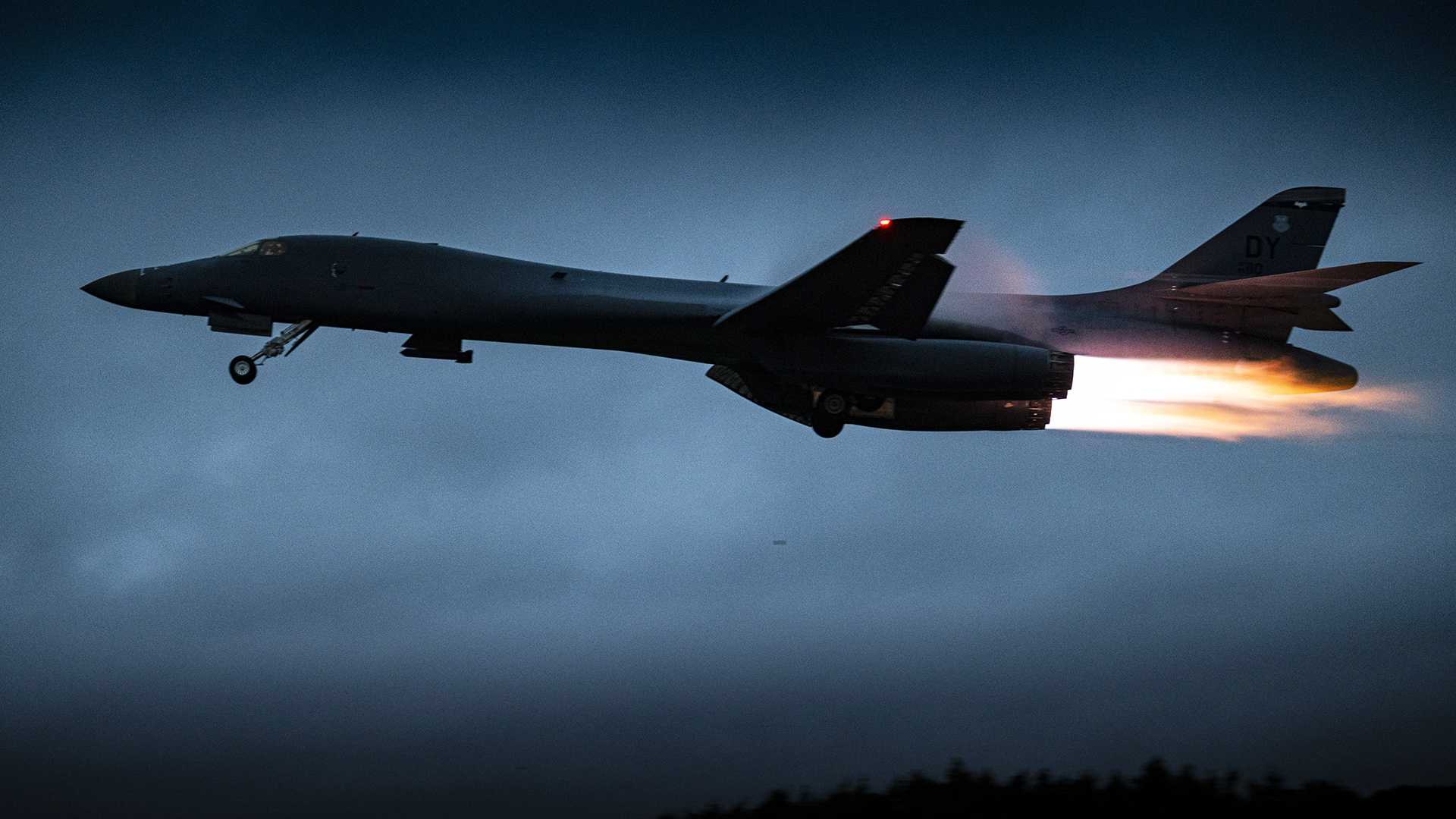
US Bombers Loaded with Bunker Busters Prepared for Strikes on Iran
The deployment of 15 US bombers in England marks a dangerous escalation of military readiness against Iran. This maneuver reveals significant shifts in air power dynamics and strategic intent in the region.
The United States has positioned 15 bombers at RAF Fairford in England, armed with bunker-busting munitions and ready for strike missions targeting Iran. This development signals a stark pivot toward aggressive air operations that could directly threaten Iranian military facilities and infrastructure. The deployment raises the specter of imminent conflict and highlights a growing willingness to take military action in response to Iran's regional activities.
The background to this alarming escalation stems from years of escalating tensions between the US and Iran, particularly after the US withdrawal from the Joint Comprehensive Plan of Action (JCPOA) in 2018. Since then, Iran has steadily advanced its nuclear program while expanding its influence across Iraq, Syria, and Yemen, prompting US forces to bolster their military presence in the region. This historical context is critical for understanding the stakes involved as the US seeks to reassert its strategic dominance over Iran.
This shift is significant as it enhances the US's capacity to deliver precision strikes in a region that has been increasingly volatile. Deploying bombers like the B-1B Lancer, which can carry up to 24 GBU-31 JDAMs or GBU-57A/B Massive Ordnance Penetrators, reflects a considerable investment in projecting military might and could embolden US allies in the Persian Gulf to take more aggressive stances against Iranian threats. The implications are profound, exposing vulnerabilities in Iranian defenses that may lead to a recalibration of its military strategy.
Key actors in this conflict include not only the US and Iran but also other regional powers such as Israel and Saudi Arabia, both of whom have vested interests in countering Iran's influence. The US aims to demonstrate its resolve to deter Iran while reassuring its partners in the region. Conversely, Iran is likely to perceive this military buildup as a direct threat, prompting it to adopt a more aggressive posture in response.
Operationally, the US bombers stationed in England have the range to strike targets deep within Iranian territory, given that RAF Fairford is approximately 1,200 miles from Tehran. The bombers are equipped with advanced targeting systems and are operating under a heightened readiness status, which has been bolstered by increased reconnaissance and intelligence-gathering efforts in the region. This suggests not only a readiness for immediate action but also a tactical shift towards a more confrontational strategy.
The likely consequences of this military maneuver include a further deterioration of US-Iran relations, increasing the likelihood of military clashes. Should strikes occur, Iran may retaliate against US assets in the region or escalate proxy engagements in Iraq and Syria. Analysts will need to monitor US military communications and Iranian responses closely, as these will be critical indicators of an impending conflict.
Historical parallels can be drawn to prior conflicts where aerial bombardment played a decisive role, such as the 2003 invasion of Iraq. Just as the US showcased military capability and readiness in that scenario, the current situation reveals a similar pattern of demonstrating force in anticipation of potential conflict. Such historical precedents underline the risks of miscalculation by either side in the current environment.
Moving forward, intelligence operations will likely focus on the Iranian military's reactions and adjustments to this enhanced US air presence. Observers should pay attention to any Iranian responses, including threats to disrupt maritime shipping in the Persian Gulf or bolstering missile systems, which are indicators of its strategic countermeasures to the US threat. This evolving scenario will require close scrutiny as tensions rise in an already fraught geopolitical environment.