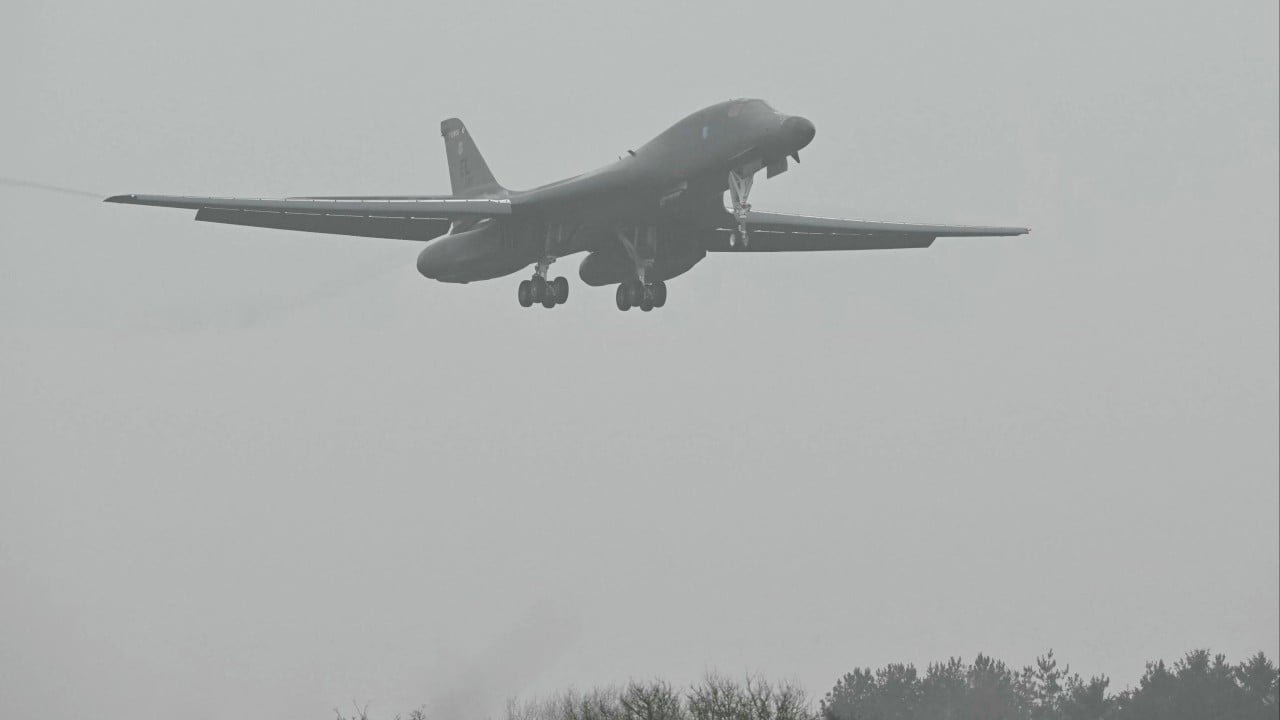
US B-1 Bombers Arrive in UK Amid Intensified Iran Conflict
The deployment of US B-1 bombers to the UK escalates military pressure on Iran, signaling a potential increase in offensive operations from NATO allies. This development raises concerns over regional stability and could provoke further retaliation from Tehran.
The arrival of four B-1 Lancer bombers at RAF Fairford, Gloucestershire, marks a significant escalation in military readiness against Iran amid ongoing strikes by the United States and Israel. The first bomber landed on Friday evening, followed by three additional bombers on Saturday morning, indicating a strategic reinforcement of US capabilities in the region. Prime Minister Keir Starmer has sanctioned 'defensive' actions from UK bases, explicitly purposed for targeting Iranian missile sites.
The backdrop to this deployment is the escalating tensions between Iran and a coalition of US and Israeli forces, which have ramped up airstrikes targeting Iranian assets in the region. This surge of military action creates a precarious scenario following years of proxy conflicts throughout the Middle East, where Iran has consistently confronted US interests and its allies. The strategic landscape shifts with each strike, raising the specter of wider conflict as Iran's response to these aggressions remains uncertain.
This deployment has profound implications for regional security dynamics. Enhanced US air capabilities in Britain, under NATO auspices, send a potent message of military alignment and readiness that could embolden further offensive operations against Tehran. It underscores the vulnerability of Iran’s interests in the region and highlights the potential for rapid escalation that could draw in additional regional players.
The key actors here include both the US, which seeks to maintain control over Middle Eastern dynamics, and Britain, which is now more deeply involved in direct military engagement with Iran. Starmer's government's decision to allow the bombers' stationing reflects their alignment with US strategic goals, though it risks entanglement in a conflict that has far-reaching implications for Europe, the Gulf States, and beyond. The real motivation behind this cooperation lies in containing Iran's expanding influence and securing ally support against potential Iranian retaliation.
The B-1 Lancer is a formidable weapon system, capable of deploying up to 24 AGM-158 JASSM cruise missiles and achieving supersonic speeds of approximately 900 km/h. With a combat radius of over 5,000 km and a payload capacity of 34,000 pounds (15,000 kg), these bombers represent a critical asset in striking both hard and soft targets within Iran, compelling Tehran to reassess its strategic calculations.
The likely consequences of this escalation include intensified Iranian retaliation against both the US and UK, with potential threats to shipping lanes in the Persian Gulf and retaliatory strikes against US facilities in the region. Furthermore, Iranian operatives may escalate asymmetric warfare tactics, targeting US interests globally as a show of defiance and resilience. This situation could quickly spiral out of control, invoking wider regional conflict.
Historically, similar deployments have been precursors to significant military operations. The bombing of Serbia in the 1990s and early operations in Afghanistan saw critical air asset movements that preceded escalated bombing campaigns. The current situation with Iran mirrors these precedents, as allied bombing campaigns frequently invite countermeasures that escalate the conflict.
Moving forward, the focus should be on monitoring Iran's military responses, especially regarding missile launches or hints of retaliatory strikes. Intelligence indicators to watch include movements of Iranian naval forces in the Gulf, increased air defense readiness, and any uptick in cyber or asymmetric operations against US and allied interests in the region. As tensions ratchet up further, the region remains a flashpoint that could ignite broader conflict at any moment.