U.S. Army's Precision Strike Missile Possibly Deployed in Iran
Recent CENTCOM footage suggests the combat debut of the next-generation PrSM against Iranian targets. Developed by Lockheed Martin, the PrSM is designed to enhance U.S. land strike capabilities.
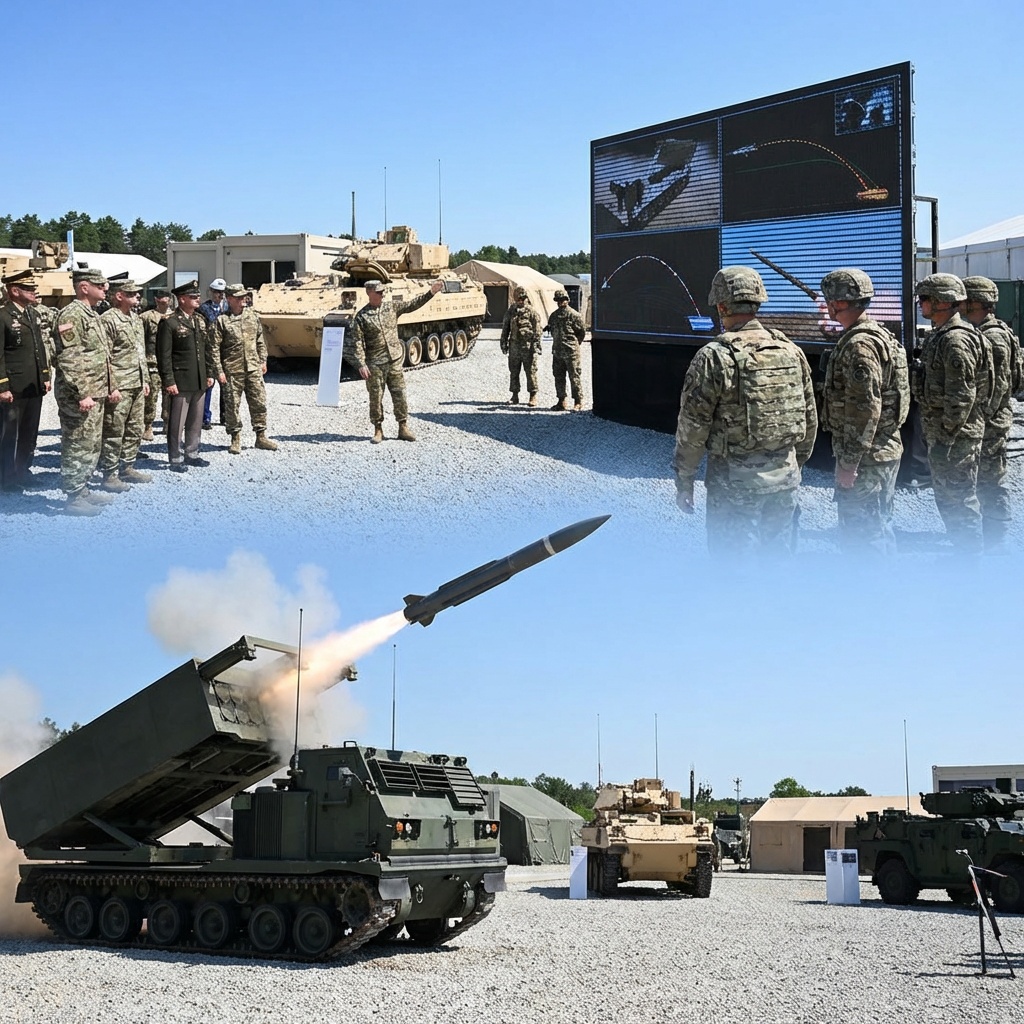
Recent reports from CENTCOM indicate that the U.S. Army's Precision Strike Missile (PrSM) may have been utilized during Operation Epic Fury against Iranian targets. Although there has been no official confirmation explicitly naming the missile involved, video footage shows a High Mobility Artillery Rocket System (HIMARS) launching a precision missile that aligns with the specifications of the PrSM. This missile represents a significant evolution in the U.S. Army’s long-range strike capabilities, designed to replace the aging Army Tactical Missile System (ATACMS).
The PrSM is designed to reach distances of approximately 500 kilometers, providing the U.S. military with enhanced strike options against high-value targets. Its state-of-the-art guidance system incorporates advanced navigation and targeting technologies, which facilitate strikes on mobile and stationary targets with a potential for high precision and low collateral damage. The missile can carry a variety of warheads, offering flexibility in mission planning and execution. Lockheed Martin's efforts to develop the PrSM highlight the increasing emphasis on precision and lethality in modern warfare.
Strategically, the deployment of PrSM in the Middle East underscores a shift in U.S. military engagement protocols, particularly in relation to adversarial dynamics with Iran. High-precision capabilities such as the PrSM enable rapid response and targeted strikes that could deter hostile actions while minimizing risks to U.S. personnel. The operational use of such advanced missile systems also serves as a statement of intent regarding U.S. commitment to maintaining regional stability and projecting power against potential threats.
Lockheed Martin, a leading defense contractor, has positioned the PrSM as a core component of land-based strike operations, emphasizing its modular design that allows for quick integration into existing artillery systems. The missile's adaptability for various platforms, including the HIMARS and potentially the Precision Strike Missile Launcher, indicates a future-oriented approach to battlefield engagement and the U.S. Army's capability to modernize its arsenal in response to emerging threats.
Potential applications of the PrSM extend beyond immediate combat scenarios; its development and deployment signal a focus on multi-domain operations that encompass not only traditional land warfare but also joint operations with air and naval forces. As such capabilities continue to evolve, the implications for U.S. military strategy and deterrence frameworks in contentious regions will likely amplify, necessitating ongoing analysis and adaptation of defense postures.