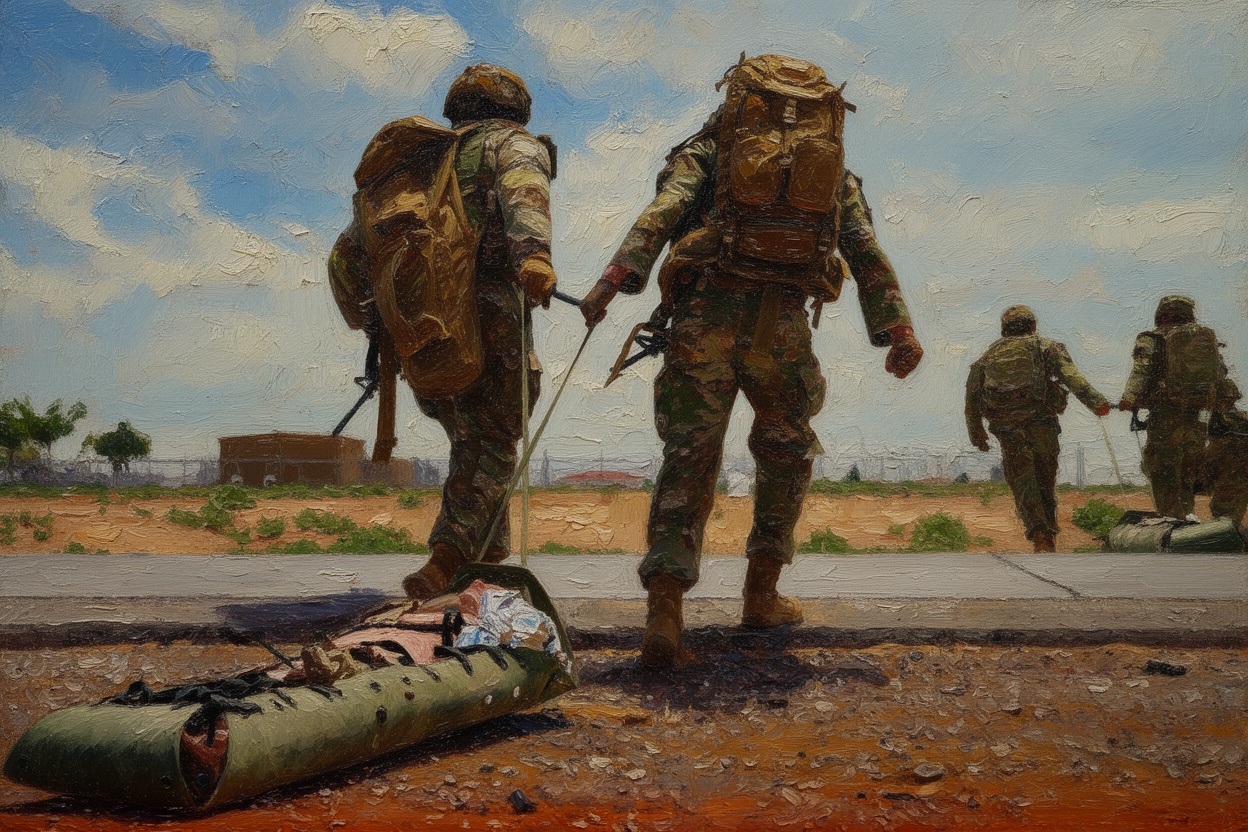
US Army seeks ‘last mile’ robot for medevac and resupply
The U.S. Army is pursuing an unmanned ground vehicle capable of transporting wounded personnel without causing additional harm. The program targets a robust, deployable asset for medical evacuation and supply tasks in contested environments. The move signals a push to expand autonomous loadout across future combat formations and aid mobility under fire.
The U.S. Army has published a solicitation for a robotic ground vehicle designed to carry wounded personnel and supplies with minimal risk to casualties. The emphasis is on a compact, all-terrain platform that can operate in complex environments, potentially reducing risk to medics and drivers in high-threat zones. The project aligns with broader modernization goals that seek to integrate autonomous and crewed assets for near-term and one- to two-decade battlefield relevance.
Background context centers on a shift toward robotics to compensate for losses and to sustain logistics in contested zones. The Army has prioritized lightweight, maintainable systems that can be rapidly deployed alongside infantry, coalition partners, and allied medical teams. The focal point is to deliver a vehicle with reliable medical evacuation capabilities while preserving the safety and integrity of wounded personnel.
Strategic significance rests on the potential to change the geometry of frontline medical care and resupply. An effective last-mile robot could enable continuous casualty evacuation and constant resupply without overburdening human medics or convoy elements. It also signals an acceleration of the Army’s autonomy through the adoption of intelligent navigation, obstacle avoidance, and secure comms for missions in degraded networks.
Technical details remain preliminary, but the target platform would likely require robust traction, modular medical kits, and secure data links for telemedicine support. Could feature modular payload bays, rapid interchange medevac configurations, and ruggedized sensors for navigation and situational awareness. Budget lines, timelines, and qualification criteria will determine whether this effort matures into a fielded system within the next five to ten years.
Forward assessment suggests the last-mile robot would integrate with joint and allied formations, augmenting medical evacuation routes and resupply chains in expeditionary and high-threat theaters. If successful, it could drive further investment in autonomous medical platforms, expand the role of robots in sustainment, and push adversaries to adapt their own protection and countermeasures for unmanned support vehicles.