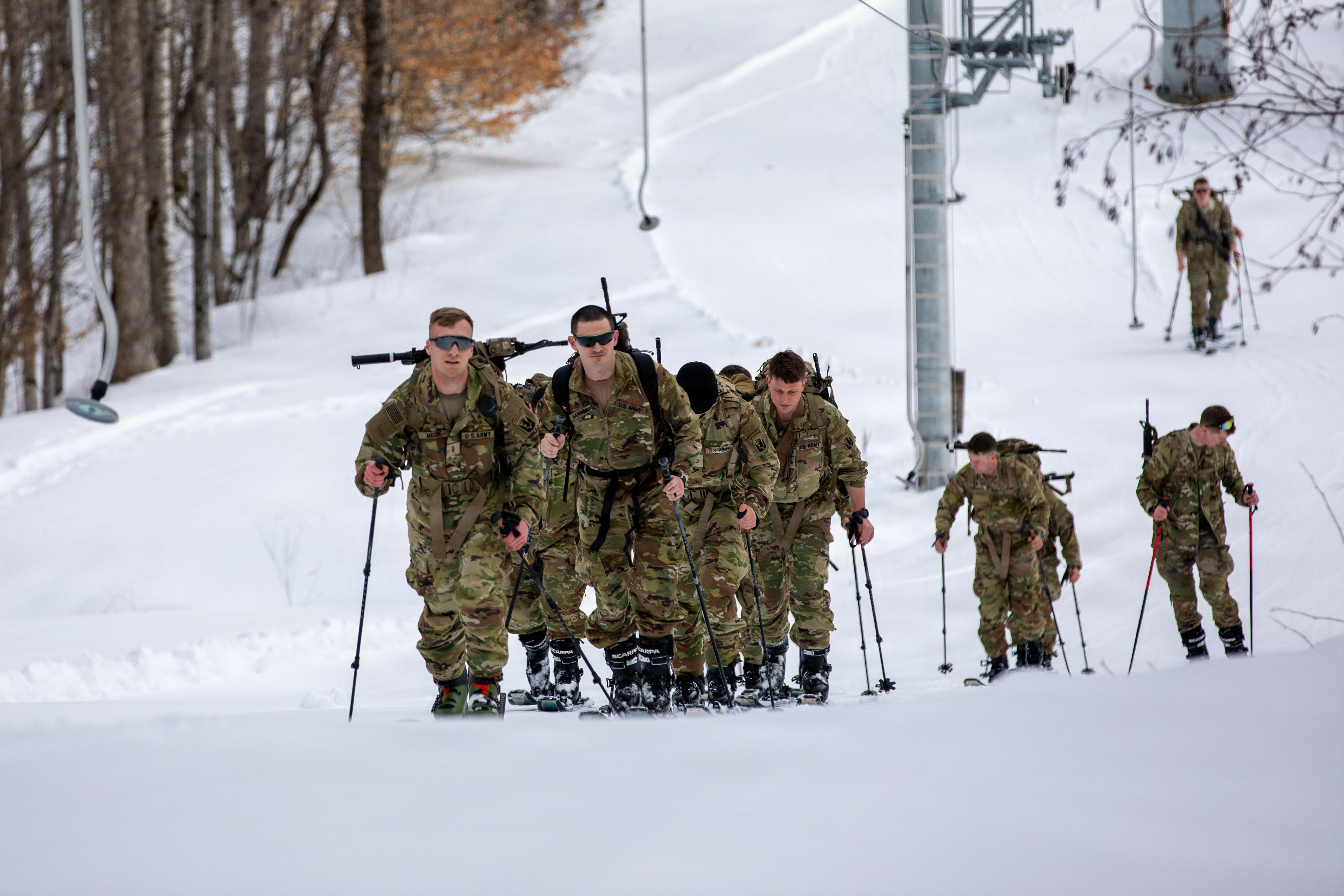
US Army National Guard Soldiers Celebrate Award Amidst Rising Global Tensions
While the US Army National Guard's achievement may seem benign, the expanding focus on winter warfare training highlights the increasing importance of specialized skills in a rapidly shifting global security landscape. Major military powers have heightened their military readiness, making such training crucial amid rising geopolitical rivalries.
The US Army National Guard recently announced that several soldiers have been awarded the Norwegian Ski Badge, emblematic of their proficiency in military skiing under harsh winter conditions. This achievement underscores a strategic pivot towards enhancing winter warfare capabilities as global military tensions escalate, particularly in the Arctic region. The award recognizes soldiers who have demonstrated exceptional skills in both skiing and enduring cold weather operations, crucial for modern military engagements in extreme climates.
Historically, military skiing proficiency has been a key component of Nordic defense strategies, dating back to World War II when skiing forces played pivotal roles in various conflicts. Norway, with its challenging terrain and frigid winters, has long been an epicenter for this type of training. As Arctic ice melts and global power plays shift focus towards this critical region, the ability to operate efficiently in snowy and icy environments has become even more important for militaries worldwide.
This development is significant as it reflects a broader trend where armed forces are adapting to new realities of warfare, including climate change and territorial disputes over Arctic resources. With Russia reaffirming its military presence in the Arctic and NATO countries ramping up their own readiness, proficiency in cold weather operations could be a determining factor in future conflict scenarios. Countries that excel in these environments may increase their strategic advantage, potentially reshaping geopolitical power balances.
Key players in this equation include not only the US and Norway but also Russia and China, both of whom are asserting military capabilities in the Arctic. These nations view winter warfare as a critical doctrine moving forward, particularly with Russia’s establishment of new military bases in the region and its Arctic Strategy, which emphasizes controlling new territorial claims. The training and skills exemplified by the Norwegian Ski Badge ceremony may enhance US-Norway military collaboration but also raise concerns among adversaries contemplating such partnerships.
Operationally, the award signifies a renewed investment in specialized skills across the military. The Norwegian Ski Badge program includes rigorous training focusing on techniques that allow soldiers to navigate challenging landscapes while carrying essential military equipment. Such expertise directly supports various operations, from logistics to combat engagements in adverse environments, enabling forces to project power effectively and maintain operational readiness.
The consequences of enhanced winter warfare capabilities could lead to increased confrontations in strategic regions, especially in the Arctic. As nations arm themselves with specific skills and tailor forces to respond to unique climates, this could create a scenario where cold-weather confrontations become more frequent. Additionally, the attention given to such training might prompt adversaries to ramp up their winter-warfare capabilities, further feeding a cycle of military readiness escalation.
Precedents for such developments exist, where winter warfare has historically dictated the outcome of important military conflicts. The Winter War (1939-1940) between the Soviet Union and Finland exemplifies this, demonstrating how forces adept in cold conditions can leverage terrain to their advantage against larger, technically superior powers. Today’s geopolitical landscape may see similar dynamics as countries grapple for control over the changing Arctic.
Looking ahead, the expansion of winter warfare training is likely to continue as nations reassess their military doctrines in light of climate implications and regional security threats. Intelligence indicators to monitor include shifts in Arctic military deployments, increased joint training exercises among NATO allies, and potential responses from rival nations, particularly Russia. The emphasis on cold-weather capabilities may also lead to new defense agreements focused specifically on Arctic operations, further entrenching military presence in this geopolitically sensitive area.