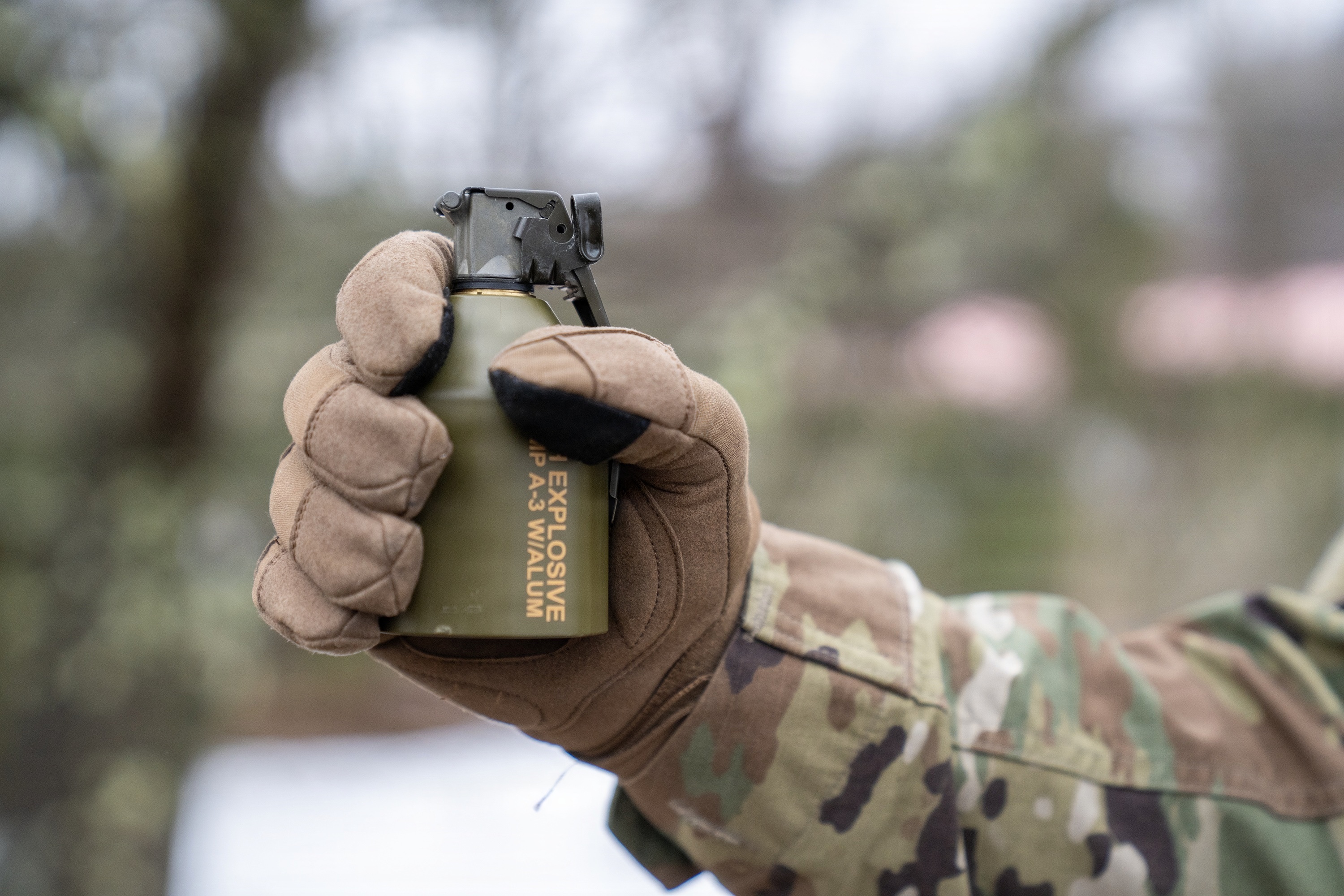
U.S. Army Introduces M111 Offensive Grenade, Threatening Tactical Balance
The M111 grenade's innovative design could shift close-quarters combat dynamics, raising concerns among global adversaries. This marks a significant leap in U.S. military capabilities after decades of stagnation in grenade technology.
The U.S. Army has approved the operational deployment of the new M111 offensive hand grenade, the first of its kind in nearly sixty years. This grenade, which diverges from standard fragmentation designs, utilizes a blast overpressure mechanism intended to incapacitate targets without reliance on shrapnel. Such a shift in technology underscores an urgent evolution in close-quarters combat capabilities amid rising global threats.
Historically, the U.S. military's hand grenade arsenal has remained largely unchanged since the introduction of the M67 grenade in the 1960s. With combat environments increasingly shifting towards urban warfare scenarios, and after decades of reliance on older models, the introduction of the M111 reflects an urgent need for modernization. The increased complexity and lethality of battlefield environments have made it clear that existing systems no longer meet the strategic demands of today’s military engagements.
The significance of the M111 goes beyond mere technological advancement; it raises substantive concerns over military effectiveness and countermeasure strategies across the globe. As nations assess their own armament capabilities in response to this new threat, shifts in tactical doctrine are likely to ensue. Global adversaries may now feel pressured to accelerate their own defenses against blast-focused weaponry, possibly igniting an arms race in close-quarters capabilities.
Key actors in the U.S. military have pushed for the M111's development, motivated by an acute awareness of changing warfare dynamics and the need to maintain a tactical edge. While the Army aims to enhance troop survivability and effectiveness in confined environments, the broader implications suggest that rivals, particularly near-peer competitors like China and Russia, must recalibrate their strategies to counter this new American threat.
The M111 grenade boasts an advanced design that relies on blast overpressure, aiming to incapacitate targets through shockwaves rather than fragmentation. This innovation may offer U.S. forces improved effectiveness in urban combat scenarios, where precision and minimized collateral damage are essential. Produced on a budget presumably in the hundreds of thousands, the Army's commitment to rolling out the M111 signifies a larger trend toward experimenting with and implementing modernized infantry weaponry.
As the M111 rolls out, potential consequences include a realignment of tactical combat operations in urban environments, where the blast radius effect could change how infantry units approach engagements. Additionally, adversaries may escalate their own armament developments in a tit-for-tat response, further heightening regional and global tensions. This may prompt an adaptive shift in military training and doctrine on both sides of the battlefield.
Historically, the introduction of advanced weaponry has often led to increased militarization and heightened tensions, as seen with the advent of the AK-47 during the Cold War. Such innovations frequently catalyze shifts in military engagements and require adjustments in international relations as countries react to perceived threats through military buildups or strategic partnerships.
Going forward, defense analysts should closely monitor the reactions of global adversaries to the M111's deployment, particularly how Russia and China may respond in terms of their combat equipment and tactics. Intelligence indicators to watch for may include shifts in military spending, research and development in similar technologies, or changes in defense postures in conflict-ready areas as they adapt to counter the U.S. Army's new capabilities.