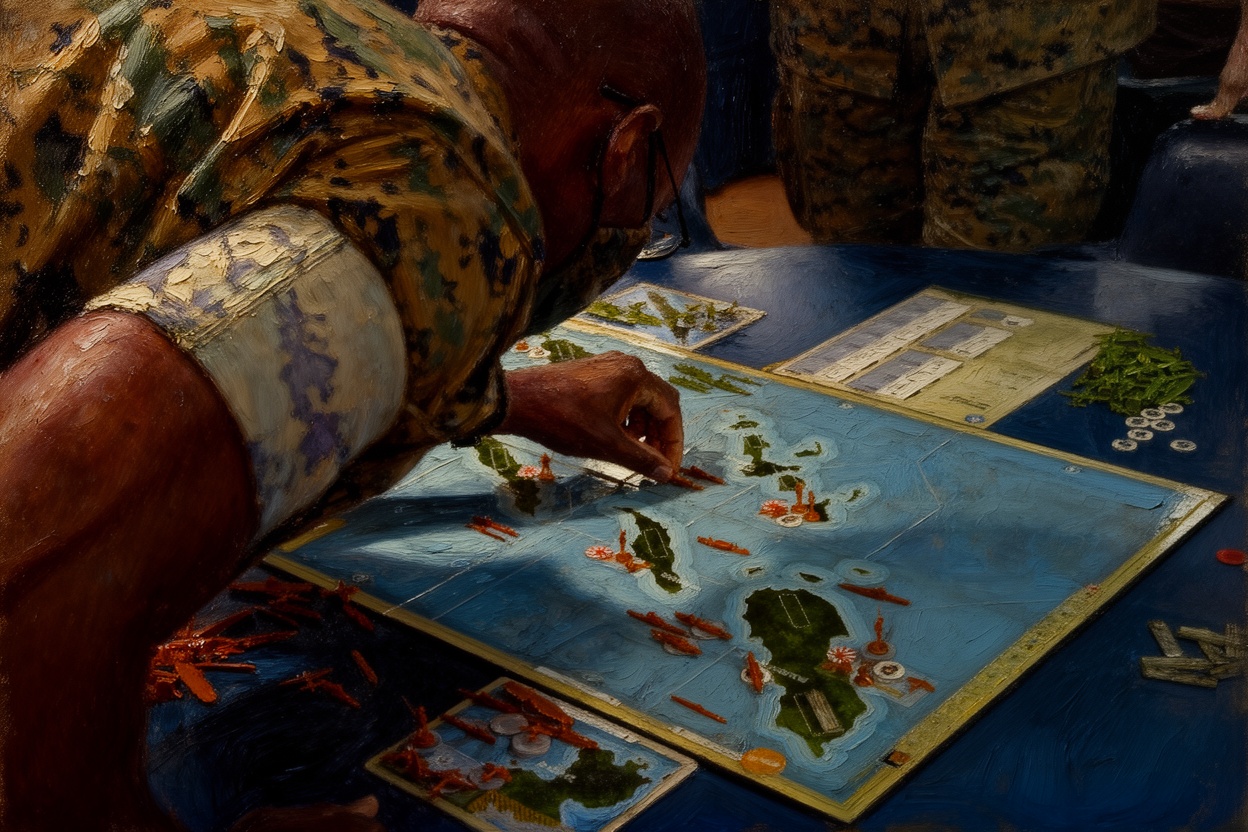
US Air Force unveils AI wargame system for operations
The US Air Force announces that WarMatrix, an AI-augmented wargaming system, has reached operational status. The system centers human judgment in simulated campaigns while leveraging AI to process data and run scenarios. The deployment signals a shift in how air power planning and crisis simulations may be conducted on joint and multinational scales.
The core development is that WarMatrix has moved from testing to operational deployment. The system is designed to keep human decision-makers at the center of wargaming, while the AI handles data synthesis, scenario generation, and rapid feedback loops. The event in late March marked a formal milestone, signaling readiness for broader exercises and potential integration with allied planning. Commanders will use WarMatrix to explore contingency options under varying threat environments and adversary models. The Air Force emphasizes that human oversight remains the defining safeguard against automated decision bias.
Background context includes prior demonstrations where AI-assisted wargaming was tested in restricted environments. The approach aligns with broader DoD experiments in decision support, where speed and volume of data threaten to overwhelm human analysts. WarMatrix is positioned as a bridge between traditional tabletop and computer-assisted wargaming, enabling more complex, data-rich simulations. The system reportedly leverages multi-domain inputs, including space and cyber considerations, to enrich scenario realism. The March event was framed as a proof of concept reaching an operational milestone rather than a full-scale rollout.
Strategic significance rests on how AI-enabled wargaming could reshape crisis management and deterrence calculus. If WarMatrix accelerates decision cycles without compromising human judgment, it could reduce planning fragility in fast-moving crises. The deployment also affects allied interoperability, given the need to align modeling standards and data interfaces. Critics warn of overreliance on artificial reasoning in high-stakes decisions, while proponents say the system increases repeatability and scenario diversity across buttons of crisis. The overall effect would be to tighten the linkage between strategic intent and execution in simulations.
Technical details include the system’s architecture, which combines machine-learning inference with scenario orchestration and human-in-the-loop controls. Specific weapon systems and force compositions used in WarMatrix exercises are kept under security constraints, but officials note capabilities for rapid scenario generation, risk scoring, and outcome visualization. Budget lines for the program are not fully public, but bipartisan defense budgets have prioritized AI-enabled wargaming capabilities in recent years. The system reportedly supports multi-domain inputs, including air, space, cyber, and maritime considerations, to reflect integrated campaigns.
Likely consequences involve accelerated learning for planners and potential changes to how training exercises are evaluated. If WarMatrix proves effective, it may set a standard for AI-assisted evaluation of concepts like air superiority, survivability, and joint operations. Multinational partners could seek access or compatible interfaces to maintain interoperability. Ongoing scrutiny will focus on ensuring human oversight remains central and that AI outputs are clearly auditable and citable in official decision-making records.