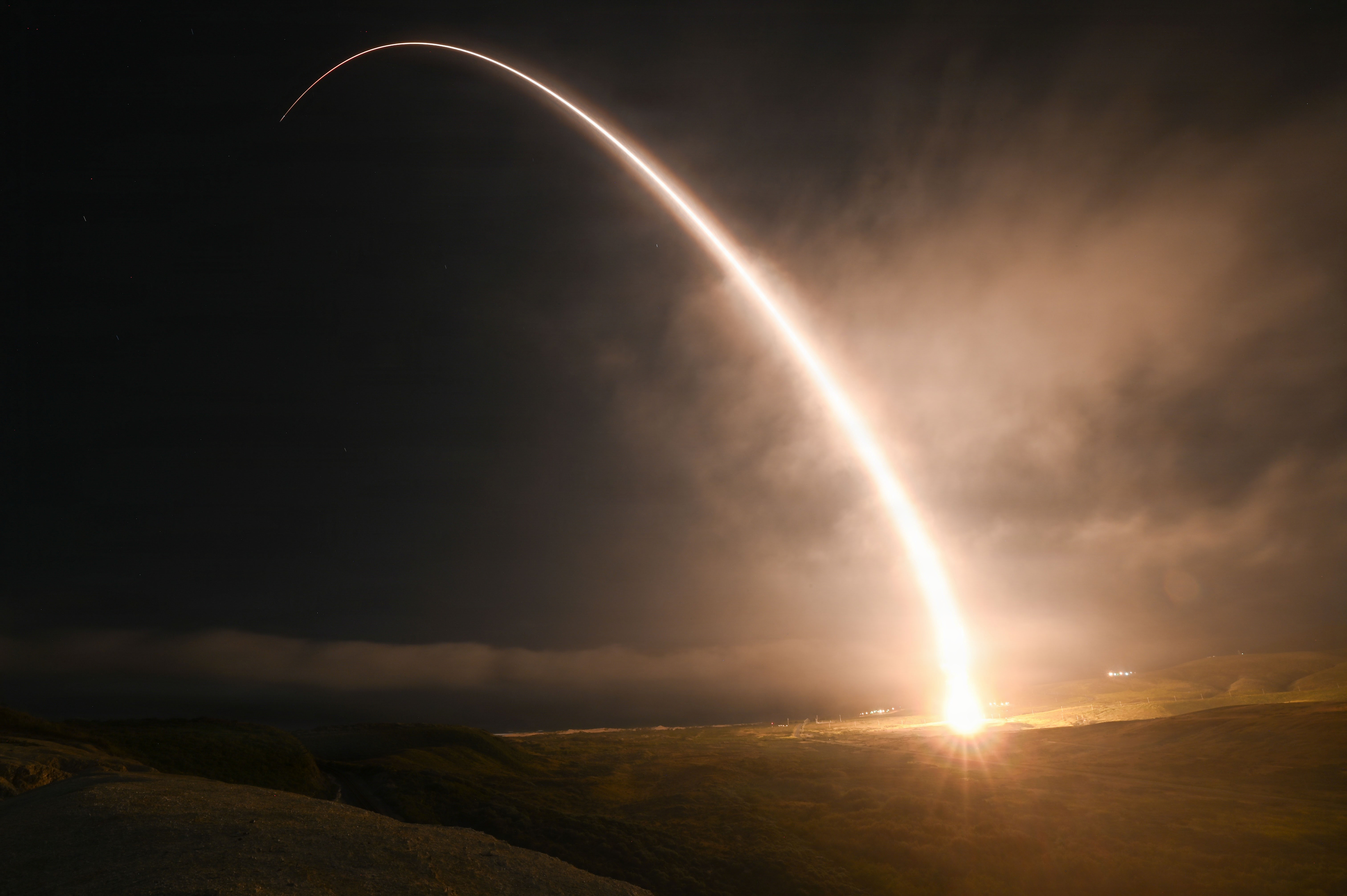
US Air Force Tests Minuteman III, Escalates Nuclear Tensions
The US Air Force's recent test of the Minuteman III ICBM heightens nuclear escalation risks amid rising global tensions. This demonstration of advanced military capability signals ongoing nuclear readiness, potentially provoking adversarial states.
The United States Air Force has conducted a test launch of the Minuteman III intercontinental ballistic missile (ICBM), featuring multiple reentry vehicles. This event took place at Vandenberg Space Force Base in California, deploying the missile to a target area in the Pacific Ocean. Though the test was planned well in advance, its timing coincides with heightened international tensions, including conflicts involving nuclear-capable nations.
The Minuteman III ICBM program dates back to the 1960s, representing the backbone of the U.S. nuclear arsenal since its introduction. With a range exceeding 13,000 kilometers and the capability to deliver up to three nuclear warheads, the Minuteman III exemplifies the US commitment to maintaining a credible nuclear deterrent. Previous upgrade efforts throughout the years have focused on enhancing its reliability and accuracy, ensuring it remains a critical component of American strategic defense.
This latest demonstration is significant as it reveals the U.S. strategic focus on maintaining and modernizing its nuclear capabilities at a time when multiple regional conflicts pose potential threats. As global competitors such as China and Russia expand their own nuclear arsenals and develop new strategies, the maintenance of the Minuteman III program sends a message of U.S. resolve. The trial comes amidst ongoing discussions regarding nuclear policies in other countries, heightening the risks of miscalculation on the international stage.
Key actors involved in this scenario include U.S. military leadership, who aim to reassure allies of American deterrence capabilities while simultaneously sending a warning to adversaries. The Air Force Global Strike Command, responsible for executing nuclear operations, may downplay the test's significance by framing it as routine. However, the current geopolitical climate, marked by increasing hostilities, suggests that such tests carry greater strategic implications than they would in more stable periods.
Technical specifications for the Minuteman III ICBM highlight its formidable capabilities; the missile can travel at speeds over 24,000 kilometers per hour and reach targets in under 30 minutes. Its upgradeable guidance systems and multiple warhead deployment make it a flexible option in the strategic arsenal. The U.S. Government spends approximately $1.3 billion annually on the continued modernization of the Minuteman system, emphasizing its importance in nuclear deterrence strategies.
The consequences of this ICBM test are profound, as it could elicit renewed military responses from other major powers, particularly Russia and China. Their potential reactions may include conducting parallel weapons tests or accelerating their own modernization programs. Furthermore, the test raises the stakes for future arms control negotiations, complicating any prospects for disarmament discussions given the perception of a renewed arms race.
Historically, the testing of nuclear capabilities has often led to escalatory cycles, as observed during the Cold War when both superpowers routinely conducted military demonstrations to assert power. Such actions frequently resulted in increased surveillance, heightened military readiness, and periods of tense diplomatic exchanges. This current test may similarly be seen as a catalyst for a new strategic arms competition as nations recalibrate their security policies in response.
Looking ahead, intelligence analysts should monitor any indicators of heightened military activity from adversarial states following this test, including potential missile tests or mobilization of nuclear forces. Also, the responses from NATO allies and non-proliferation forums will be telling, as they grapple with the implications of U.S. nuclear assertions amidst a backdrop of regional instability. The next moves from global players will be critical as they could define the security landscape in the coming years.