US Air Force Reveals F-47 Integration in New Attack Weapon Program
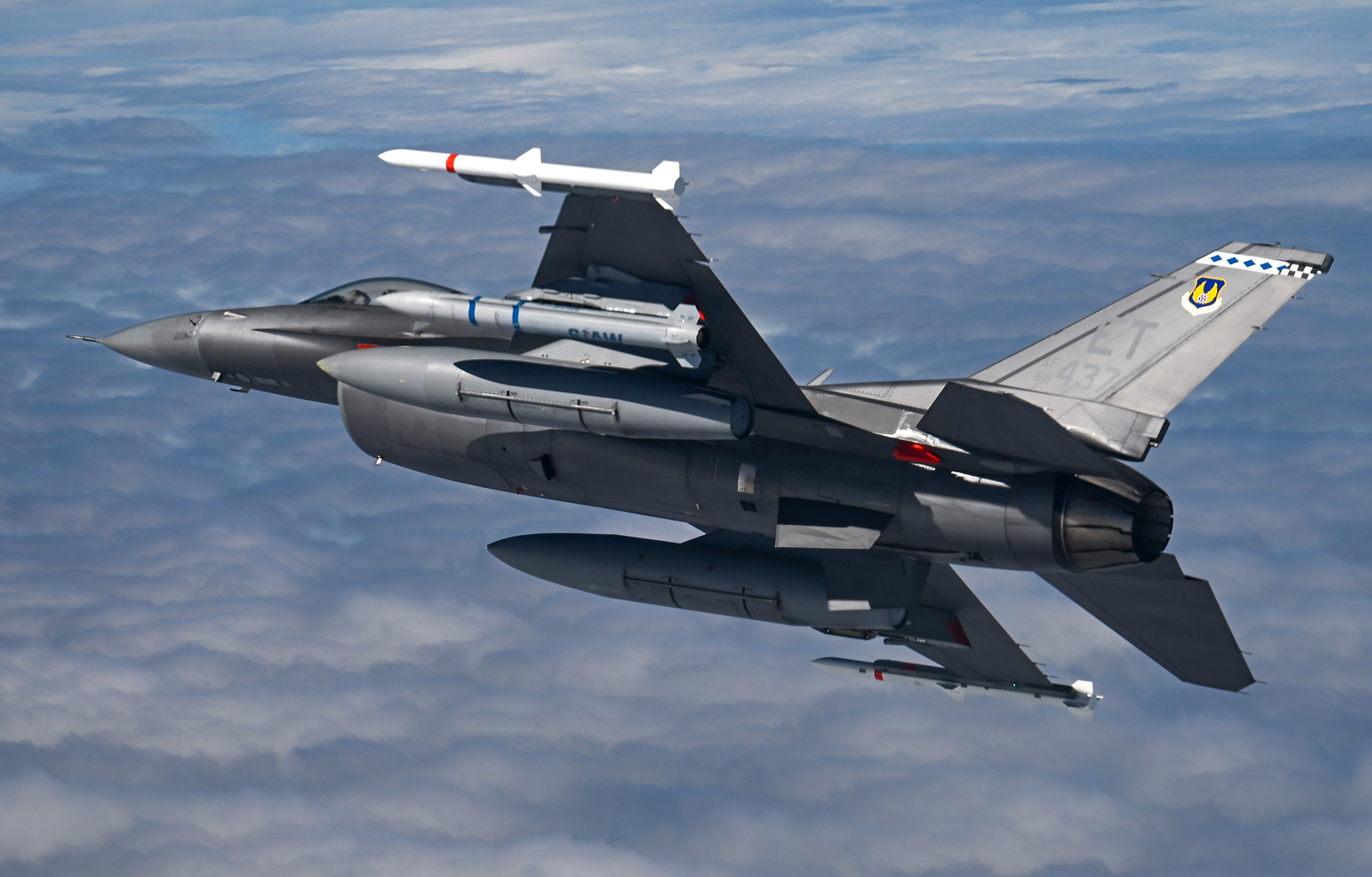
The U.S. Air Force's call for Stand-in Attack Weapon sources signals its intent to operationalize the stealthy F-47 fighter, a significant step in modernizing strike capabilities amidst rising global tensions. This development marks the F-47's first official mention in an acquisition context, highlighting its strategic role in future conflict scenarios.
The U.S. Air Force's recent solicitation for developers of a Stand-in Attack Weapon (SiAW) explicitly mentions the F-47 fighter for the first time in a public acquisition document. This is a clear indication that the F-47 is closer to entering operational service as a cutting-edge platform designed for precision strikes against high-value targets. Additionally, the B-21 Raider's compatibility with this weapon underscores a shift towards integrating advanced multi-domain capabilities in aerial warfare.
The F-47's development has been shrouded in secrecy, yet its birth aligns with the U.S. military's efforts to counter increasingly aggressive postures from global adversaries, particularly China and Russia. As these nations enhance their own stealth and long-range strike capabilities, the U.S. aims to maintain its edge in aerial dominance. The emergence of the F-47 within the SiAW program suggests urgency in bolstering U.S. rapid response capabilities in potential conflict zones.
This development is significant as it addresses the changing nature of warfare, where near-peer competitors are invested in advanced aerial technologies. By actively seeking innovative weapons that can leverage the F-47 and B-21's stealth and speed, the U.S. is preparing for scenarios that demand rapid, precision strike options against sophisticated threats. The announcement also raises the stakes for other military powers that may perceive this enhancement as a direct challenge.
Key players in this development include defense contractors with substantial capabilities in precision munitions and integration technologies. Contractors such as Lockheed Martin and Northrop Grumman are likely to vie for contracts associated with this program. Their motivations stem not only from financial gain but also from the strategic imperative to align their technologies with the evolving needs of U.S. Air Forces, thus ensuring their relevance in cutting-edge military projects.
The Stand-in Attack Weapon itself will likely have specifications designed to penetrate sophisticated enemy defenses, possibly featuring advanced guidance systems, stealth capabilities, and capabilities for deep-strike missions. Existing estimates put the program's budget in the billions, reflecting the substantial investment aimed at securing the U.S. advantage in high-tech warfare. Furthermore, timelines indicate initial operational capabilities may be realized by the mid-2020s, coinciding with anticipated advances in adversary capabilities.
Expectations are that the integration of the SiAW with platforms like the F-47 and B-21 will lead to significant escalation in aerial engagements. As the U.S. amplifies its offensive capabilities, potential adversaries might respond with countermeasures, including advancements in anti-satellite and air defense systems. Such dynamics could spiral into an arms race focusing on stealth and strike warfare superiority.
Historically, similar development drives have taken place during the Cold War, where technological competition defined military capabilities and strategies. The F-117 and B-2—a predecessor to the B-21—demonstrated the importance of stealth technologies which have now become central to 21st-century military doctrine. The current trajectory mirrors those efforts, emphasizing the U.S. focus on next-generation capabilities responding to an evolving threat landscape.
In the coming months, intelligence communities should closely monitor developments around the SiAW program, observing weapon test results, contractor advancements, and emerging operational plans for the F-47. Key indicators will include contracts awarded, statements from defense firms involved, and shifts in associated military exercises that signal readiness for deployment. These factors will illuminate the strategic posture of the U.S. and its ability to counter rising adversarial capabilities effectively.