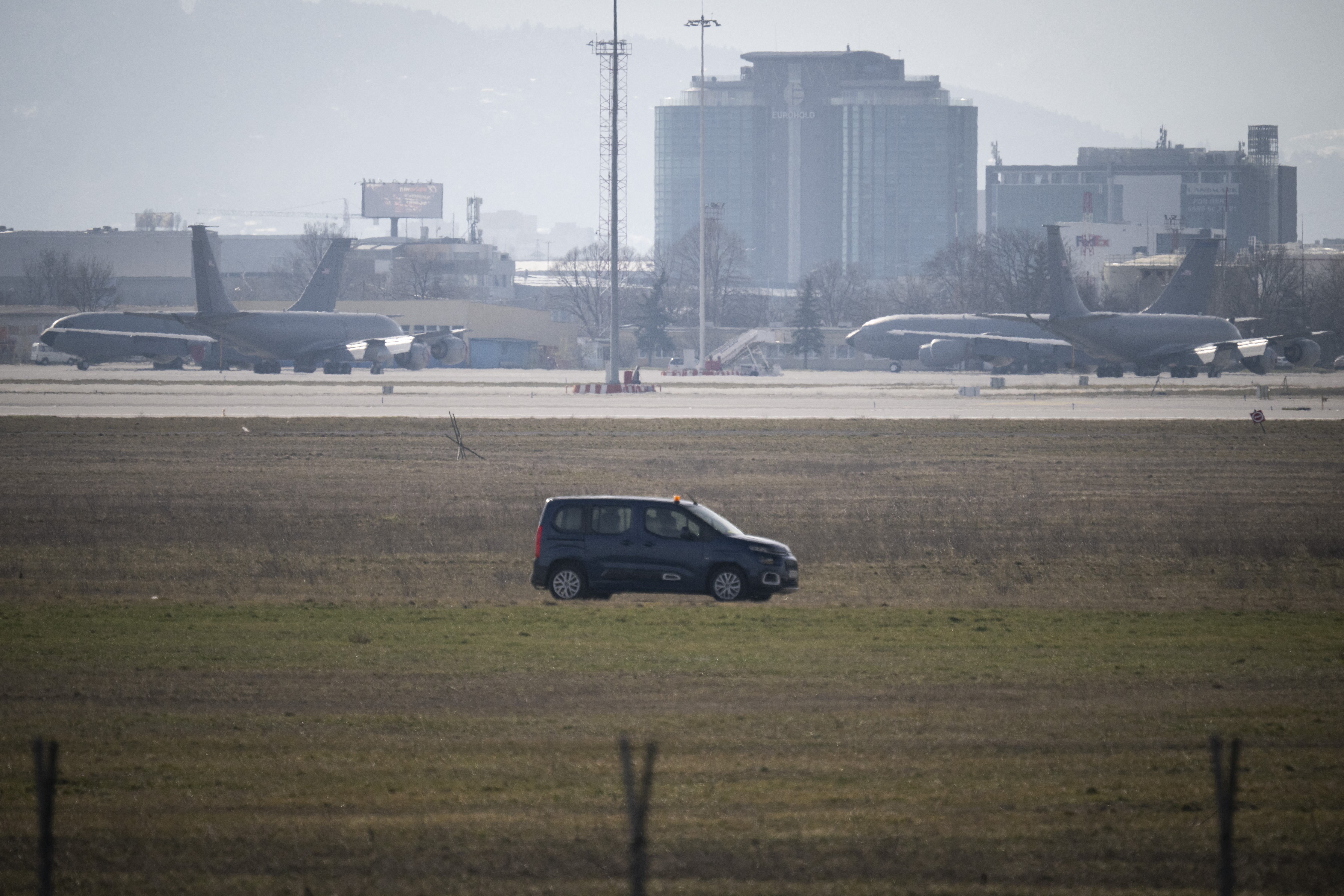
US Air Force Deploys 50 Warplanes in Bulgaria During Iran Nuclear Diplomacy
The U.S. deployment of 50 warplanes in Bulgaria signals increased military readiness coinciding with critical nuclear negotiations with Iran. This buildup may heighten tensions in the region as diplomatic efforts unfold.
The United States Air Force has deployed 50 advanced warplanes, including F-15 and F-16 fighters, to several bases in Bulgaria. This mobilization marks a significant military presence in Eastern Europe, particularly as the U.S. aims to enhance its operational capabilities in proximity to potential hotspots in the Middle East and beyond. Notably, this airlift coincides with ongoing high-stakes negotiations regarding Iran's nuclear program, which have drawn considerable international scrutiny and concern.
Strategically, this military reinforcement underscores the U.S. commitment to NATO allies while simultaneously serving as a deterrence measure against adversarial actions, particularly from Russia in the context of their ongoing conflict with Ukraine. Moreover, the timing of these movements suggests a dual-purpose strategy, wherein the U.S. may be signaling its resolve amidst delicate talks with Iran, where regional security dynamics could be at stake.
Key players in this scenario include the United States, Iran, NATO allies, and potentially Russia, which may perceive this buildup as a provocative gesture. The United States is motivated by the need to showcase robust military capabilities while maintaining pressure on Iran to comply with nuclear agreements. Conversely, Iran may view this military escalation as a threat, complicating their response to negotiation dynamics.
The implications of this development could lead to heightened tensions not only in the Balkans but also across the broader Middle East. Should Iran interpret the U.S. military expansion as an aggressive maneuver, it could exacerbate regional instability, provoke retaliatory measures, or disrupt ongoing negotiations aimed at curbing Iran’s nuclear ambitions. Additionally, an increased military presence in Eastern Europe may prompt a strategic recalibration by Russia, potentially leading to a tit-for-tat military buildup.
Historically, military deployments in sensitive geopolitical contexts have often been preludes to escalated conflicts. The U.S. presence in Bulgaria can be traced back to the need for rapid response capabilities during the Cold War, with a significant evolution in strategic imperatives reflecting the current geopolitical climate.
Analysts suggest that the situation remains fluid, with the potential for further military enhancements or abrupt diplomatic shifts as the talks with Iran progress. The juxtaposition of military readiness and diplomatic negotiations will require careful monitoring to assess its impact on regional security dynamics and the likelihood of successful outcomes in the Iranian negotiations.