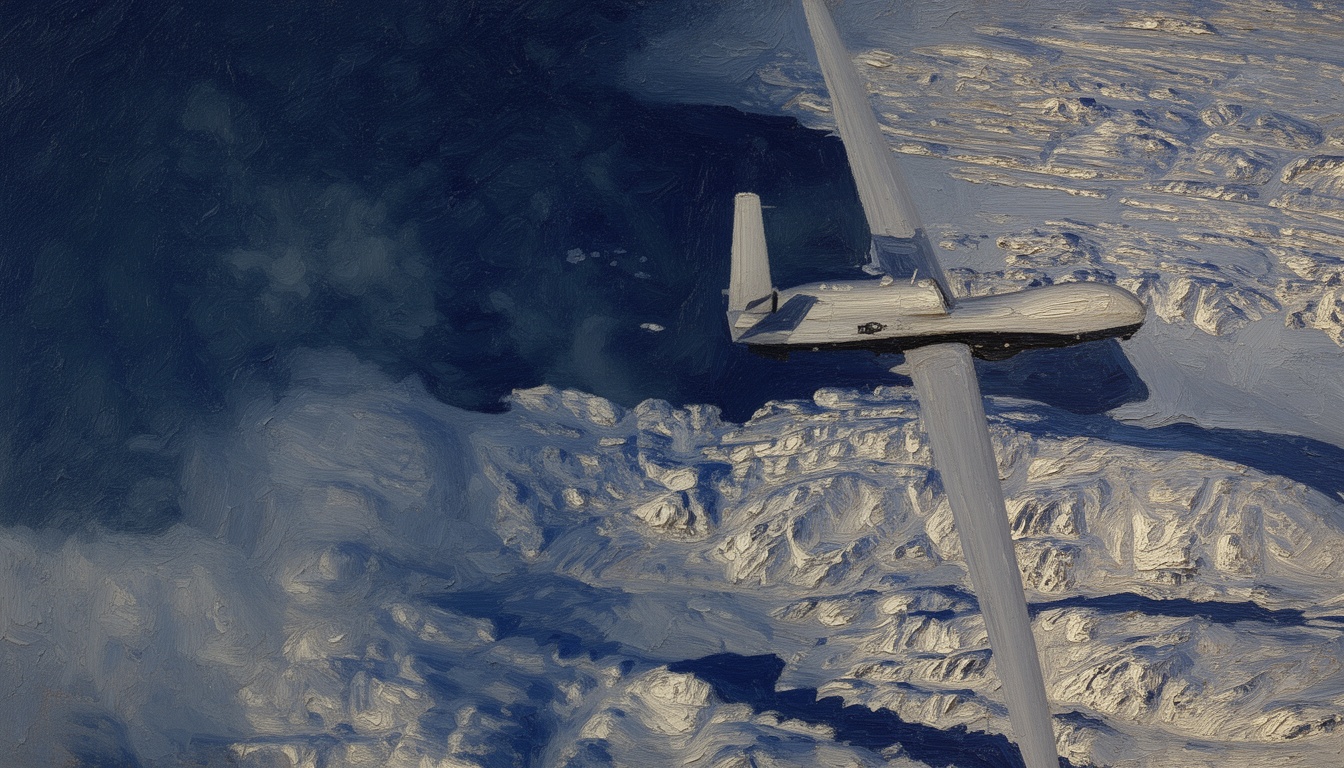
Unclear cause: Navy MQ-4C Triton mishap sparks crisis-grade risk
A US Navy MQ-4C Triton UAV suffered a Class A mishap. Official details are unavailable; sources say it is unknown whether enemy fire or a mechanical failure caused the incident. The event raises questions about ISR resilience, rules of engagement, and threat calibration in contested airspaces.
The core development is blunt: a Navy MQ-4C Triton unmanned aerial system has experienced a Class A mishap, with the exact cause still unconfirmed. Reports indicate uncertainty over whether the aircraft was downed by hostile fire or disabled by a mechanical fault. The incident immediately triggers defensive reviews and broadens scrutiny of unmanned maritime reconnaissance in high-tension theaters. The lack of a confirmed enemy action leaves open questions about the aggressor's access to contested airspace and the platform's susceptibility to operational disruption.
Context: The MQ-4C Triton is a long-endurance maritime ISR asset designed for persistent reconnaissance over oceans and strategic chokepoints. It operates in conjunction with manned patrols and other unmanned systems to extend sensing windows and intelligence collection. Historically, mishaps of unmanned systems in contested environments have exposed gaps in maintenance, integration, and airspace deconfliction. The current event underscores how even routine patrols can escalate risk when confronted with sophisticated air-defense networks. International observers will watch how the US Navy responds in terms of public accounting, damage assessment, and operational safety reforms.
Strategic significance: A loss or impairment of an MQ-4C could constrain maritime ISR continuity in key theaters and pressure allied command-and-control architectures. If adversaries are able to contest or degrade unmanned reconnaissance, opponent deterrence calculations may shift toward heightened air and sea domain activity. The incident also brings into focus risk management for high-end ISR fleets, including maintenance cycles, mission planning, and redundancy with allied systems. The broader implication is a potential adjustment of patrol patterns, force posture, and alliance risk-sharing in contested waters.
Technical/operational details: The Triton platform is a high-endurance, maritime-focused unmanned system. It is designed to operate at extended ranges with a substantial sensing payload and a robust communications suite. The exact payload configuration on the downed or damaged airframe remains unconfirmed, but the platform typically relies on multi-sensor reconnaissance and data links to multiple command nodes. If enemy action is confirmed, it would imply a step-change in local air defense effectiveness; if mechanical fault is implicated, it would spark investigations into maintenance, component reliability, and system health monitoring across the fleet.
Consequences and outlook: The immediate consequence is a temporary constraint on long-range maritime ISR tempo until safety and reliability assessments are completed. If adversary capabilities contributed to the mishap, regional deterrence dynamics could tilt toward more aggressive ISR and anti-access operations. Officials are likely to impose tighter flight-safety procedures, review concealment and sensing tradecraft, and accelerate resilience upgrades for unmanned patrols. In the near term, expect intensified dialogue among allies on ISR risk-sharing, data fusion improvements, and protective measures for critical maritime routes.