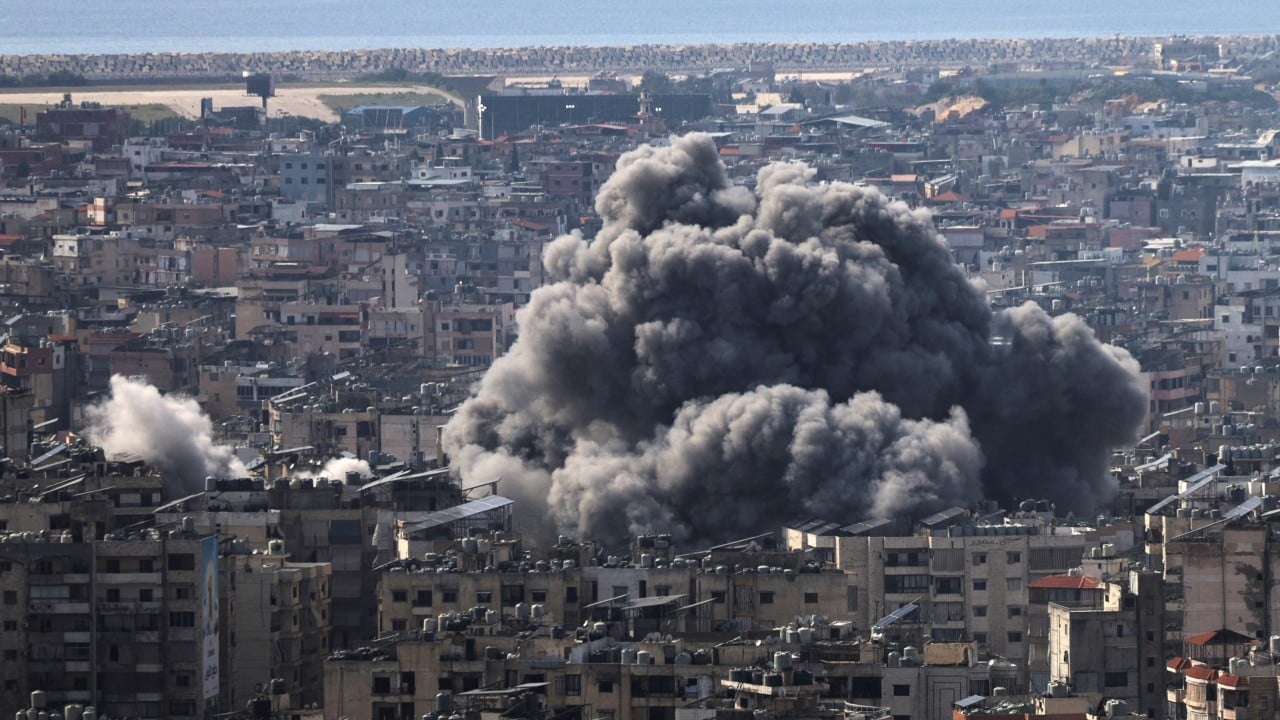
UN Demands Probe of Fatal Israeli Strikes as Lebanese Civilians Flee
Israel's military strikes across Lebanon have prompted a humanitarian crisis, with hundreds of thousands displaced. Investigations into potential violations of international law could heighten tensions in an already volatile region.
Israel's recent bombardment of Lebanon has resulted in significant civilian casualties and has led to the displacement of hundreds of thousands, driving them to flee their homes. The United Nations has called for immediate investigations into these strikes, questioning whether they comply with international law. This escalation has sparked severe humanitarian concerns, as civilians bear the brunt of renewed hostilities.
The backdrop of this conflict is marked by ongoing tensions between Israel and various militant groups in Lebanon, particularly Hezbollah. Over the years, a series of skirmishes and escalations have strained relations, particularly following the July 2006 war, which saw widespread destruction and civilian suffering in both Israel and Lebanon. The recent strikes represent a significant escalation in a long-standing conflict, raising alarms about a return to full-scale warfare in a region still reeling from previous conflicts.
The implications of this crisis are profound, not only for the immediate safety of civilians but also for the geopolitical landscape of the Middle East. The crisis exposes vulnerabilities within Lebanon and showcases Israel’s preemptive military posture, indicative of its wider strategic aims in countering perceived threats from Hezbollah, which has been increasingly emboldened in its military capabilities since the last major conflict.
Key actors in this scenario include the Israeli military, which justifies its operations as necessary for national defense, and Hezbollah, which may view this as an existential threat that necessitates retaliation. The U.N.'s calls for de-escalation serve as a backdrop against these motivations, as international actors push for restraint while the potential for retaliatory actions looms large.
Operationally, the Israeli Air Force has deployed precision munitions in strikes targeting Hezbollah positions and supply lines, with reports of extensive damage to infrastructure. The financial cost of this military operation is surging, as ongoing conflicts strain national budgets on both sides, with Israel’s military expenditure likely increasing to support its ongoing operations.
The likely consequences of this escalation are a dangerous cycle of retaliatory attacks, increasing regional instability, and a continuing humanitarian crisis that may draw international responses. If the civilian toll continues to rise, we could see greater international condemnation and potential sanctions directed at Israel, further complicating an already tense environment.
Historically, such escalations have often led to broader conflicts in the region. Precedents set during the 2006 Lebanon War illustrate the rapid deterioration of conditions that can emerge from sustained military confrontations, where initial strikes can spiral into a larger conflict involving multiple countries and militias.
Looking forward, observers should monitor indicators of both Israeli military intentions and Hezbollah's responses. Key intelligence markers will include troop movements, artillery fire, civilian casualty reports, and any indications of diplomatic efforts to mediate. The risk of a further escalation remains high, and stakeholders must remain alert to emerging developments within this complex and dangerous landscape.