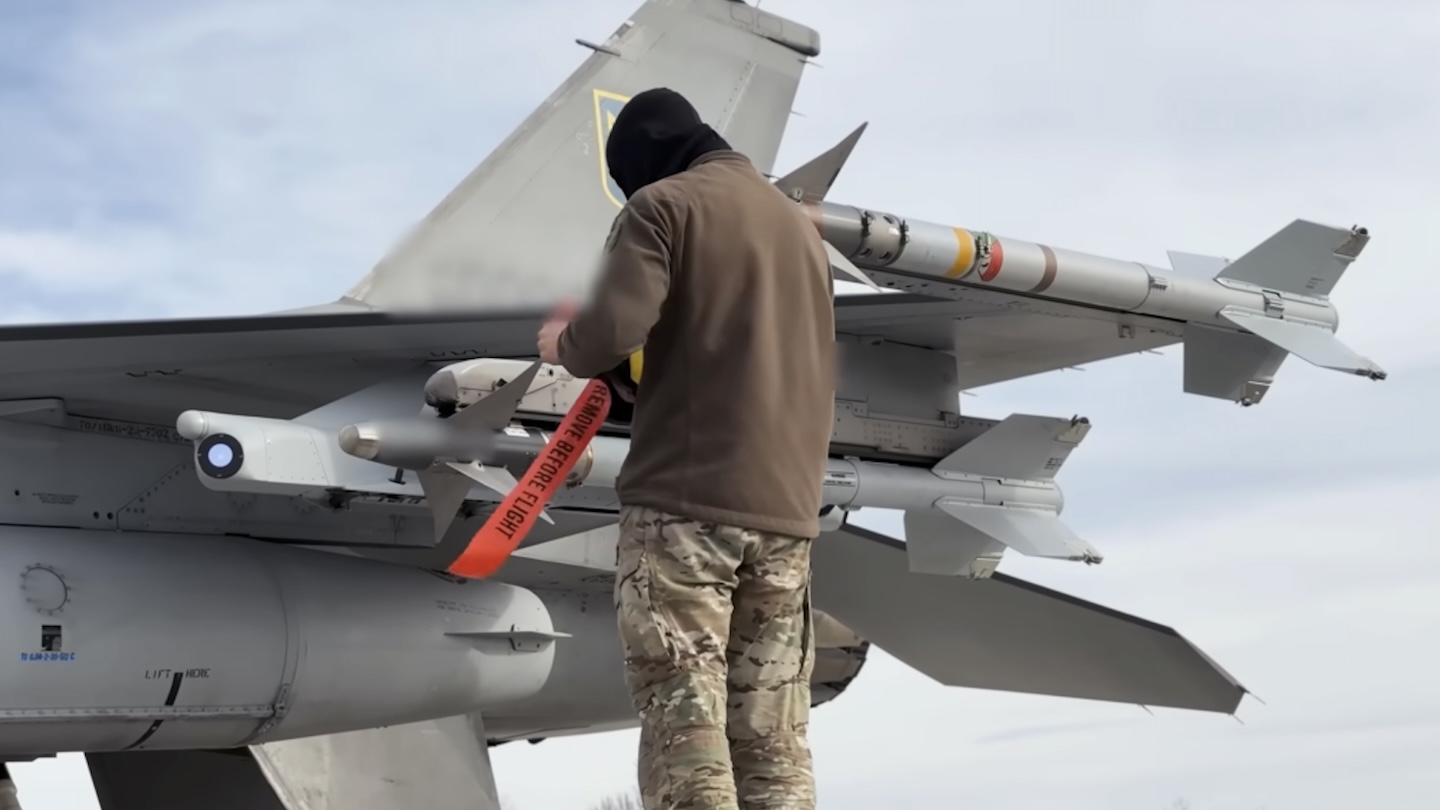
Ukrainian F-16s Face Critical Shortage of Sidewinder Missiles
Ukraine is dangerously low on air-to-air missiles, risking aerial defense capabilities during intensified conflict. The Middle East crisis exacerbates global demand and complicates procurement efforts.
Ukrainian F-16s are reportedly operating with only a handful of AIM-9 Sidewinder missiles, severely undermining their operational readiness and aerial combat capabilities. As Russian aerial assaults increase, this shortage poses a significant risk, leaving Ukrainian forces exposed to enemy aircraft. The scarcity is not a localized issue, as the demand for air defense systems rises worldwide due to ongoing conflicts, straining available military resources.
Historically, Ukraine's military has received extensive support from Western nations, including air defense systems like the F-16. The procurement process for missiles has always faced friction due to production constraints and global supply chain issues. Now, with concurrent military operations in the Middle East, nations are reallocating their defense resources, leaving Ukraine to scramble amid a deteriorating supply situation.
This missile shortage is critically significant. As the existing stockpile of Sidewinders dwindles, Ukraine’s aerial combat effectiveness diminishes, allowing Russian forces to exploit gaps in air superiority. This vulnerability could embolden Russian operations and alter the conflict's dynamics dramatically, extending the war's timeline and increasing civilian casualties.
Key players in this unfortunate situation include the United States, which produces the AIM-9 Sidewinder missiles, and various NATO allies who have been proactive in supplying Ukraine with military aid. However, these nations are now constrained by their own military needs, further complicating support for Ukraine’s air defense systems. The motivations for assistance remain, but the capacity to fulfill requests is deteriorating as exigencies escalate outside Ukraine.
Operationally, the AIM-9 Sidewinder is a short-range air-to-air missile designed for high-speed aerial engagements. Ukraine gained around 50 F-16s from Western allies, but recent reports indicate they have not been able to procure sufficient munitions to match such advancements in aerial platforms. Currently, the cost for an AIM-9 missile hovers around $450,000, and with escalating demand coupled with limited production capability, retrieval for Ukraine appears bleak.
The consequences of this shortage are severe. Should Russia choose to escalate attacks via airstrikes, Ukraine may struggle to counter effectively, leading to higher casualty rates and potential territorial losses. With the Middle East driving up competition for munitions, the situation could precipitate further disorder not just in Ukraine, but in other conflict zones where air superiority is contested.
Looking back, this situation recalls other instances when countries faced similar shortages during prolonged conflicts, such as the 2003 Iraq War. The ensuing supply chain failures had long-term operational impacts for coalition forces, significantly affecting mission outcomes due to inadequate air cover. The scenario underscores the need for a robust, sustainable supply chain in modern warfare.
Moving forward, it’s crucial to monitor procurement efforts from NATO allies toward Ukraine’s air defense capabilities. Intelligence indicators include production timelines for AIM-9 missiles and shifts in military production policies from the U.S. and Europe. Any further strain on the air defense supply could result in increased vulnerability for Ukraine, changing the course of the overall conflict dramatically.