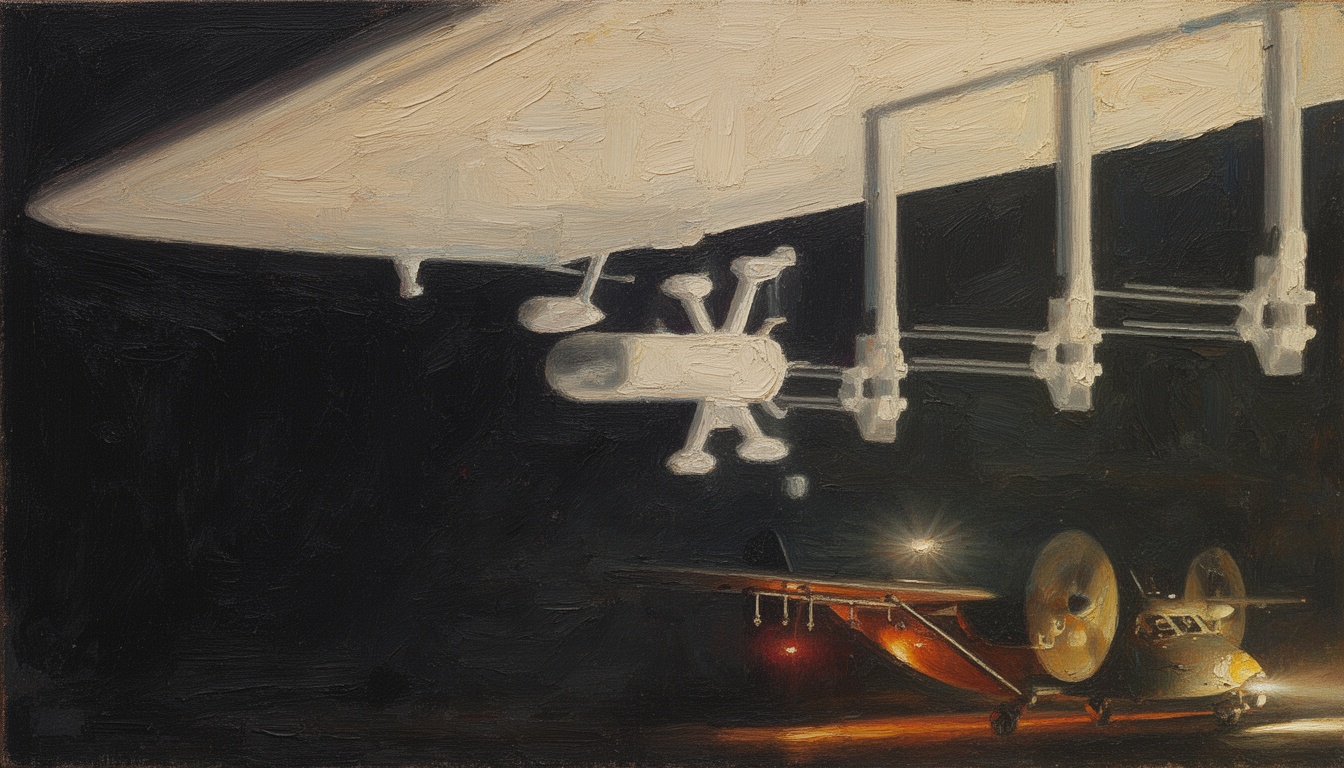
Ukraine's An-28 Launches Interceptor Drones for Counter-Drone Warfare
Ukraine expands its rugged An-28 Cash counter-drone platform by integrating interceptor drones and Minigun armament. The development signals a layered approach to autonomous threat denial and battlefield air defense amid ongoing conflict. The move underscores Kyiv’s push to saturate enemy ISR and loitering drone capabilities with agile, mobile systems.
Ukraine is rolling out a new evolution of its An-28 Cash turboprop counter-drone system, equipping the aircraft with interceptor drones and Minigun firepower. The modification represents a shift from a purely defensive, gun-armed platform to a more modular, networked counter-UAS approach. Operators describe the result as a hybrid solution designed to neutralize hostile drones at multiple engagement ranges while preserving the An-28’s mobility across contested airspace.
Historically, Ukraine’s An-28 Cash has served as a rugged, low-cost platform for radar and short-range air defense tasks. The latest iteration integrates autonomous or semi-autonomous interceptor drones that can be dispatched from the mothership to engage threats at standoff distances or in complex air clutter. A Minigun-based armament package provides close-in defense, allowing the aircraft to engage swarms or fast-moving targets that slip past the interceptors. This combination aims to complicate the attacker’s attack geometry and raise the cost of drone-enabled assaults.
The strategic significance lies in Kyiv’s emphasis on distributed, scalable air denial capabilities that can be rapidly reconfigured for evolving threat streams. By leveraging a low-cost airframe with modular munitions and dedicated interceptor micro-drones, Ukraine reduces reliance on high-value platforms while increasing deterrence against raiding drones and small autonomous weapons systems operated by adversaries. The approach also enhances persistence, enabling persistent screening of supply routes and critical infrastructure in contested zones.
Technical and operational details remain partially opaque, but the concept suggests a coordinated system: the An-28 launches or controls interceptor drones that physically intercept or jam incoming drones, while the Minigun provides continuous close-range suppression if threats close in. The interceptor drones likely operate under autonomous or semi-autonomous control with data-link guidance, radar or electro-optical tracking, and on-board propulsion enabling rapid turnover. The overall architecture underscores a push toward integrated, manned-unmanned teams in a technologically challenged airspace.
Looking forward, Kyiv faces the risk of a protracted drone-centric battle where electronic warfare, counter-UAS networks, and rapid platform reconfigurations become decisive. The An-28’s upgraded role may pressure adversaries to invest in heavier, more complex drone swarms or counter-countermeasures, potentially driving a regional arms-race dynamic. If the concept proves scalable, it could be exported to allied forces seeking portable counter-drone solutions that blend standoff interception with close-range firepower, reinforcing deterrence through dispersed, adaptive air denial.