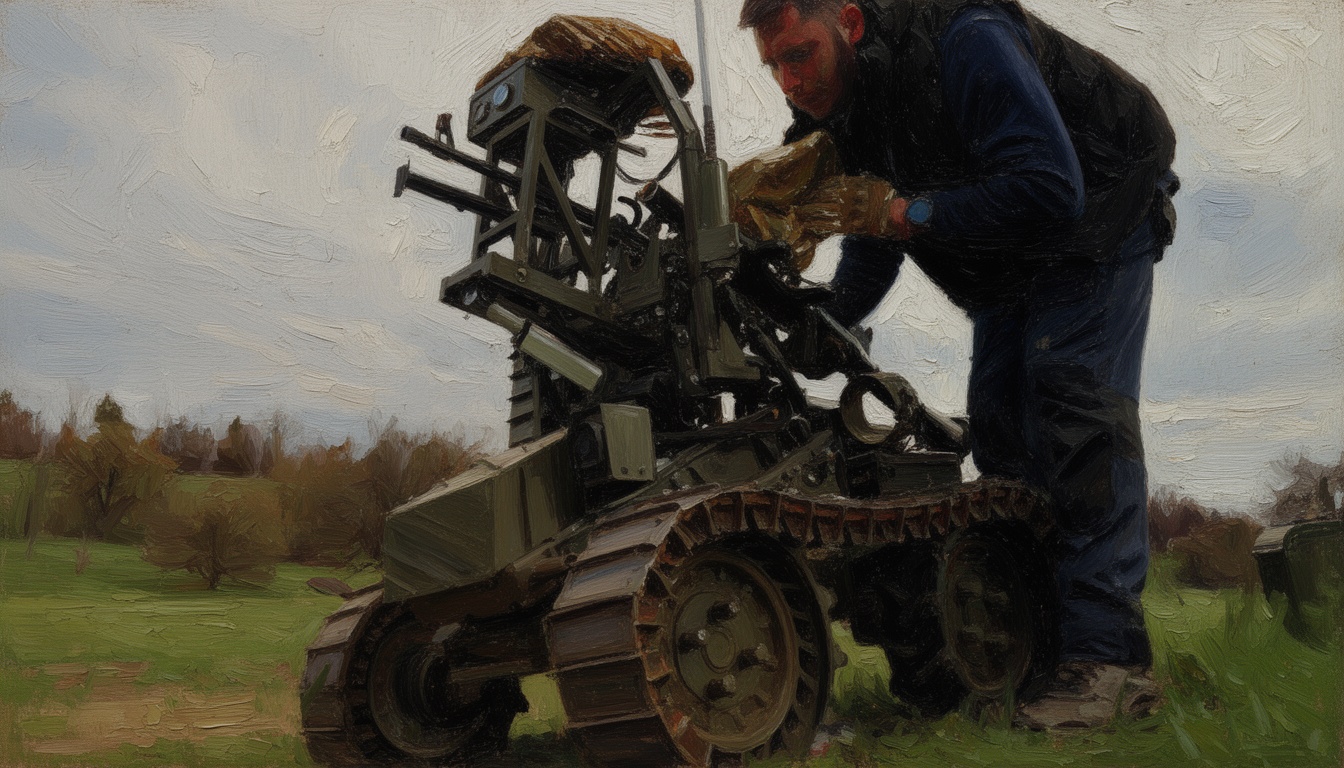
Ukraine robot unit claims 100+ attacks on Russian forces
A Ukrainian ground-robot unit announces it has conducted over 100 attacks on the front. The claim follows Zelensky’s praise for a Russian position seizure using robotic forces. The development signals a shift in frontline tactics and demand for further verification.
The Ukrainian unit overseeing ground-based combat robots asserts it has executed more than 100 attacks on Russian forces at the front. The statement, attributed to a source within NC-13, notes that the operations are conducted by machines designed to reduce human exposure to danger. Officials emphasise that these operations span a range of combat tasks, including engagement with enemy personnel and targeted impact on fortifications. The claim arrives after President Zelensky publicly praised the capture of a Russian position aided by this robotic method.
Context for this development is essential: Ukraine has long promoted unmanned systems as force multipliers, aiming to sustain pressure on the front while limiting casualties. The NC-13 unit, affiliated with Ukraine’s 3rd Assault Brigade, specializes in deploying ground robots for reconnaissance, strike, and assault missions. While the exact models and payloads remain undisclosed, the integration of robotics appears to be part of a broader strategy to augment conventional forces without proportional increases in human risk. Observers note that the 3rd Assault Brigade has been central to high-intensity operations in recent months.
Strategically, the reported 100+ operations indicate a persistent escalation in the employment of autonomous or semi-autonomous systems on the battlefield. If validated, these claims could push Russia to adapt its air and ground denial measures, and could prompt allied partners to accelerate support for Ukrainian robotics development. The pace of robotic utilization will influence deterrence calculations, particularly in contested urban and fortified front-line environments. Analysts will watch for changes in command-and-control, navigation accuracy in contested terrain, and electronic warfare resilience.
Technical and operational details remain limited: the units involved are described as ground-robot teams operating under Ukraine’s 3rd Assault Brigade. The source highlights operational outcomes such as “elimination of enemy personnel” among the reported tasks, but specifics on weapon primaries, ranges, or success rates are not disclosed. Financial or logistical data, including procurement channels or maintenance cycles for these systems, have not been released. The forward outlook remains uncertain, with the possibility that robotics will become a more central component of Ukraine’s frontline tactics if capabilities prove scalable and reliable.
The likely consequences include deeper integration of unmanned systems into frontline maneuvers, potential acceleration of safety margins for soldiers, and increased pressure on Russian defensive schemes, especially in sectors where infantry entry is high risk. If the trend continues, Kyiv may prioritize rapid field upgrades to robotics ecosystems, while Moscow seeks countermeasures ranging from electronic warfare to counter-robot platforms. The assessment is preliminary, but the trajectory points to a future battlefield where automated infantry adjuncts play a decisive role.