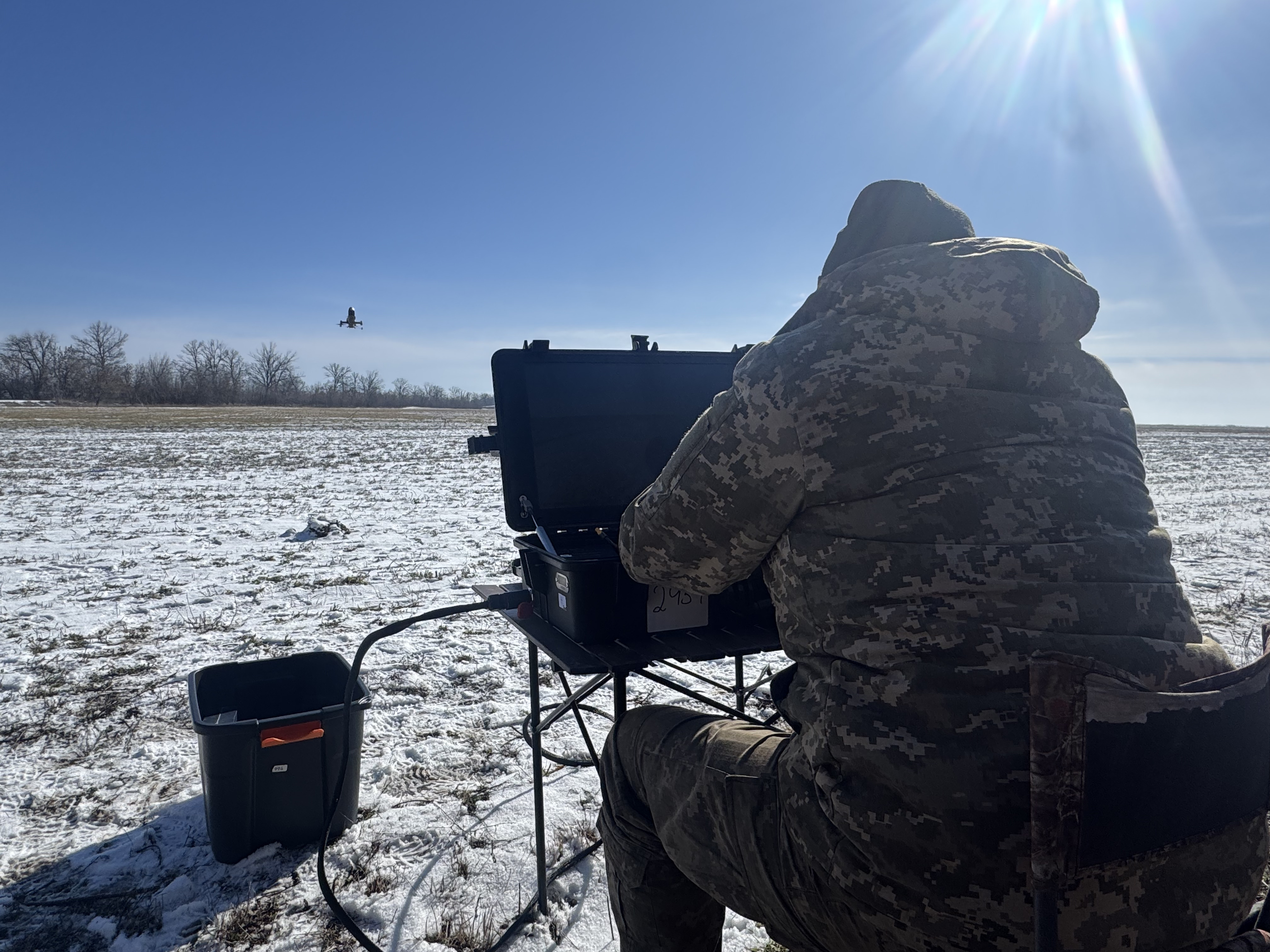
Ukraine Leverages Novel Interceptor Drones for Air Defense
Ukraine has introduced innovative interceptors that enhance its air defense capabilities without reliance on artificial intelligence. These systems utilize manual impact methods for target engagement.
In a recent development, Ukraine has unveiled new interceptor drones aimed at improving its air defense framework against aerial threats. These drones operate on traditional interception principles, relying heavily on manual control for ramming or close-range detonation rather than incorporating artificial intelligence for autonomous decision-making. This simplicity in design may allow for rapid deployment and decreased operational costs, aligning with the current needs of Ukraine's defense strategy.
The technical specifications of these interceptors detail a capable platform designed for speed and maneuverability, allowing them to effectively engage airborne threats with precision. By focusing on manual interception techniques, these drones are reportedly equipped with enhanced guidance systems to improve targeting accuracy. While lacking in AI capabilities, this approach may result in a more straightforward operational protocol, enabling quicker responses to incoming aerial assaults.
Strategically, these interceptors represent a significant adaptation within the broader context of Ukraine's defense posture, especially amidst ongoing conflicts that emphasize the necessity for responsive air defense mechanisms. The performance of these drones in real-world conditions could serve as a critical countermeasure against sophisticated enemy aircraft and missile systems, potentially shifting the dynamics of air superiority in eastern Ukraine. Moreover, the cost-efficiency associated with manual interception may yield substantial economic benefits, allowing for a larger fleet of defenders without the financial burden of more advanced technologies.
The development of these drones comes at a time when Ukraine is actively seeking partnerships and collaborations with domestic and foreign defense manufacturers. The specific manufacturer has not been disclosed, but as the conflict continues, Ukraine's emphasis on locally produced defense technology could foster greater self-sufficiency in its defense sector. Potential applications for these interceptors extend beyond just air defense, as they could also be adapted for other reconnaissance or tactical missions in contested environments.
In conclusion, the introduction of these novel interceptor drones represents a strategic pivot in Ukraine's defense capabilities, enhancing its ability to defend against aerial threats while adhering to economically favorable approaches. This development not only underscores the importance of innovative solutions in modern warfare but also highlights the ongoing evolution of conflict dynamics in the region.