Ukraine Declines US Request to Combat Iranian Drones, Prioritizes Air Defenses
Ukraine's decision to withhold support for US operations against Iranian drones demonstrates a critical vulnerability in its air defense capabilities amid ongoing conflict with Russia. This refusal may signal a shift in alliances and expose greater strategic isolation for the West in confronting Iranian drone proliferation.
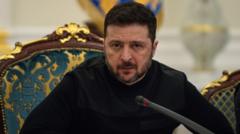
Ukrainian President Volodymyr Zelensky confirmed that Kyiv has declined a direct request from the United States to assist in efforts against Iranian drone threats. Zelensky emphasized that Ukraine's involvement would only be considered if it does not compromise its already strained air defense capabilities, which have been heavily tasked in the ongoing war with Russia.
This development is rooted in Ukraine's precarious security situation, marked by intense battles with Russian forces since the invasion began in February 2022. As Moscow escalates its drone warfare tactics, both sides have engaged in heavy exchanges using various unmanned aerial systems (UAS), particularly the Shahed-136 drones supplied by Iran. This request indicates a growing recognition of the Iranian drone threat not just in Ukraine but as a destabilizing factor in broader international security dynamics.
The refusal to assist the US not only highlights Ukraine's overstretched military resources but also raises urgent concerns about the West's ability to counter Iranian influence in the region. It exposes a stark reality wherein allied nations may be facing compounded military pressures, potentially leading to a strategic vacuum that adversaries like Iran could exploit. This situation risks eroding Western military credibility as reliance on air defenses becomes more pronounced.
Key actors, including the US and Ukraine, must navigate their motivations carefully. The US seeks to curtail Iranian drone proliferation to support its allies and maintain regional stability, while Ukraine aims to operate from a position of strength without further compromising its air defense against Russian threats. This refusal could be interpreted as a warning shot regarding Ukraine's sovereignty and its critical need for enhanced support in its ongoing conflict.
Operationally, Ukraine's air defense systems, such as the S-300 and newer NASAMS, have been under remarkable stress, necessitating constant resupply and reinforcement. As of now, Ukraine's air defense budget must focus on repelling immediate threats from Russian forces, which may restrict its ability to engage in broader operations against adversarial drone networks. Given the current landscape, without a significant upgrade in defense capabilities, Ukraine remains vulnerable.
The implications of Ukraine's refusal may stimulate further tensions between Kyiv and Washington, leading to potential reevaluations of military support and cooperation strategies. The situation may also empower Iran's drone allies like Russia, leading to escalated conflicts where drone attacks become a more frequent response against adversaries. The potential impact could draw regional powers closer to military confrontations.
Historically, similar scenarios reveal how regional conflicts can draw in larger global powers. The Vietnam War serves as a reminder of how external dependency can complicate engagements and lead to deeper quagmires. Ukraine's current refusal may also presage a shift in military dynamics reminiscent of earlier Cold War engagements fraught with interdependencies.
Moving forward, intelligence surveillance will be critical to assess how this refusal influences US air defense strategies against Iranian systems and whether Kyiv can maintain operational integrity amid its own pressing conflicts. Key indicators to monitor include changes in military aid flows, updates on drone technology transfers, and patterns in air defense engagements in the region, which could signal a further escalation in asymmetric warfare tactics employed by both Iran and Russia.