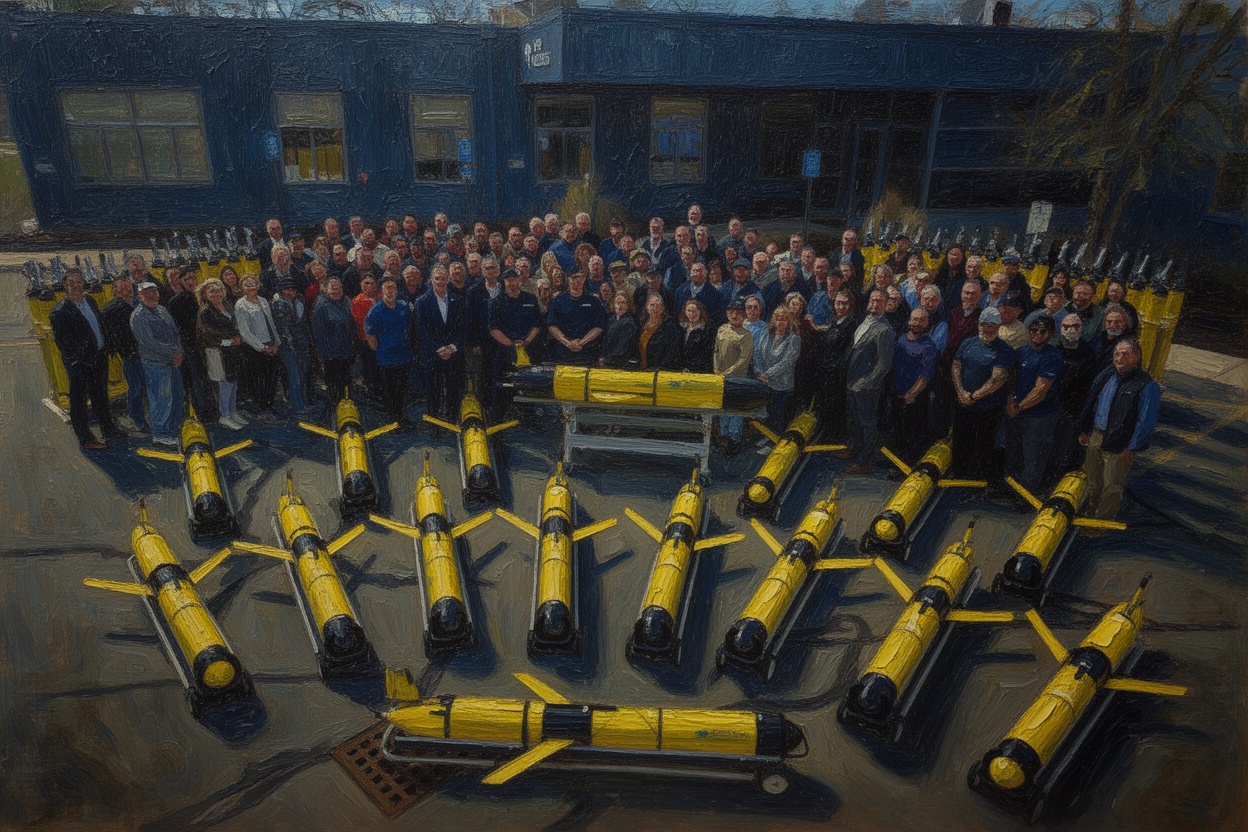
UK Royal Navy Procures Teledyne Underwater Gliders for Ocean Surveillance
The UK Royal Navy has secured a major contract with Teledyne to deploy autonomous underwater gliders that will enhance maritime domain awareness. This acquisition strengthens the Royal Navy’s capacity to collect vital environmental intelligence in complex oceanic theaters, bolstering operational readiness.
The UK Royal Navy has awarded a significant contract to Teledyne Marine for the supply of advanced autonomous underwater gliders and associated ocean observation systems. The contract includes provision of Sentinel and Slocum gliders, APEX floats, and support services designed to enhance data gathering capabilities in challenging maritime environments.
This investment upgrades the Royal Navy’s environmental monitoring, vital for submarine tracking, mine detection, and operational planning in remote and complex waters. The underwater gliders autonomously collect high-resolution environmental data over extended periods, reducing the need for manned patrols and enhancing persistent surveillance.
Strategically, this contract advances the Royal Navy’s undersea warfare and maritime domain awareness capabilities amidst increasing global naval competition, particularly in contested regions like the Arctic and the Indo-Pacific. Autonomous sensor networks like these represent a growing trend among major naval powers to leverage technology for intelligence, surveillance, and reconnaissance (ISR).
Technically, the Sentinel and Slocum gliders operate by using buoyancy changes to glide silently underwater, capable of covering hundreds of kilometers over weeks while gathering oceanographic data. APEX floats complement this by collecting vertical profiles of temperature, salinity, and currents. Teledyne’s systems are known for endurance, stealth, and high data fidelity, crucial for tactical and strategic naval operations.
Looking ahead, the integration of these platforms will increase the Royal Navy’s situational awareness and operational flexibility amid intensifying maritime challenges. The data collected will also inform joint allied operations and environmental forecasting, reinforcing the UK’s global naval posture and maritime security commitments.