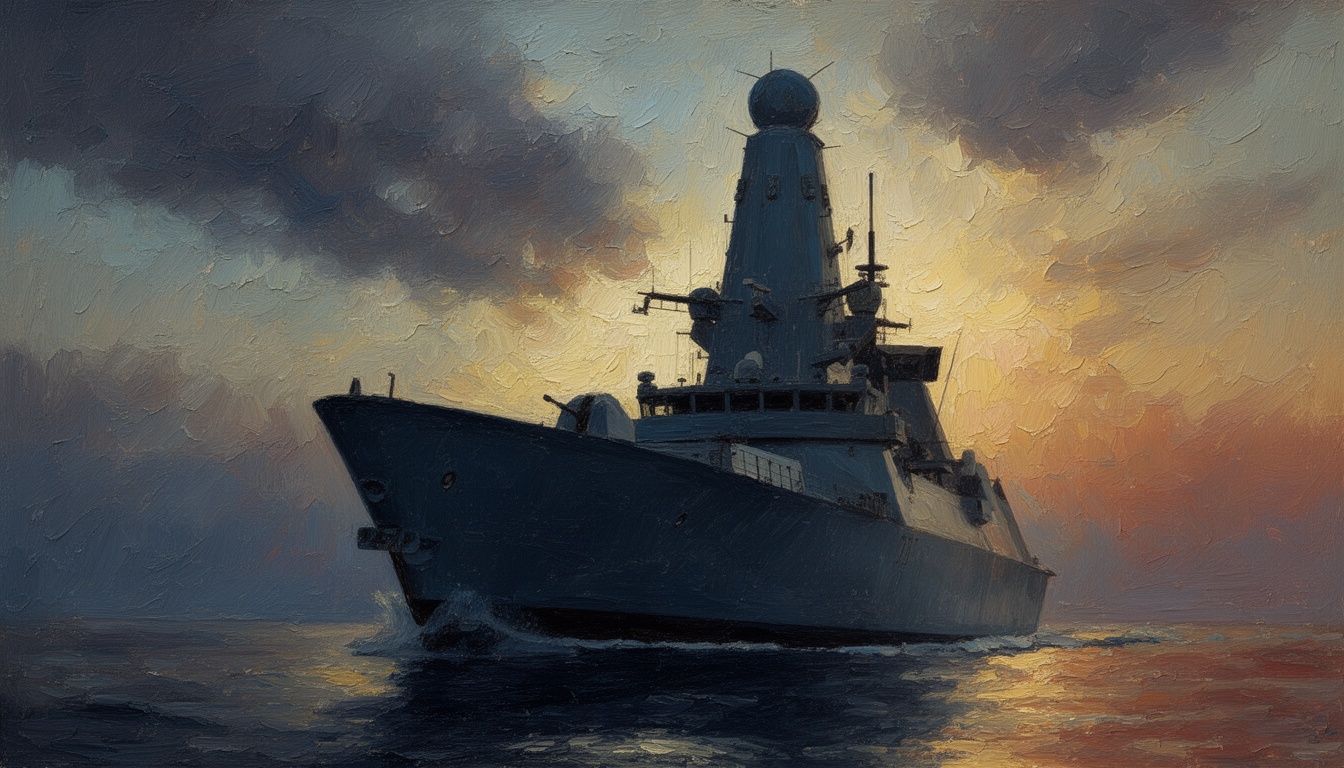
UK official asserts HMS Dragon remains ready for air defense
London signals flagship Type 45 continues to provide layered air defense despite a tight maintenance window. The ship’s rapid return to operations reinforces UK naval deterence posture amid ongoing regional tensions. Analysts will watch whether this sustains alliance credibility and regional air-defense coverage.
The UK asserts that HMS Dragon, the Type 45 air-defense destroyer, remains on high readiness for air defense duty despite a brief pause for maintenance. The vessel had reached a theatre early in the deployment, then entered a maintenance window that was shorter than typical. The official statement reframes the maintenance as a routine, time-efficient step that preserves combat readiness. This keeps the ship conceptually at peak readiness for any emergent air-threat scenario.
Historically, Type 45s form a core element of UK and allied sea-based air defense, carrying the Sea Viper system and supporting distributed fighter coverage. The ship’s presence in theatre prior to maintenance underscores a strategy of maintaining overlapping anti-air capabilities across key regions. Observers will weigh whether the short maintenance window affected other vessels in the task group or broader air-defense coordination with allied forces. This narrative aligns with ongoing emphasis on persistent air-denial capabilities around critical chokepoints.
In strategic terms, the HMS Dragon’s status feeds into wider deterrence calculations for NATO and partners. Keeping such ships available signals resilience against accelerating aerial threats, including advanced missiles and air-launched platforms. The decision to publicly frame the ship as still available for air defense suggests a deliberate message about continuity of coverage. Analysts will monitor any subsequent drills or sensor-network integrations that could magnify its defensive envelope.
Operational specifics indicate the Type 45’s dual-band radar, integrated air-defense suites, and command-and-control links that enable rapid tasking with allied units. Precise timelines for the maintenance window have not been disclosed, but the emphasis is on preserving the ship’s engagement capacity. In the near term, expect closer coordination with regional air-defense nodes and possible return-to-doorstep readiness testing. The outcome will influence assessments of Royal Navy sustainment planning and allied force-generation schedules.
Looking forward, the Dragon’s continued availability will shape perceptions of UK maritime deterrence. If maintenance overrun becomes a pattern, allied planners could adjust patrol schemas or rotate additional air-defense assets into the area. For now, the official framing reinforces confidence that London can keep high-end air-protection afloat in volatile theatres. The broader implication is an extended-zone, layered defense posture that complicates adversaries’ planning cycles.