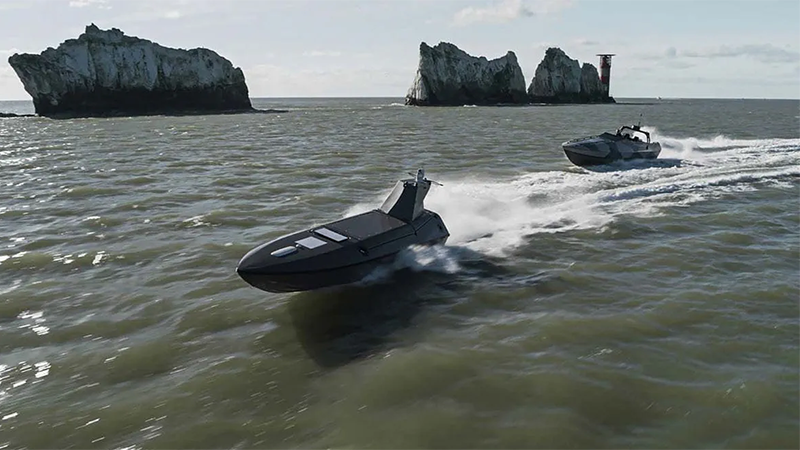
UK Navy Acquires 20 USVs for Potential Iran Maritime Operations
The UK Navy’s acquisition of 20 unmanned surface vessels (USVs) signals a dangerous escalation in its operational readiness in the Persian Gulf. Uncertainty surrounds their deployment timeline amidst rising tensions in Iranian maritime activity.
The UK Ministry of Defence has confirmed the acquisition of 20 unmanned surface vessels (USVs) aimed at enhancing naval capabilities. However, officials have refrained from disclosing whether these vessels will be deployed imminently in response to escalating maritime threats in the Persian Gulf linked to Iran. This move indicates an urgent adaptation to evolving security challenges in the region.
Historically, the UK's naval presence in the Gulf has fluctuated in response to both geopolitical dynamics and regional stability. Iran’s aggressive maritime maneuvers, particularly concerning the Strait of Hormuz—a critical chokepoint for global oil supply—have consistently aggravated tensions with Western naval forces. The strategic significance of these USVs emerges against a backdrop of increased Iranian aggression, underscoring a shift in operational strategy as Western navies reassess their deterrence capability.
The significance of this acquisition cannot be overstated; it reflects a clear intent by the UK to maintain maritime dominance and ensure safe passage for international shipping lanes. The USVs will serve as a testbed for unmanned combat and surveillance technologies that could enhance fleet capabilities, but their deployment raises substantial risks of confrontation with Iranian forces, which could lead to significant military escalation in an already volatile region.
Key actors include the UK Ministry of Defence, which aims to present a robust front against perceived Russian and Iranian threats, and Iran, which has historically perceived Western encroachments as provocations. The UK’s focus on unmanned systems highlights the shift in naval warfare tactics, where intelligence, surveillance, and reconnaissance (ISR) capabilities play crucial roles in maritime security operations. Iran’s motivation involves asserting control over its regional waters while countering what it sees as Western conspiracies against its sovereignty.
Technically, the USVs represent a modern evolution in naval warfare, capable of multi-role missions including reconnaissance, strike operations, and force augmentation. Although specific designations and operational specs of the USVs have not been revealed, these vessels are part of a broader investment strategy aiming to modernize the Royal Navy’s fleet well into the coming decade. The announced budget for the procurement is part of a larger £1.5 billion investment into unmanned naval technologies.
The consequences of this naval expansion could lead to a number of escalation vectors. Iran may perceive the presence of UK USVs as a direct challenge, prompting increased aggressive posturing or even missions to disrupt surveillance operations. Furthermore, incidents at sea involving Iranian naval assets could trigger responses from the UK Navy, further complicating the already tense maritime situation.
This scenario mirrors previous instances where technological advancements in naval warfare, such as the introduction of drones, have led to new forms of confrontation; notably, the Israel-Iran maritime conflict has seen escalation due to similar technologies being employed against one another. The historical context of the Gulf War also provides a precedent for how maritime operations can spiral quickly out of control, especially when unmanned systems are involved.
Looking ahead, attention should be focused on the operational status of these USVs and any developments in Iranian naval strategy. Key intelligence indicators will include deployments of Iranian naval assets in proximity to UK operations and any reports of confrontation incidents. The UK's ability to effectively integrate these USVs into existing naval frameworks will also be critical in assessing their impact on regional security dynamics.