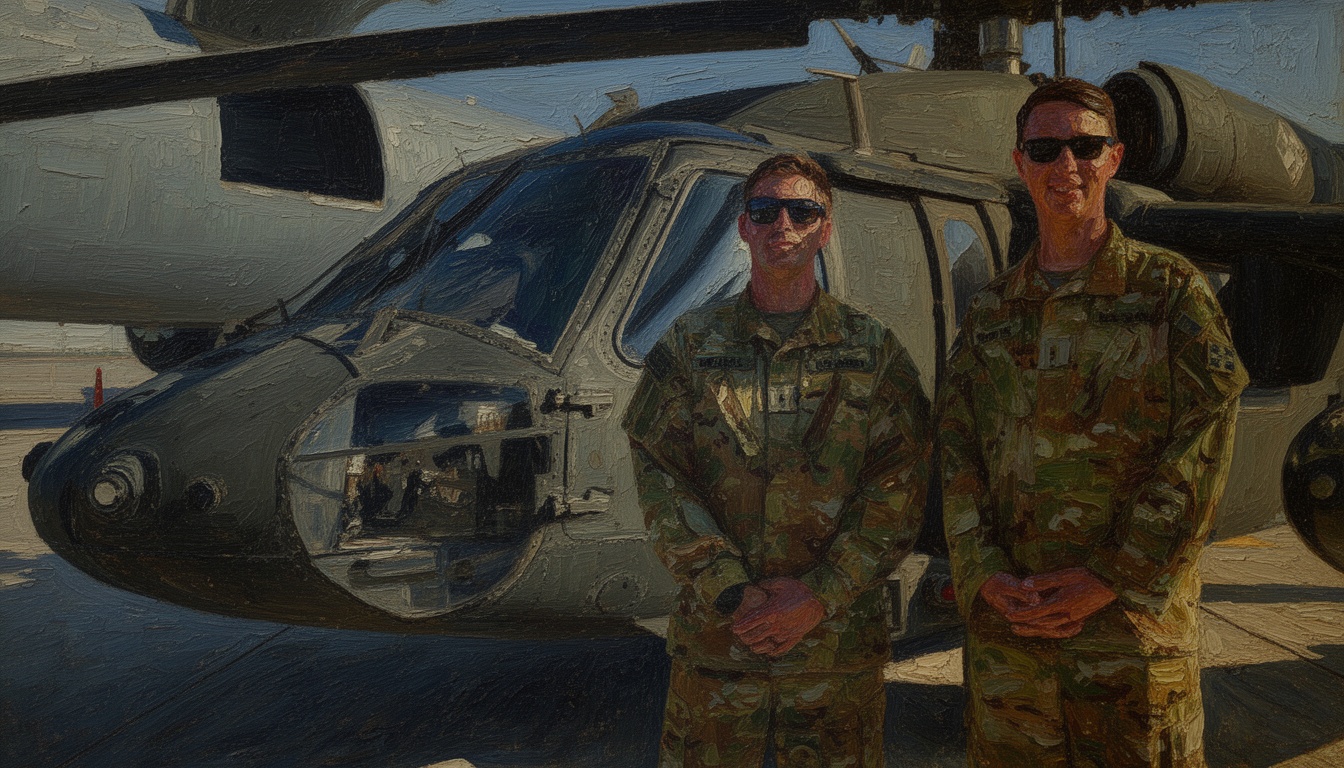
UH-60M Black Hawk tour and mission briefing signals shift to unmanned battlefield support
A US Army UH-60M Black Hawk tour and mission briefing with its pilots reveals ongoing emphasis on multi-role capability and the planned integration of uncrewed battlefield support. The briefing highlights crew priorities, avionics upgrades, and future tasks that extend beyond traditional transport and firefighting roles. This development has implications for air-ground collaboration and force projection across allied defense portfolios.
Paragraph 1: The U.S. Army's UH-60M Black Hawk tour and mission briefing with its pilots underscores a pivot toward expanded mission sets, including uncrewed battlefield support concepts. Commanders use the briefing to map how the helicopter's current loadouts can be complemented by autonomous and remotely operated systems in future operations. The session emphasizes readiness, crew training, and interoperability with ground units to ensure rapid integration of new capabilities. Paragraph 2: Background context shows the UH-60M as a backbone of rotary-wing versatility, repeatedly deployed for lift, medevac, and special operations support. The shift toward unmanned support reflects broader doctrine adjustments in U.S. and allied forces, aiming to reduce risk to personnel while maintaining tempo. The briefing also touches on modernization efforts across avionics and mission planning workflows to enable tighter control of mixed manned-unmanned formations. Paragraph 3: Strategic significance centers on deterrence and expeditionary reach. The move toward unmanned battlefield support could complicate adversaries’ targeting calculus by multiplying options for sustainment and counter-reconnaissance. For allied partners, the development offers potential interoperability benchmarks and shared training pipelines, which could influence regional power dynamics and coalition planning. Paragraph 4: Technical and operational details cover specific UH-60M configurations, new sensor suites, improved communications links, and software updates intended to enable safer operation alongside unmanned assets. The briefing hints at joint exercises that test coupled manned- unmanned sorties, data fusion, and battlefield situational awareness. Budgetary signals show continued investment in rotorcraft modernization and connected battlefield ecosystems. Paragraph 5: Likely consequences include accelerated adoption of unmanned support concepts, increased demand for pilot training in autonomous integration, and stronger collaboration with ground forces and air defense assets. Forward assessment suggests awaitable tests in live-fire environments, with a path toward formal doctrine amendments and international partner exercises that demonstrate this converged capability.