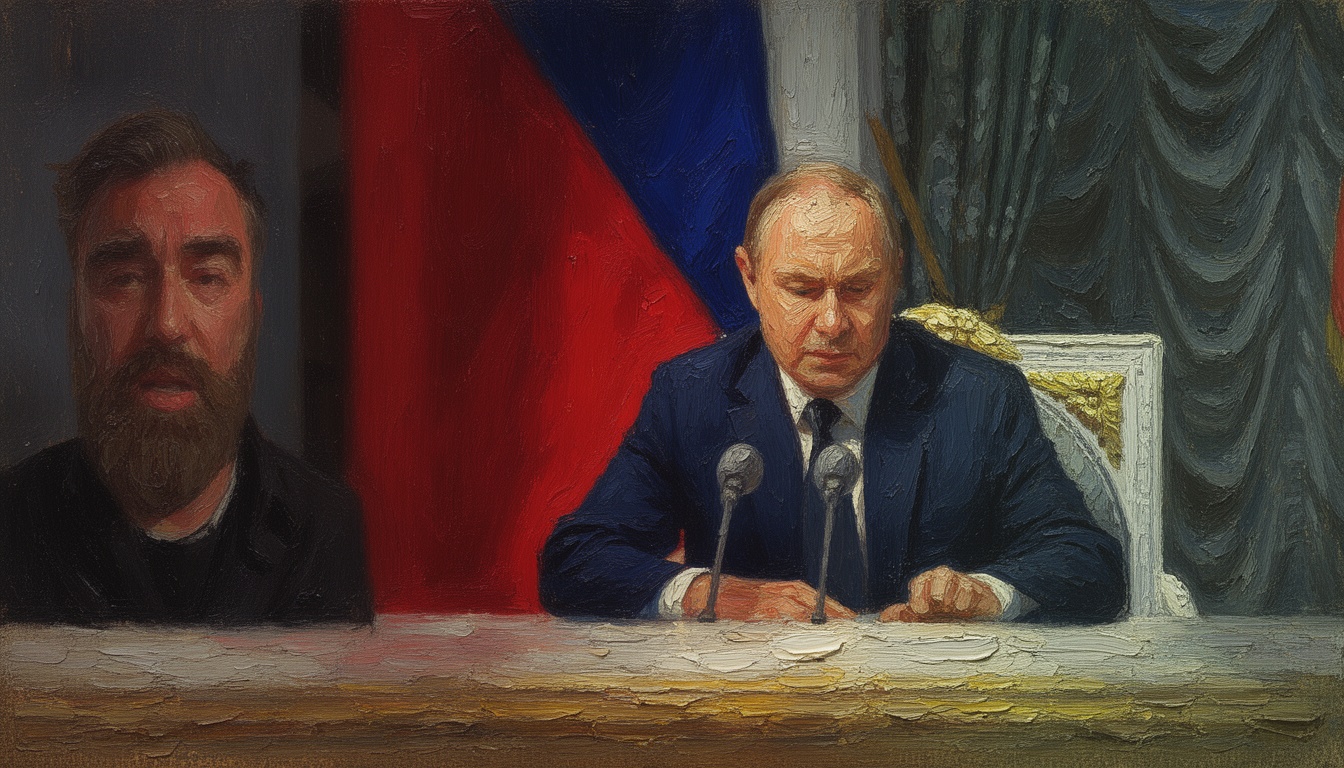
Trump's Unexplained Sympathy for Putin Raises Questions
A Ukrainian analyst contends that Donald Trump’s reticence to pressure Russia into ending the Ukraine war signals a tangled personal-political dynamic with Vladimir Putin. The analysis comes as Ukraine hails a U.S.–Iran ceasefire while urging Moscow to halt its war. The piece frames the Trump–Putin relationship as a potential leverage issue for Western deterrence and alliance cohesion.
A Ukrainian analyst asserts that Donald Trump appears to withhold decisive pressure on Russia to end the war in Ukraine, prompting urgent questions about the nature of his ties to Vladimir Putin. In a discussion with FRANCE 24’s Mark Owen, Peter Zalmayev, founder and director of the Eurasia Democracy Initiative, argues that Trump’s reluctance to exert strongarm tactics on Moscow may reflect deeper misalignments within the US political-security structure. The analysis juxtaposes a two-week ceasefire between the U.S. and Iran with the ongoing Ukrainian conflict, suggesting that Western leverage is bifurcated by divergent strategic priorities. The piece foregrounds how personal relations between leaders can influence allied risk calculations and escalate or dampen deterrence. The claim rests on public statements and observed diplomatic signals rather than a disclosed policy document.
Background context emphasizes that Washington’s posture toward Russia has long been a core determinant of European security. Ukraine’s leadership has simultaneously sought to maximize Western unity while pressing for clearer penalties on Moscow’s military actions. The report implies that a dissonant US approach could undermine alliance credibility at a time when Russia has shown readiness to adapt its coercive methods. Analysts warn that any ambiguity in American messaging risks emboldening Russia’s capacity to test Western resolve. The narrative treats the Trump era as a potential pivot point for future US deterrence policy toward Moscow.
Strategic significance centers on deterrence dynamics and alliance cohesion across the transatlantic security architecture. If a personal-politics dimension shapes official policy, allied capitals may recalibrate risk tolerance and escalation thresholds. The argument invites scrutiny of how domestic political cycles translate into foreign policy signals that bear on Ukrainian counteroffensive planning and Western military aid flows. The broader balance involves how US domestic politics interact with European and Eurasian security calculations as the war persists. The case underscores how leadership signals can become force multipliers or constraints for alliance action.
Technical-operational details note that no new weapon systems or battlefield deployments are announced in the interview. The focus remains on strategic signaling, messaging, and the potential for policy fragmentation. Budgetary implications are inferred rather than explicit: greater clarity from Washington would likely sustain or increase security aid to Ukraine, while mixed signals could complicate European defense planning and procurement timelines. The piece implies that risk management hinges on clear articulation of red lines, escalation channels, and credible consequences for Russian actions. Forward assessments indicate the need for close monitoring of US domestic politics as a driver of Western deterrence posture in the near term.