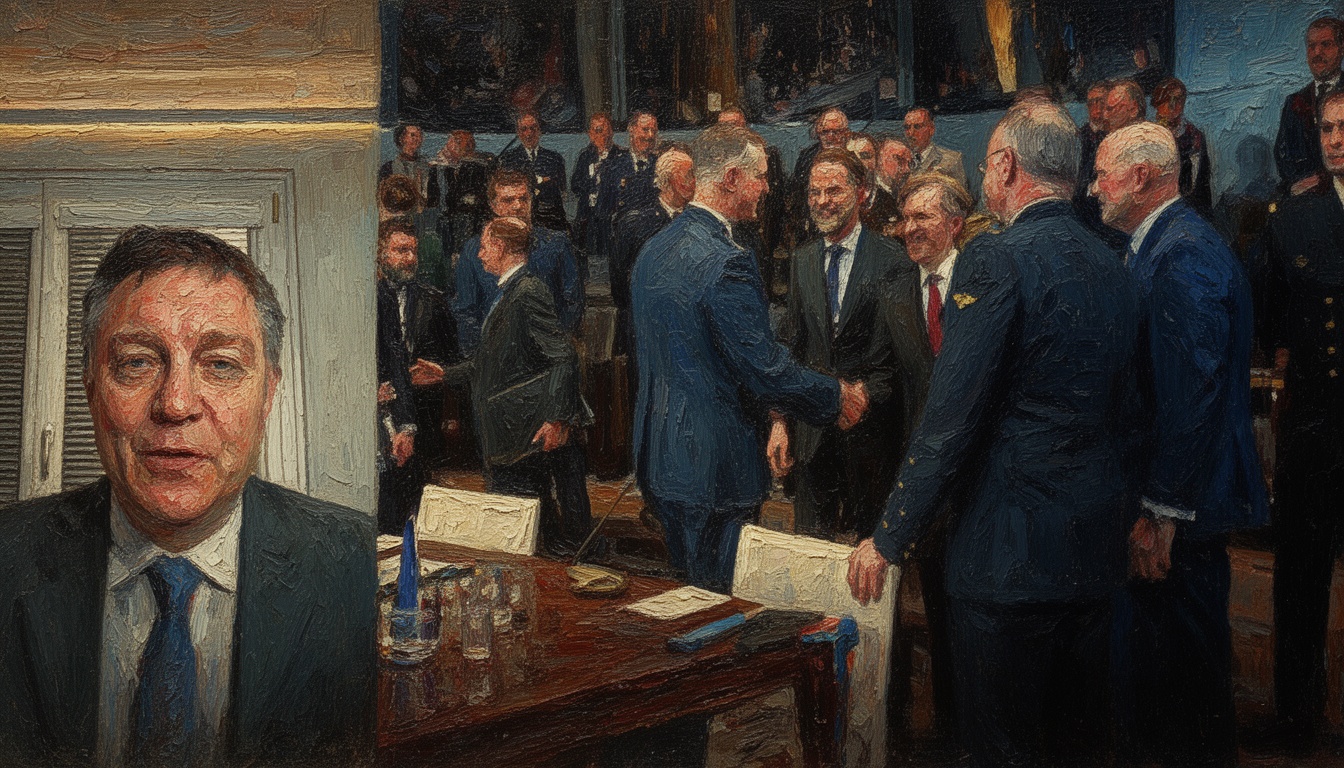
Trump's incendiary rhetoric fuels 'chaos and confusion', driving NATO allies toward self-reliance
Trump's fiery language is foregrounding a broader realignment in the transatlantic security posture. European capitals are recalibrating toward greater autonomy, highlighting gaps in interoperability and logistics with the United States. The GCSP analyst frames this as a structural shift with long-term implications for alliance cohesion and defense industrial bases.
Trump's incendiary rhetoric is reframing the strategic environment for the Atlantic alliance. The rhetoric feeds a perception that the United States may retreat from its traditional security commitments, pushing European partners to hedge and accelerate self-reliance. Analysts caution that while language can shape political will, the underlying capacity calls for urgent investment in interoperability, logistics, and force planning across the transatlantic zone. The consequence would be a more autonomous Europe able to field credible deterrence without heavy reliance on American compatibility and support.
The background context is a period of renewed U.S. political volatility and recalibrated risk tolerance in allied capitals. European governments have faced a complex mix of threats—from resurgent great-power competition to asymmetric warfare—while navigating budget pressures and domestic political cycles. In this frame, the Geneva Centre for Security Policy’s Alexandre Vautravers emphasizes that rhetoric becomes a catalyst for concrete policy choices. He notes that alliance management now hinges on how quickly Europe can close technical and doctrinal gaps that hinder seamless joint operations with the U.S. and among European forces.
Strategically, the shift toward autonomisation signals a rebalancing of the transatlantic power equation. If NATO members move toward greater independent capability, the alliance could maintain credible deterrence even with fluctuating U.S. commitments. However, this trajectory also risks duplicating capabilities and inflating defense budgets unless harmonized through synchronized programs and common standards. The dynamic frames a contest of credibility: fast-tracking interoperability versus preserving unity of command and shared risk.
On the technical and operational level, the discourse centers on force readiness, logistics pipelines, and equipment standardization. Specific concerns include the alignment of industrial supply chains, joint exercises, and the integration of next-generation systems across air, land, and cyber domains. The analysis suggests Europe must accelerate multi-domain integration, invest in strategic stockpiles, and align defense procurement with joint NATO priorities to avoid friction during multi-national operations.
Looking forward, the consequences are likely to include heightened defense spending in Europe, broader public awareness of alliance dependencies, and a gradual shift in political narratives around burden-sharing. The trajectory could spur new bilateral and multi-lateral partnerships aimed at resilient deterrence, with potential realignments in regional security architectures. Observers expect a period of recalibrated trust and more rigorous alliance planning as Europe tests its capacity to operate as a credible strategic actor alongside the United States.