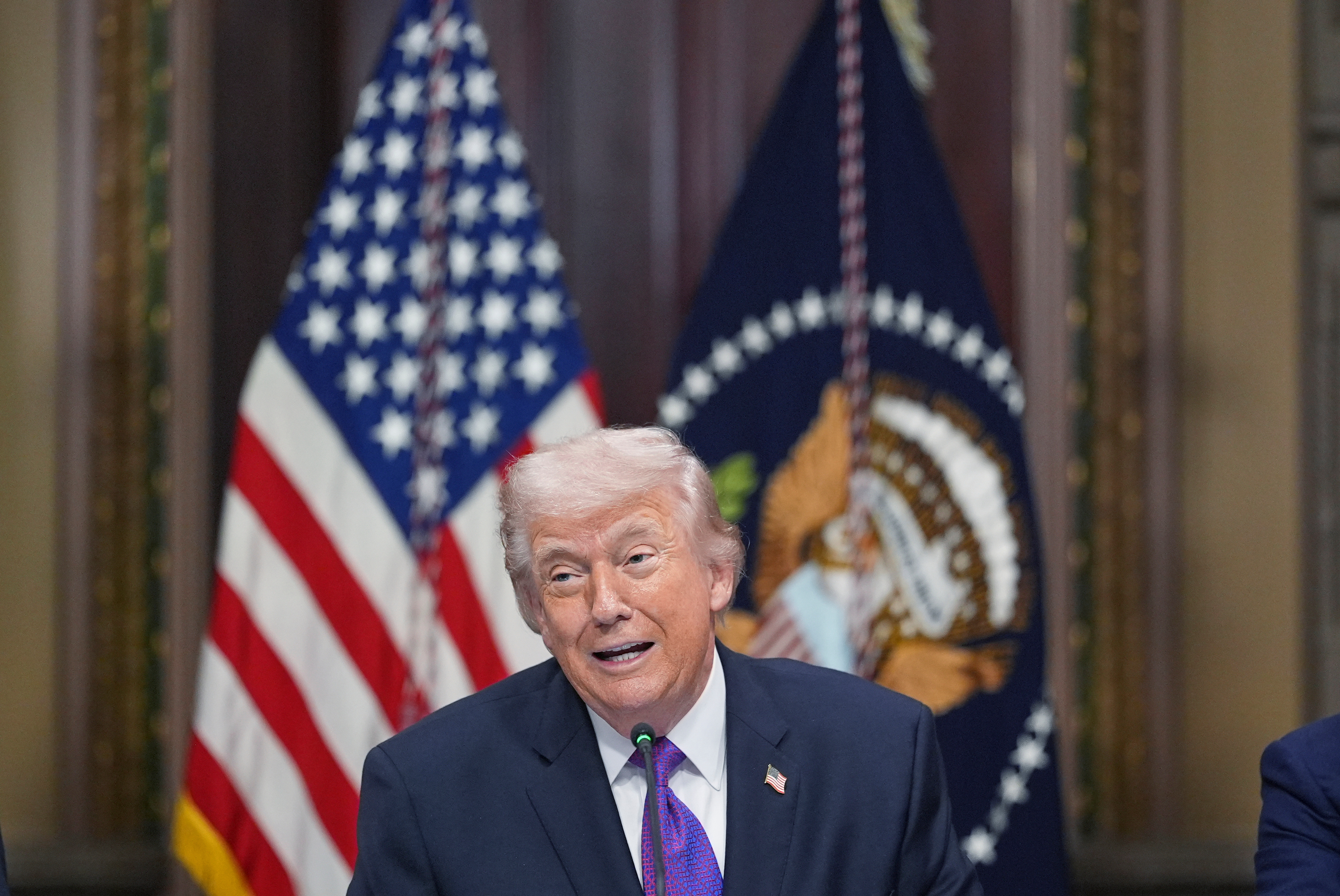
Trump's Arms Executive Meeting Escalates Pressure to Replenish War Stockpiles
The U.S. seeks urgent replenishment of munitions for potential conflicts, reflecting rising tensions in the Middle East. This meeting signals a relentless push to sustain U.S. military readiness amidst ongoing regional threats.
Former President Donald Trump is set to meet with arms executives on Friday to hasten the replenishment of U.S. munitions and weapons stockpiles depleted during the Iran conflict. This strategic move highlights the administration’s urgent response to evolving threats and the necessity of maintaining military readiness against adversaries in the region. The focus on rapid resupply underscores an alarming commitment to confrontations in volatile theaters where U.S. forces and interests are increasingly at risk.
The backdrop to this meeting is the sustained military involvement in the Middle East, particularly in conflicts involving Iranian influence and associated proxy forces. U.S. stockpiles have dwindled as military operations persist, necessitating immediate action to restock munitions. The depletion of conventional weaponry and specialized munitions poses a significant threat to U.S. operational capabilities, raising the stakes for Trump's upcoming discussions with defense industry leaders.
This situation reveals the precarious balance of global military power and exposes vulnerabilities within U.S. defense planning. The push to refill munitions not only aims to sustain operations but also reflects the broader strategic concerns of deterring Iranian advancements and supporting regional allies. With global interests hanging in the balance, any prolonged depletion risks undermining U.S. influence and operational effectiveness against both state and non-state actors.
Key players in attendance will surely include executives from major defense contractors such as Lockheed Martin, Raytheon, and Northrop Grumman, who stand to benefit from increased government contracts worth billions of dollars. As the U.S. prepares to replenish stocks, these firms are motivated by not only profit but also the political expediency of equipping U.S. forces for engagement in a rapidly deteriorating regional landscape. Their advise will likely center on accelerating contracts to ensure both production efficiency and timely supply delivery.
The armaments in focus include precision-guided munitions, artillery shells, and missiles designed to counteract Iranian capabilities. U.S. expenditure for these munitions, which could reach upwards of $10 billion, signals a considerable demand for quick production cycles to replace critical lost assets. With confrontation looming, investments in military technology become paramount, as is ensuring the U.S. can project power effectively and rapidly should tensions escalate.
Failure to replenish these stocks risks a severe strategic misalignment for U.S. military operations, possibly leading to vulnerabilities that adversaries could exploit. Moreover, this meeting is likely to signal further military escalations and could prompt Iran and its proxies to increase their own military posturing, heightening regional instability. In this high-stakes scenario, both sides could find themselves on a collision course.
Drawing from historical precedents, when military stockpiles are inadequately maintained, it can lead to prolonged engagements and increased fatalities. The U.S. military’s experience during the prolonged operations in Iraq and Afghanistan serves as a grim reminder of the perils of being ill-prepared. History shows that the consequences of inadequate resupply can escalate conflict and strain U.S. forces, necessitating robust action.
In the immediate future, close attention must be paid to developments from this meeting, particularly regarding commitments from the defense industry and timelines for munitions production. Observers should also monitor any escalatory actions taken by Iran and its proxies in reaction to this renewed U.S. military readiness. Intelligence indicators will be crucial in assessing changes in regional dynamics and any shifts in military deployments by both sides.