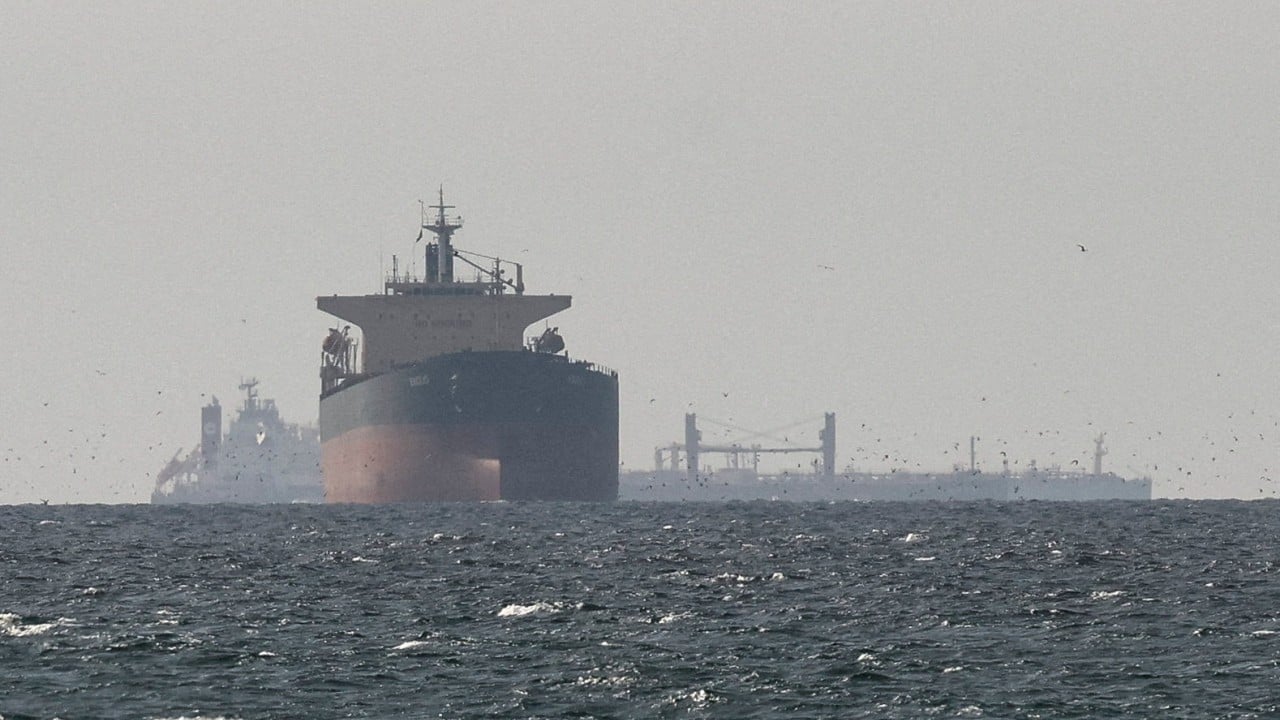
Trump Dismisses Strait of Hormuz Risk as Oil Routes Face Crisis
The closure of the Strait of Hormuz threatens global oil supplies, with Trump urging tankers to take risks. The US's unclear response raises significant fears of escalation in a strategic maritime chokepoint.
The Trump administration is downplaying the escalating crisis in the Strait of Hormuz, where Iranian threats have effectively closed this vital artery for maritime oil transport. In a recent Fox News interview, President Trump cavalierly claimed, "there’s nothing to be afraid of," while the realities on the ground indicate a precarious situation for international shipping. The lack of robust US actions could embolden Iranian provocations further disrupting global oil supplies.
The Strait of Hormuz has long been a flashpoint in US-Iran relations, especially since the US withdrew from the Joint Comprehensive Plan of Action (JCPOA) in 2018. With roughly 20% of the world's oil passing through this narrow passage, tensions have escalated in recent months as Iranian naval forces have repeatedly threatened foreign vessels. The current crisis marks a significant deterioration from earlier periods of military engagement and diplomatic overtures in the region.
The strategic implications of this downplay are severe; should Iran succeed in enforcing its control over the strait, global oil prices could surge dramatically, risking an economic crisis that transcends regional boundaries. Countries heavily dependent on oil from the Gulf, such as Japan and South Korea, could face severe supply disruptions. The US's failure to take decisive action raises questions about its reliability as a security guarantor in the region, potentially inviting greater aggression from Tehran.
Key actors in this crisis include the US and Iran, both of whom wield significant leverage over the oil market and maritime security. While Trump urges tankers to display bravery, the reality is that a combination of military restraint and internal political dynamics may prevent effective US naval operations. Iran, on the other hand, is likely leveraging this crisis to reinforce its power and test US resolve, calculating that American interests may not provoke an effective military response.
Technical details emphasize the strategic weight of the Strait, where vessels navigate a mere 33 kilometers at its narrowest point. An estimated 17 million barrels of oil pass through the strait daily, illustrating its global economic significance. The Trump administration's consideration of escorting vessels hints at a potential military deployment, but no firm decisions have been announced, leaving navigational safety in limbo.
The consequences of this standoff could spiral quickly, with potential escalation vectors including direct military clashes between US forces and Iranian naval units, or a unilateral Iranian effort to impose further restrictions on shipping. Should the US fail to implement protective measures soon, we may see a broader maritime conflict in which oil transport routes become a battleground.
Historical parallels can be drawn with incidents such as the 1988 Iran–Iraq War, during which the United States engaged directly to safeguard oil flows in the Persian Gulf. As tensions flared, it also led to significant naval engagements. The contemporary situation reflects a delicate dance of power projection on both sides, wherein miscalculations could lead to renewed hostilities in the region.
Looking ahead, it is critical to monitor Iranian naval activity and US response strategies in the Strait of Hormuz. Key intelligence indicators will include shipping patterns, reported naval deployments, and any escalation in rhetorical exchanges, all of which could precipitate a broader international confrontation. As market stability hangs in the balance, the world must remain vigilant to a rapidly changing security landscape.