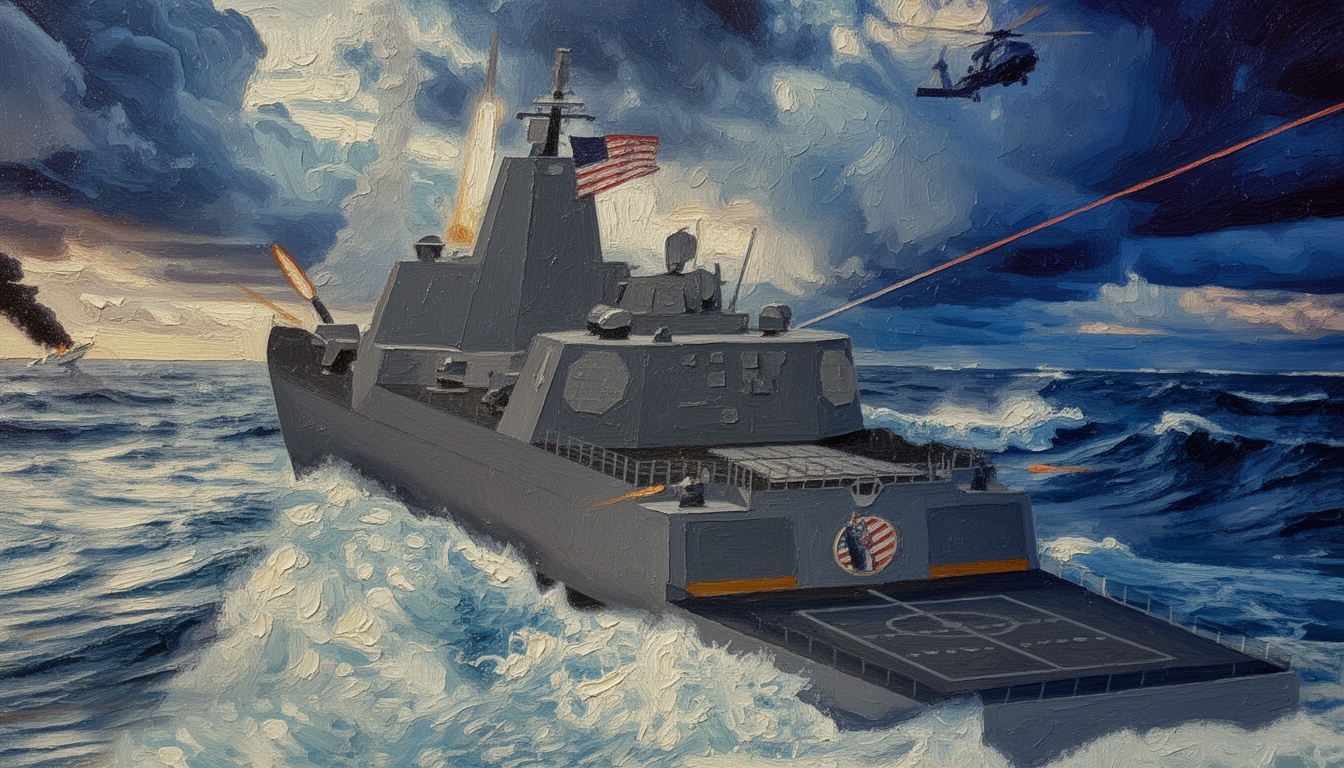
Trump Class Battleship Program: New Details, Huge $17B Per Vessel
The Navy is outlining a conceptual path for the Trump-class battleship program, with vessels estimated at $17 billion each. The discussion centers on how these ships could fit into modern fleet operations, emphasizing power projection and deterrence. This analysis assesses potential strategic implications for global naval balance and alliance planning.
The Trump-class battleship program is moving from rumor to a more defined concept, with officials describing a future role that centers on high-end surface power and long-range deterrence. The focus is on a vessel intended to operate as a flagship with advanced sensors, ballistic and anti-ship strike options, and extended endurance. While details remain sparse, the architecture is framed around survivability in contested environments and the ability to influence maritime chokepoints. The cost estimate of roughly $17 billion per ship anchors the scale of the program and invites scrutiny of fiscal tradeoffs within the Navy's long-range plan.
Background for this program traces back to a broader push to reassert sea dominance through multi-mission capital ships capable of rapid response and autonomous resilience. Analysts note that the proposed hull could integrate next-generation propulsion, directed-energy components, and advanced command-and-control suites designed to fuse fleet-wide sensor data. The conversations around this platform reflect renewed emphasis on naval deterrence in the presence of sophisticated adversaries and proliferating anti-access/area-denial (A2/AD) capabilities.
Strategically, the program signals a recalibration of maritime power projection amid evolving great-power competition. If realized, the Trump-class could reshape carrier and cruiser dynamics by offering a heavy-hitting, long-range option that complements existing capital ships. The approach hints at a fleet architecture prioritizing node-based sensing, networked fires, and rapid upgrade paths to absorb future weapons systems. The implications extend to allied planning, where partner navies may adjust training, interoperability, and buffer stock for long-range operations near contested theaters.
Technical and operational details remain uncertain, but the public framing emphasizes a high-displacement hull, survivable hull form, and sensor-integrated combat systems. Budget conversations imply significant investment in propulsion, power generation, and modular payload bays for future missiles or directed-energy modules. The program would also require a dedicated industrial base for construction, sustainment, and lifecycle upgrades, potentially reshaping domestic naval-industrial policy and export considerations in allied markets.
Forward assessment suggests the Trump-class concept could drive tensions in fleet development timelines and force posture planning. If the program progresses, it may accelerate competition in shipbuilding, push other navies to accelerate their own capital ship ambitions, and affect strategic risk calculations in high-end maritime theaters. The ultimate trajectory will hinge on congressional approvals, technological maturation, and the execution of a coherent deterrence doctrine that justifies a multi-vessel, multi-year investment.