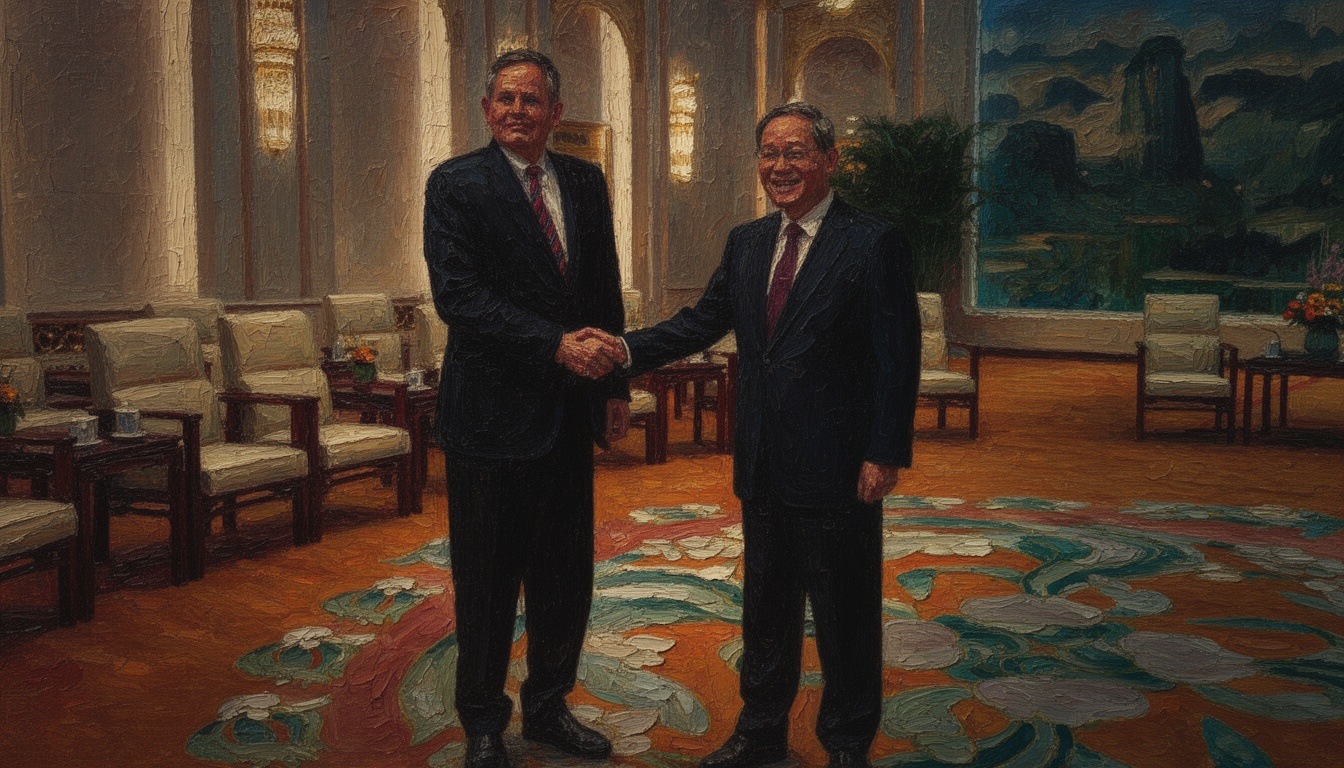
Trump ally to visit China as US presses Beijing before May summit
A five-member bipartisan delegation led by Senator Steve Daines will visit China May 1-15, aiming to signal U.S. patience on trade, tech competition, and Iran ties ahead of a high-stakes May summit. Washington's pressure campaign intensifies as Beijing hosts leaders from both nations. The trip underscores the fragility of U.S.-China relations and the risk of escalation in economic and strategic competition.
A Trump ally will lead a five-member bipartisan delegation to China next week, with first stops in Shanghai and Beijing. The visit, scheduled to begin May 1, is intended to demonstrate U.S. willingness to engage Beijing even as Washington escalates pressure on trade, technology, and Iran-linked diplomacy. The delegation is headed by Senator Steve Daines, a Republican from Montana, and includes members from both parties. The trip occurs in the shadow of a closely watched May 14-15 leaders' summit and amid a broader U.S. campaign to shape Beijing's policies on multiple fronts.
Background context here shows that Washington believes economic and strategic competition with Beijing is intensifying. U.S. officials have repeatedly tied access to technology markets to decisions by Beijing on issues ranging from export controls to corporate governance. The Trump-era alignment on China remains influential in Washington, even as the current administration seeks to balance competition with cooperation where possible. The visit to China is framed as a squeeze on Beijing ahead of the summit, designed to keep pressure on any favorable concessions that might ease tariff tensions or restrict strategic alliances.
Strategically, the trip signals that Washington will neither concede on core demands nor abandon diplomacy. The Chinese leadership is watching for signs that U.S. concerns can be translated into concrete policy shifts, particularly on technology transfer, intellectual property protections, and Iran-related diplomacy. While the delegation itself has limited policy powers, its reception and any public statements could influence agenda-setting at the May summit and the broader trajectory of Sino-American engagement. The visit also serves as a test of Beijing's willingness to continue high-level dialogue while resisting external pressure on domestic priorities.
Operational details indicate a tightly choreographed itinerary; Shanghai and Beijing are the primary stops, suggesting emphasis on economic signaling and strategic messaging rather than extended regional reconnaissance. The delegation’s composition—five members, bipartisan—aims to project a united, scrutinizing approach toward Chinese policies. U.S. officials have framed the trip as part of a broader pressure campaign that includes trade negotiations, technology access, and Iran diplomacy. Analysts expect the outcome to influence both sides’ posture in the coming weeks and the messaging around the May leaders’ meeting.
Forward assessment suggests risk remains high for miscommunications or misinterpretations that could raise tensions around the summit. If Beijing pushes back, it could link concessions to broader regional leverage, including security dialogues and industrial ties. Washington may respond with calibrated sanctions or policy adjustments to maintain leverage without triggering a full-blown crisis. The trajectory hinges on how much room each side has to maneuver without provoking a sharp escalation in the bilateral relationship.