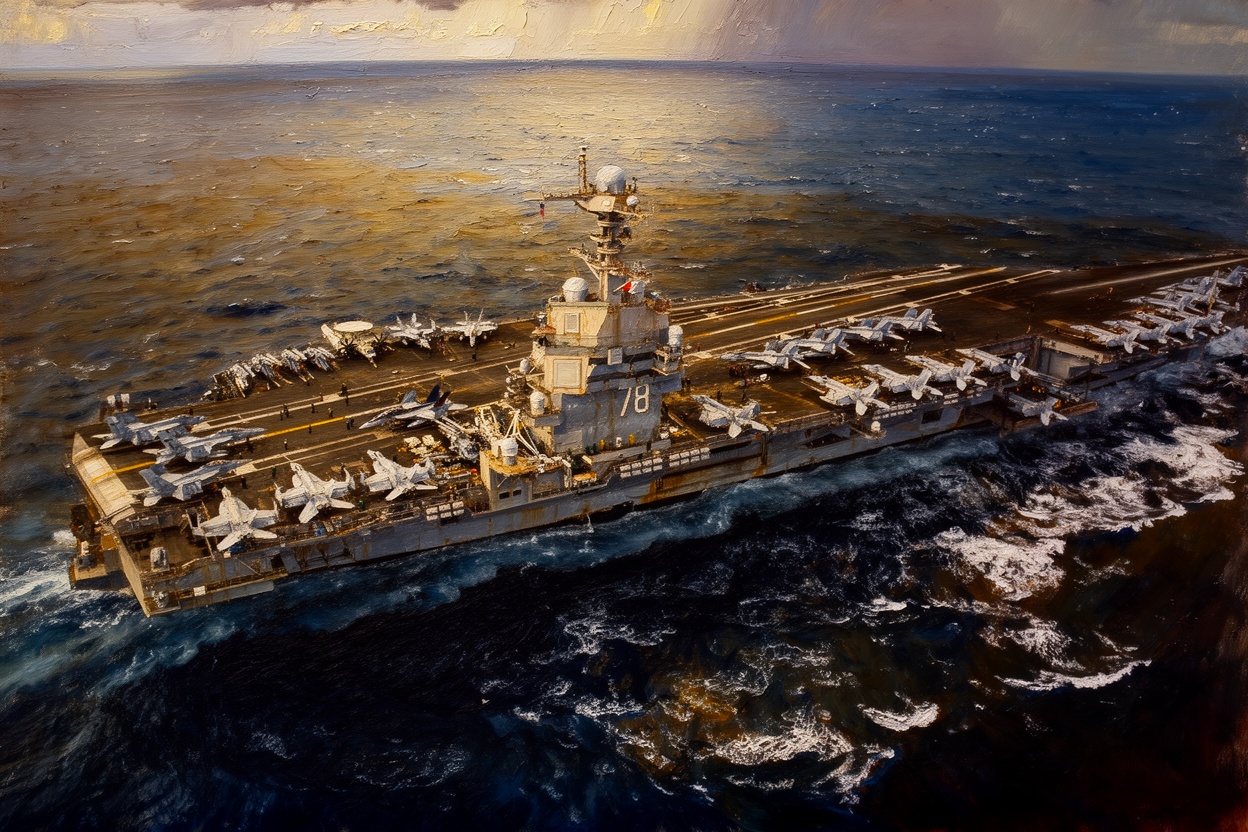
Three U.S. Carriers Enter Middle East for First Time in Decades
Three U.S. aircraft carriers operate within Central Command's area for the first time since 2003. The move signals a renewed carrier presence in a volatile region and tests naval power projection amid rising regional tensions. Analysts weigh the implications for deterrence, alliance signaling, and potential escalation dynamics.
The deployment marks a historic return of a multiple-carrier posture to the region’s sky and sea lanes. The ships are conducting routine power projection, air defenses, and maritime security operations under CENTCOM. The presence aims to reassure partners, deter adversaries, and maintain freedom of navigation across crucial choke points.
This development comes after years of fluctuating naval activity in the Middle East and persistent regional threats. The redeployed carriers reassert Washington’s capability to surge air and sea power rapidly. It also signals Washington’s willingness to leverage carrier groups as strategic deterrents in a high-stakes security environment.
Strategically, the move closes gaps in power projection and signals a higher baseline deterrent posture. It affects adversaries’ risk calculations in contested waters and prompts allies to calibrate their own force readiness. The broader balance of maritime power in the region could shift as other navies adjust patrols and exercises.
Technical details remain anchored to standard carrier-group operations: carrier air wings, escorting cruisers and destroyers, and replenishment ships in formation. Each carrier class and air wing composition contributes to the overall combat capability, with integrated air defense and anti-submarine warfare measures. The budgetary and maintenance implications are notable for ongoing readiness and training cycles.
Forward assessment suggests this deployment will endure for weeks to months, depending on strategic objectives and regional developments. The maneuver likely aims to deter escalation, support ongoing diplomacy, and demonstrate U.S. resolve to protect maritime lines of communication. Partners in the region will watch for signs of intensified drills, joint patrols, and airspace management coordination.