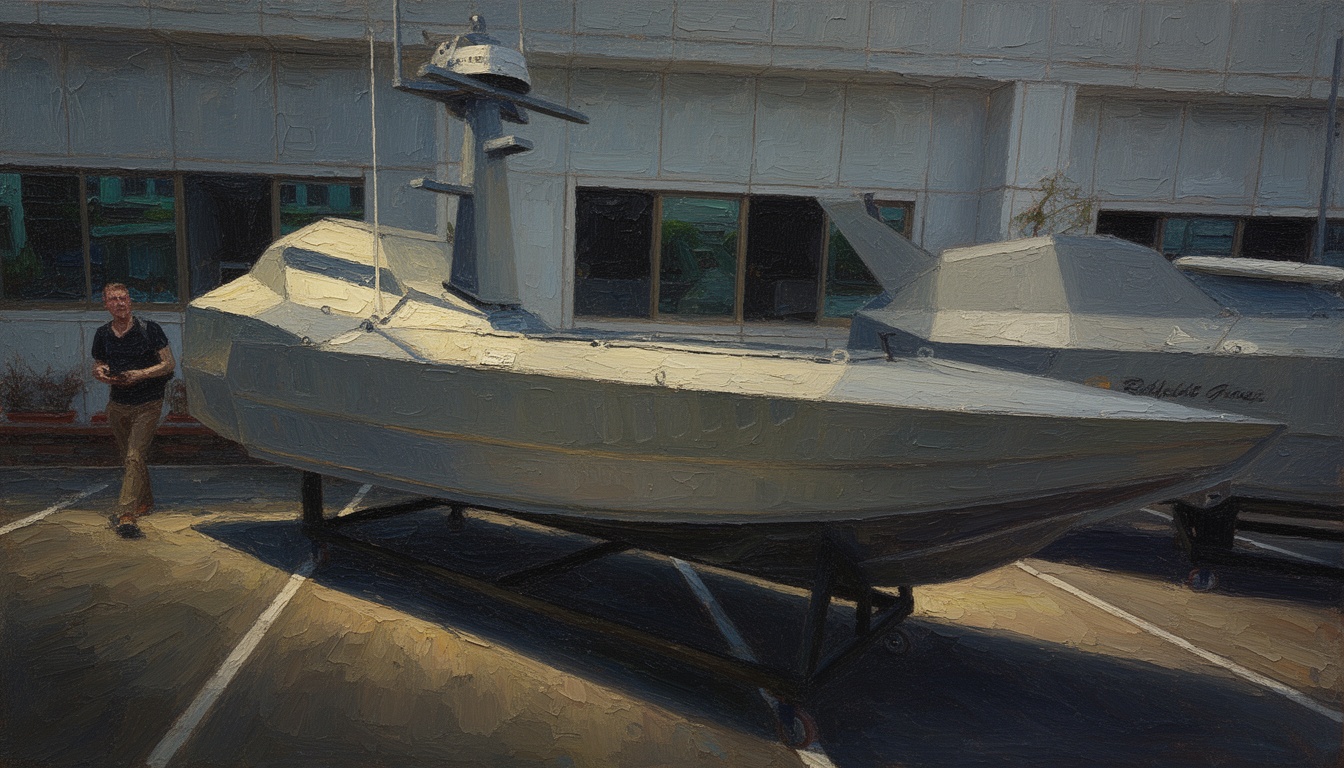
Thousands of US drone boats could disrupt PLA plans for Taiwan
Taiwanese analysts broadly welcome a US Navy plan to deploy thousands of uncrewed surface vessels across the Indo-Pacific by 2030. They believe the move could complicate Beijing’s military planning and bolster deterrence. Yet they caution that without Taiwan investing in its own drone fleet, gains may be limited due to Washington’s production, logistics, and surveillance hurdles.
The core development is the imminent US Navy plan to deploy thousands of uncrewed surface vessels across the Indo-Pacific by 2030, aimed at complicating PLA maritime plotting around Taiwan. Analysts in Taipei say the initiative raises the cost and risk for Beijing and enhances the perimeter of deterrence in the region. The proposal comes as Washington accelerates distributed maritime operations concepts and seeks to tie together unmanned platforms with allied intelligence networks. While the framework promises a persistent, layered presence, its success hinges on reliability, interoperability, and resupply capabilities across a dispersed fleet.
Background context shows Taiwan eyeing parallel investments in autonomous drones and sea-skimming sensors to complement existing defences. Analysts point out that US plans increasingly rely on mass, networked systems rather than single-vehicle swarms. Beijing, meanwhile, views Taiwan as a core national-interest flashpoint, and PLA doctrine has long emphasised sea denial and integrated air-sea operations. The evolving architecture could force Beijing to stretch its planning cycles and allocate more resources to counter-mobility operations in the Western Pacific.
Strategic significance rests on deterrence dynamics and alliance burden-sharing. The US initiative could raise the threshold for any potential seizure scenario by complicating PLA targeting and undermining its command-and-control loops. For Taiwan, the shift promises extended deterrence, if allied support remains credible and scalable. Yet uncertainty over production tempo and long-haul logistics could degrade effectiveness in a crisis, making resilience and redundancy critical denominators of the plan.
Technical and operational details include the scale of deployment and the types of systems envisioned: thousands of uncrewed surface vessels designed to operate in littoral and open-sea environments, integrated with sensors, comms nodes, and potentially light munitions. The effort will require robust maritime traffic management, secure data links, and secure maintenance chains across multiple theaters. Budget lines, industrial partnerships, and joint training cycles will shape the pace of fielding and integration with allied forces. Without parallel improvements in Taiwanese drone fleet capability and supply chains, the net gain may be constrained by overlapping readiness and maintenance demands.
Likely consequences and forward assessment indicate a more contested Indo-Pacific with higher combined risk for PLA grip on Taiwan’s approaches. The deterrence value will depend on sustained logistics, real-time intelligence sharing, and the ability to absorb setbacks in a crisis. If Taipei accelerates its own drone ambitions in lockstep with Washington’s plan, the cost-imposed on Beijing could rise further, fostering greater regional deterrence. Short of that alignment, the plan risks delivering symbolic gains without translating into decisive military disruption for PLA campaigns.