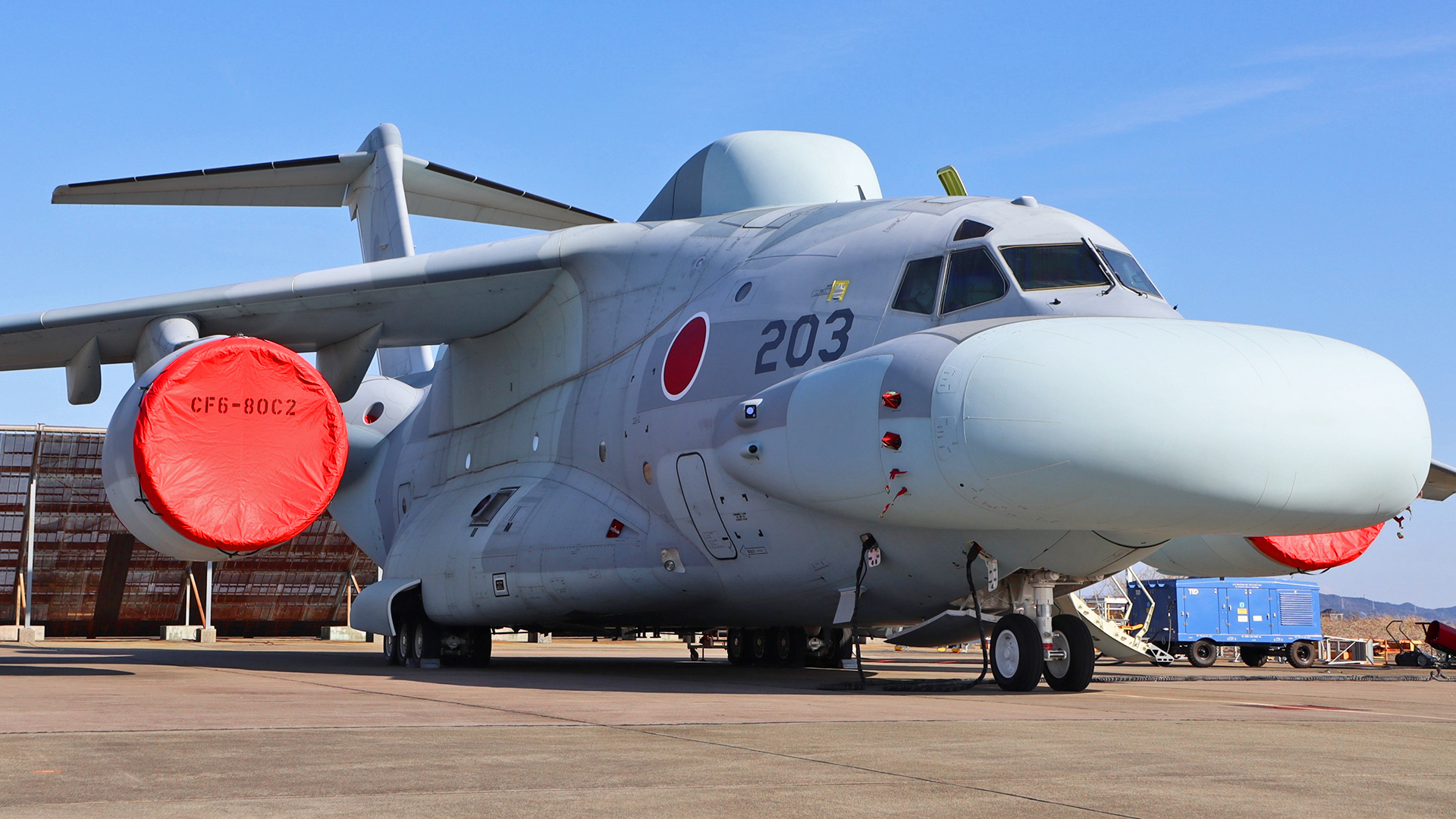
The World’s Ugliest Airplane Just Flew For The First Time
Japan’s prototype EC-2 electronic surveillance aircraft completed its first flight, marking a significant leap in regional intelligence-gathering capability. The unconventional platform signals a bold shift in Japan’s airborne ISR doctrine, directly challenging East Asian electronic warfare balances.
Japan’s experimental Kawasaki EC-2 electronic surveillance aircraft completed its maiden flight, officially entering the race for airborne signals intelligence dominance in the Asia-Pacific. Far from mere novelty, this platform—despite its radically unconventional appearance—reflects Tokyo’s urgent drive to close ISR and EW capability gaps vis-à-vis regional adversaries.
The EC-2 project builds on the proven C-2 airlifter but is heavily modified for electronic intelligence (ELINT) and communications intercept missions. Years of rising regional threats, especially from China’s increasingly networked PLA, have driven Japan to rapidly expand its surveillance and countermeasure assets as tensions spike near disputed maritime territories.
The introduction of this platform is significant on multiple fronts. It reveals Tokyo’s determination to gain strategic electronic insight over adversaries, particularly as Chinese, Russian, and North Korean forces accelerate their own advances in spectrum warfare. By fielding an unorthodox design, Japan signals it will not be constrained by established airframe doctrine or the visual homogeneity preferred by Western manufacturers.
Japanese defense planners are motivated by the acute challenge of detecting and tracking hostile formations that now routinely conduct multi-domain exercises around the archipelago. The EC-2’s large internal bays and expansive sensor arrays make it a force multiplier, enabling Tokyo to fuse and disseminate actionable intelligence well beyond its shores. Public focus on its ungainly appearance belies its high-value operational intent.
Technically, the EC-2 is based on the Kawasaki C-2, with a 44-meter wingspan, redesigned nose, prominent bulges, and bespoke electronic suites. Its payload is believed to include wideband receivers, ELINT arrays, and advanced communications jamming gear—key for countering China’s increasingly encrypted battle networks. No other air force fields a comparable platform in such a configuration.
The EC-2’s debut could trigger a local surveillance arms race. Beijing and Moscow have each deployed advanced AEW&C and EW aircraft in the region; Japan’s new asset will likely prompt counter-deployments or cyber operations aiming to penetrate its capabilities. Any incident involving the EC-2 and Chinese or Russian patrols risks rapidly escalating into a regional crisis.
Historically, radical surveillance designs like the US RC-135 and Russia’s Il-20M have repeatedly sparked tensions during standoffs. Japan’s EC-2 is likely to fly routine missions close to contested airspace, increasing friction points over the East China Sea and Sea of Japan.
The world should watch for patterns in EC-2 deployment, international air intercepts, and technical leaks about its sensor loadout. Accelerated deployment schedules, new basing arrangements, or publicized intercept incidents may indicate rising electronic warfare contestation across North-East Asia in the months ahead.